Design for Security
Chapter Info
Calculating... Writing Progress: 80%
!!Security is not a feature that can be added at the end of development. It emerges from the way a system is designed, built, deployed, and operated. Every architectural decision affects what can be attacked, how far a compromise can spread, and how quickly the system can recover.!! This chapter presents the enduring principles for reducing those risks across the software supply chain, infrastructure, data, development practices, and incident response. Identity and Zero Trust are covered separately in the Design for Trust chapter.
Introduction
Yesterday's Normal Is Today's Vulnerability [Yesterday's Normal] {1}
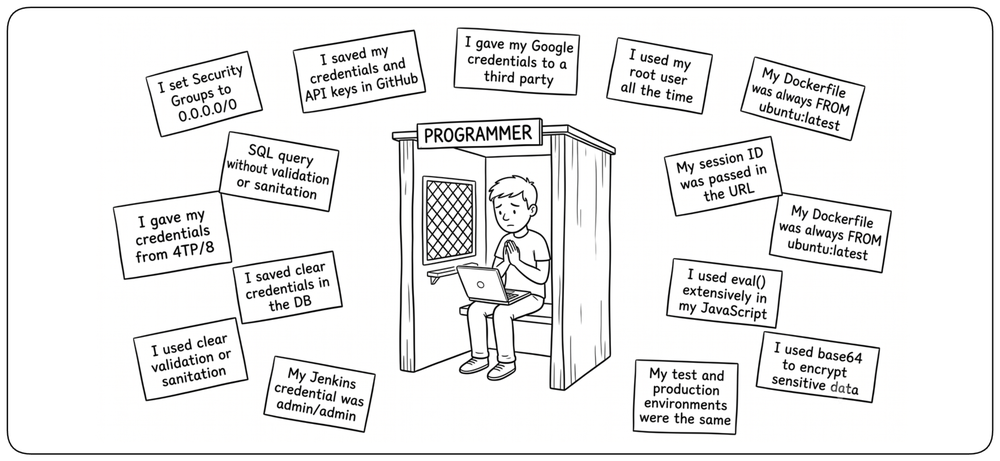
!!What was considered secure yesterday is no longer secure today.!! Algorithms once trusted are now trivial to crack, protocols quietly deprecated, and configurations that felt perfectly reasonable have become textbook mistakes. Every experienced engineer carries a private confession of past practices that would raise alarms in any modern review. This is not a story of individual failure—it is the nature of the field. Security moves, and what was standard becomes indefensible.
Practices Change, Foundations Endure [Perpetual Motion] {1}
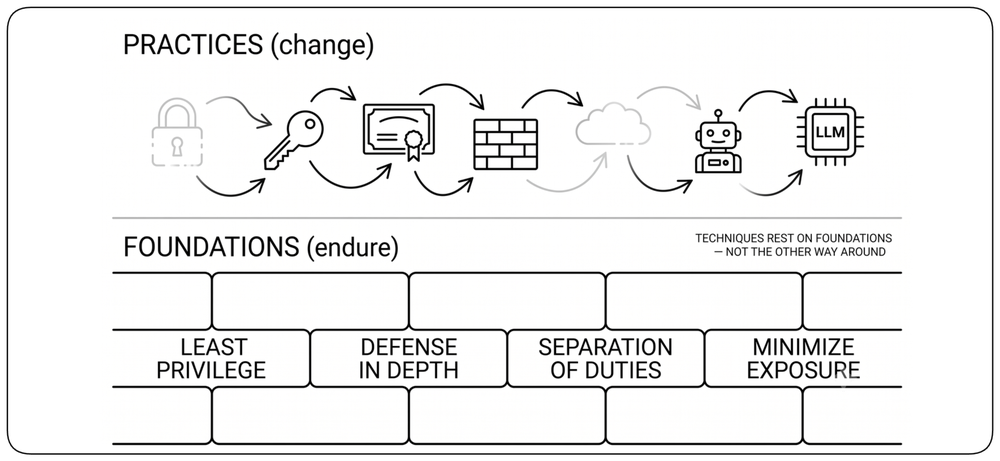
!!The practices of security shift constantly, but the underlying principles are few and conceptually simple!! — least privilege, defense in depth, separation of duties, minimizing exposure. These foundations were true decades ago, they are true today, and they will still hold when today's tools are obsolete. This chapter focuses on those foundations, because a security engineer grounded in principles can adapt to any new threat, while one who only knows today's practices becomes obsolete with them.
No Defense Is Foolproof [Humility] {1}
!!Even with the strongest protections, no defense is ever 100% effective — residual risk always remains!!. Humility follows: accept that vulnerabilities will exist, that attackers will evolve, and that our job is to constantly learn, adapt, and stay prepared for the incidents prevention will inevitably miss.
Life Continues Under Attack [Living With It] {1}
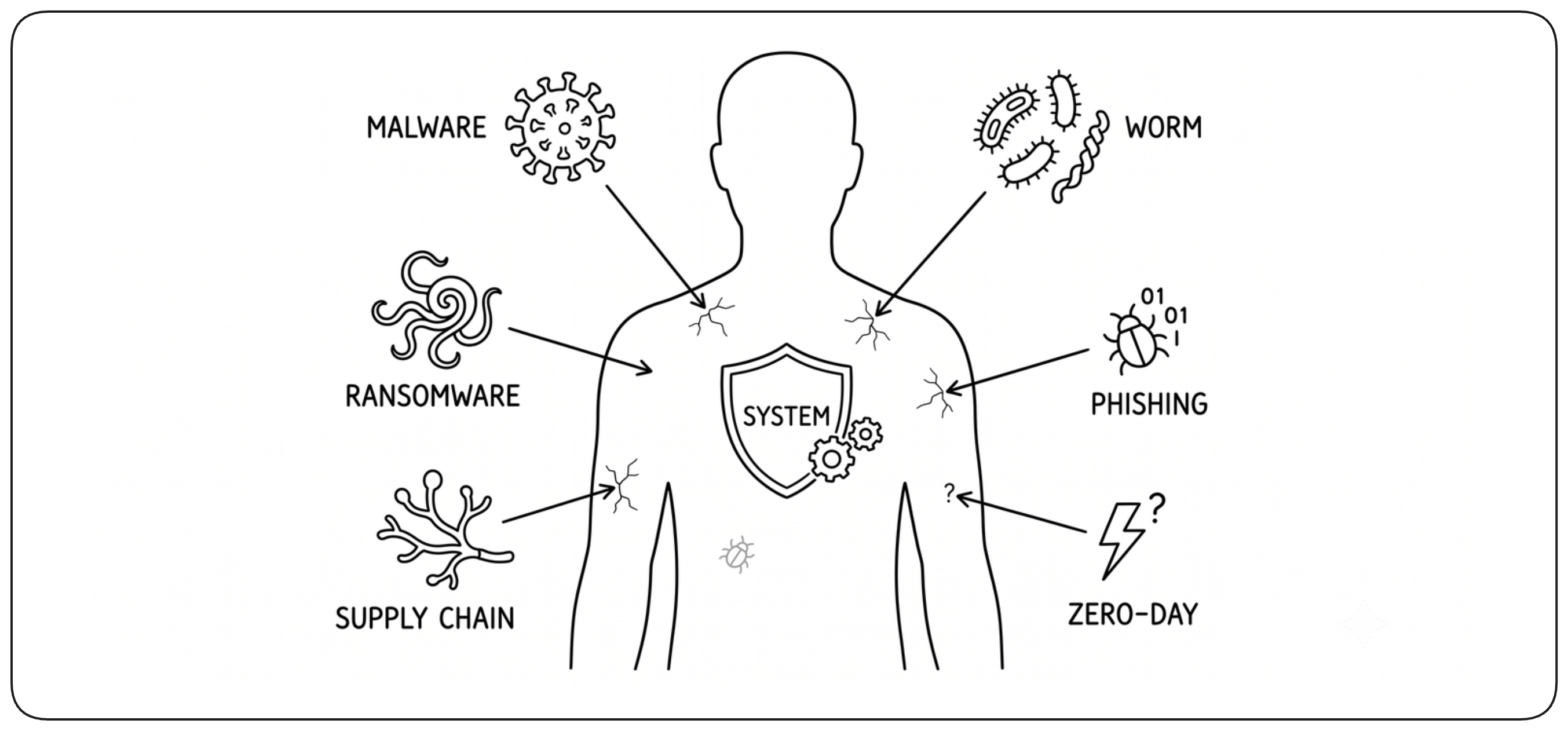
Modern security accepts a hard truth: !!attacks never stop, and business cannot stop either!!. The old paradigm asked "how do we prevent every breach?"—the new one asks "how do we keep operating through them?". Defenses still matter, but they are no longer expected to be perfect. Instead, systems are designed so that intrusions can be detected, contained, and repaired while the rest of the organization keeps running. Resilience is not about surviving one attack and getting back to peace; it is about building a normal life under permanent, ongoing pressure.
Fundamental Security Principles [Security Core Principles]
Holistic Security: Seeing Security as a System [Holistic] {1}
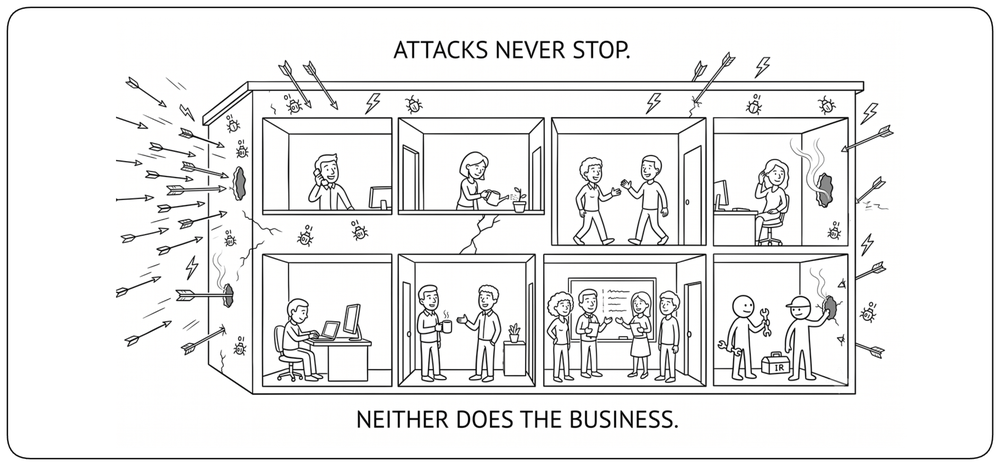
Faced with the sheer number of security domains, the natural reflex is to turn them into a checklist and work through it item by item. It feels reassuring — tick every box and the job looks done. But a checklist is only a list of parts; real security is a system. !!Every control gains its strength from its relationship with the others, not from being closed on a list!!. The principles that follow in this chapter — defense in depth, least privilege, segmentation, monitoring, incident response, and the rest — each look powerful in isolation, but each is weak alone and strong only when they reinforce each other. Holistic thinking is that reframing: stop counting controls, start seeing how they hold together.
Security is Only as Strong as Its Weakest Link [Weakest Link] {1}
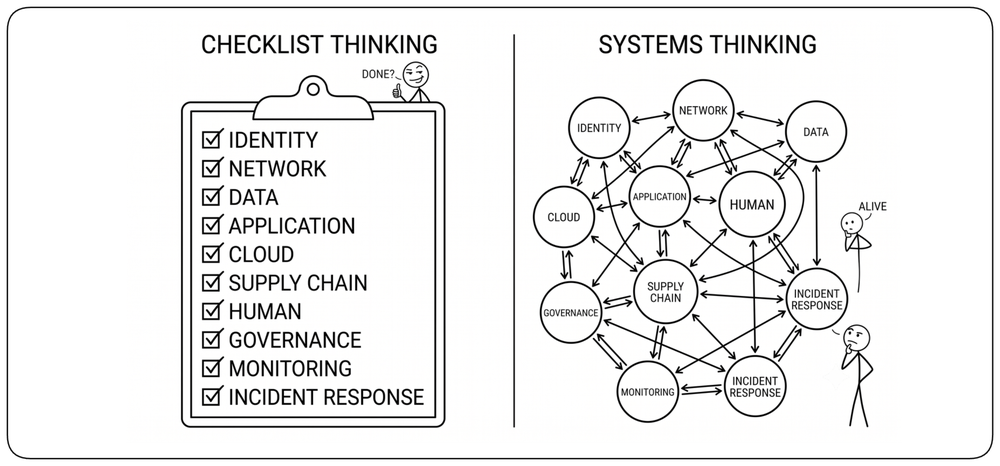
!!Attackers do not attack systems where they are strongest — they attack where they are weakest!!. It does not matter how many layers of defense stand around the crown jewels if one forgotten server, one legacy endpoint, one over-permissive role, or one unpatched dependency offers a cheaper path in. The defender must cover every point; the attacker only has to find one. This asymmetry is what makes security uniquely hard: strengthening the strong parts wins nothing, only closing the weakest link raises the actual floor.
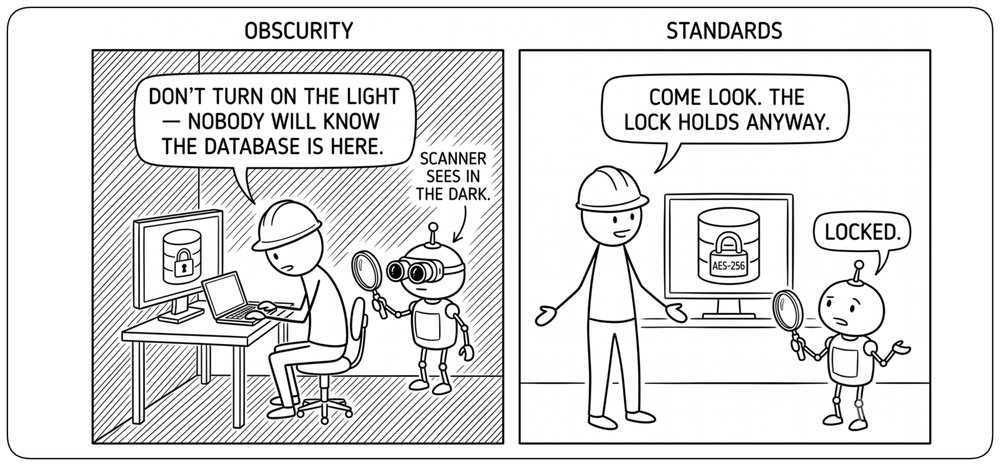
Rely on Proven Standards, Not Obscurity [Standards Over Obscurity] {1}
!!Real security comes from proven standards, not from clever inventions!!. Battle-tested algorithms, protocols, and frameworks — strong authentication, modern encryption, established authorization models, defense in depth — have survived years of public scrutiny from researchers and attackers alike, and their weaknesses are known and patched. A custom-built alternative, however brilliant, has none of that history behind it: it might work, or it might contain the fatal flaw nobody has spotted yet. Standards are stronger not because they hide anything, but because they were forged in the open and still stood.
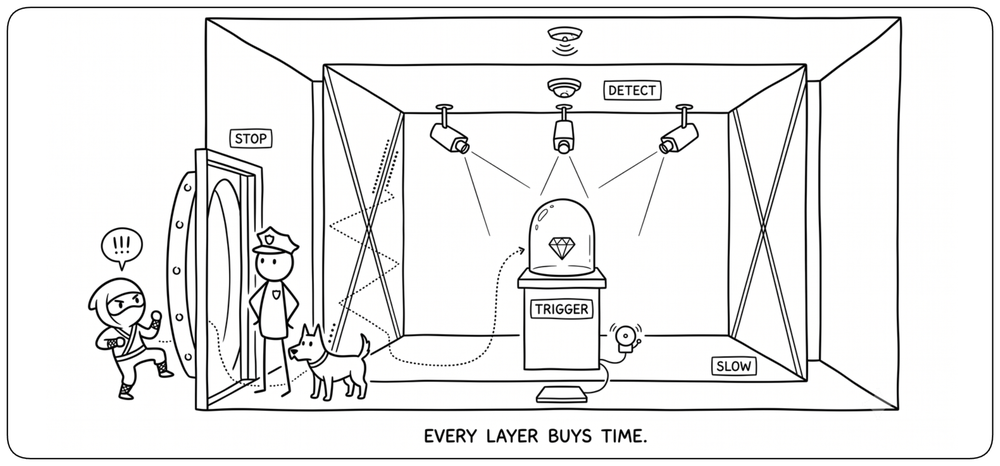
The Multi-Layered Security Approach [Defense in Depth] {1}
!!No single control can be trusted to hold — so systems are wrapped in multiple independent layers, each doing a different job!!. Some layers stop the attacker outright, others only slow them down, others simply detect and raise the alarm. The point of defense in depth is not redundancy for its own sake but diversity: when the first barrier falls, the second is a different kind of obstacle, forcing the attacker to solve a new problem instead of repeating the same trick. Every extra layer buys time, and time is what turns a breach into a caught intrusion.
Minimizing the Damage, Reducing the Blast Radius [Blast Radius] {1}
Even with strong defenses, breaches will still happen. !!Reducing the blast radius means designing systems so that when a failure occurs, its impact stays contained instead of spreading across the entire environment!!. It is not a technique in itself but an outcome: the mechanisms that produce it — segmentation, exposure reduction, least privilege — are what the following sections detail.
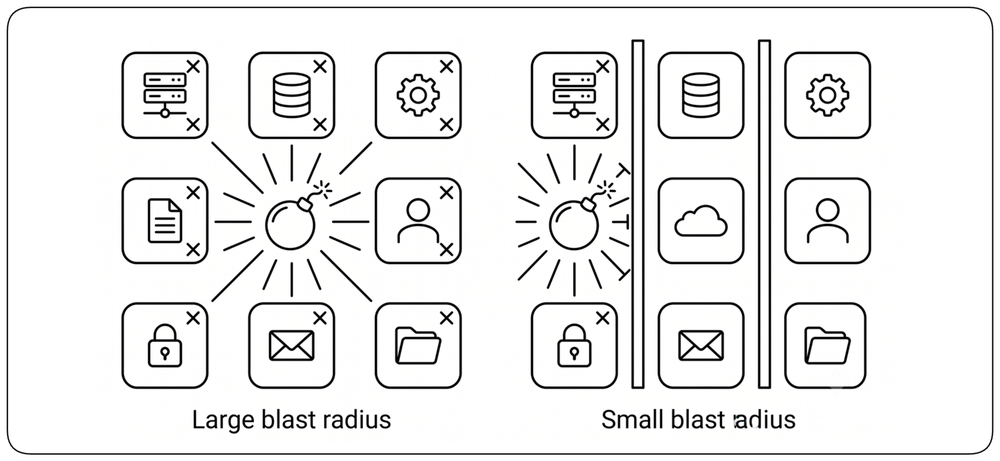
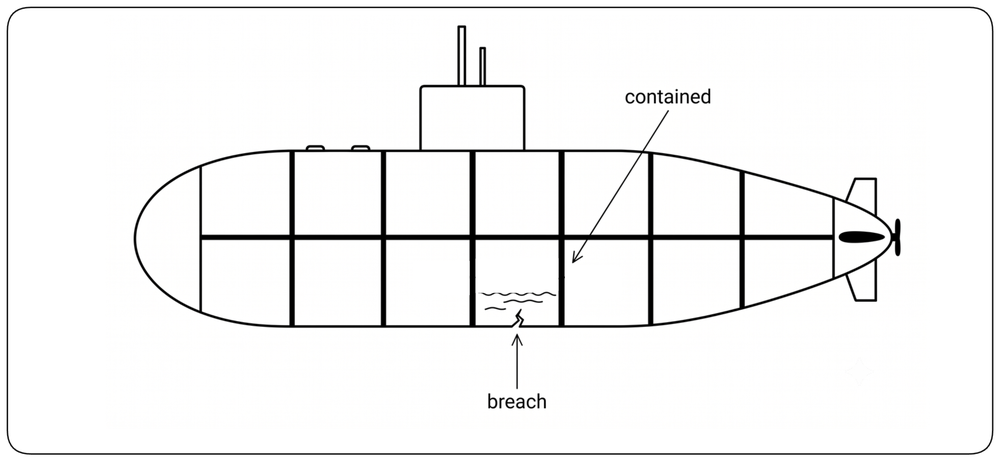
Segmentation: The Mechanism Behind a Small Blast Radius [Segmentation] {1}
Segmentation is the primary way to keep the blast radius small. !!Internal boundaries turn one big system into many small ones, so a compromise in one section cannot spread to the rest!!. Submarines rely on the same idea — sealed compartments mean that a hull breach floods one section, not the entire vessel.
Minimize Exposure to Reduce Attack Opportunities [Exposure] {1}
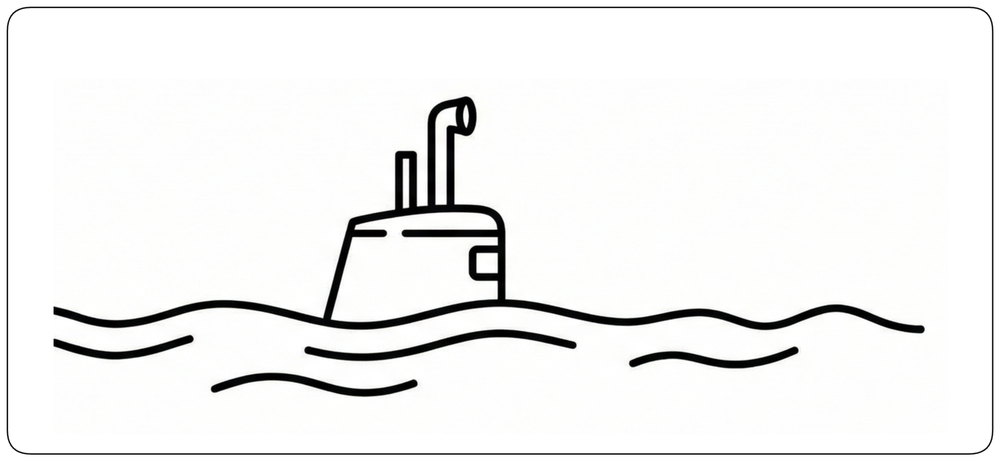
Attackers thrive on time, visibility, and persistence: !!the longer something is exposed and the more broadly it is reachable, the higher the chance that weaknesses will be discovered and abused!!. Exposure is a combination of how long a resource exists, how broadly it is reachable, and how visible it is to the outside world — across access, credentials, services, trust relationships, and infrastructure. Like a submarine that surfaces only briefly to avoid detection, a system should minimize how long and how broadly its components are exposed.
Keep Everything Temporary [Ephemeral Resources] {1}
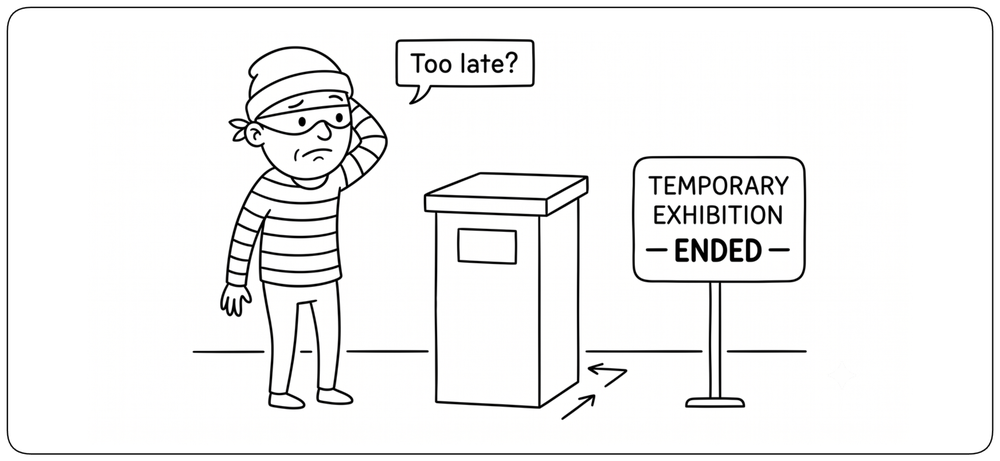
One of the strongest ways to minimize exposure is to make resources short-lived. !!Ephemeral credentials, temporary compute, expiring tokens, and time-bound access!! all limit attacker opportunity and force continuous renewal. When everything naturally expires, systems refresh themselves and reduce long-term risk.
Data Protection [Data Security]
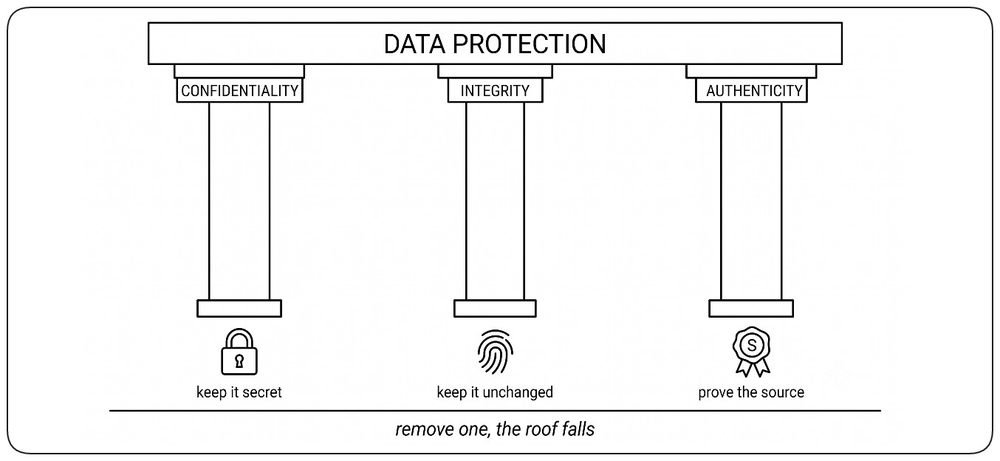
For most organizations, data is the asset attackers ultimately want. Infrastructure, applications, identities, and networks are valuable primarily because they provide a path to that data. Protecting data therefore begins long before encryption — with decisions about what to collect, how to classify it, who may access it, how long to keep it, and how to prove it has not been altered. Confidentiality, integrity, and authenticity are different guarantees, each requiring its own architectural controls.
Data Classification [Data Classification] {1}
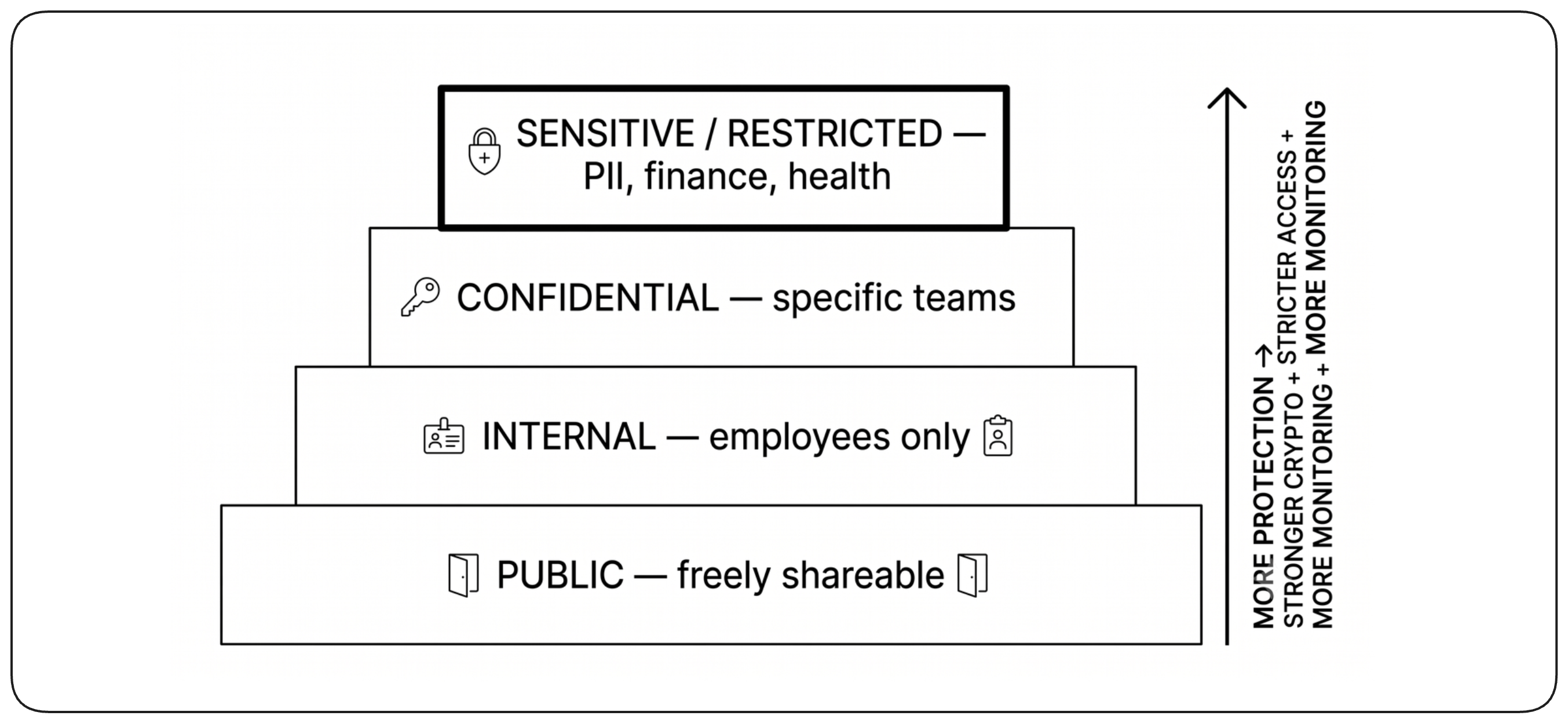
!!Not all data deserves the same protection, and classification is what turns that principle into concrete controls: each tier drives its own encryption strength, access rules, retention window, and monitoring depth!!. Without it, either everything is over-protected — slow, expensive, unusable — or everything is under-protected, and the crown jewels sit next to the cafeteria menu. Classification is the foundation on which every downstream data-security control rests.
Classify Before You Build [Classify First] {1}
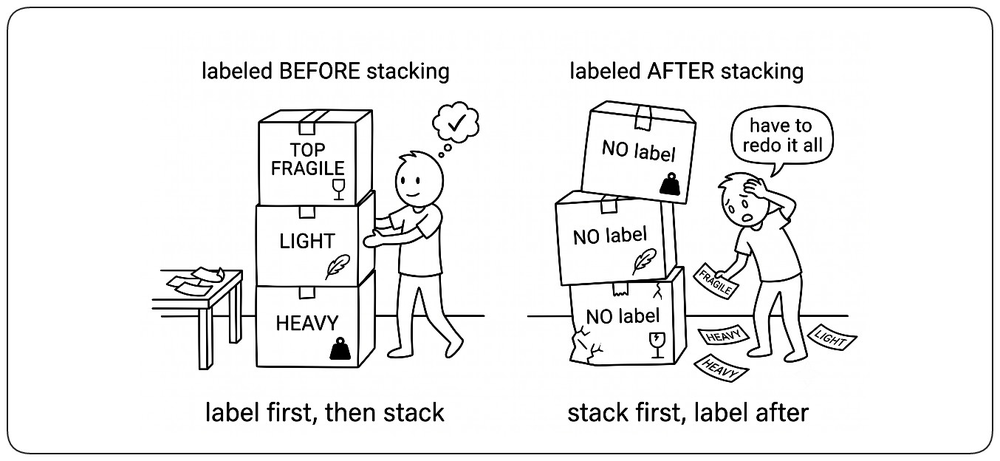
!!Classification is not a label you stamp on a system after it exists — it is an input to the design itself!!. Where sensitive fields live, which tables can join, which services can read what, and what an API exposes are all architectural decisions dressed up as data decisions. A schema drawn without classification leaks sensitivity across boundaries by default, and retrofitting means expensive migrations, painful splits, and controls bolted on after the fact. Classify first, then design around it.
Mixed Data Inherits the Highest Classification [High-Water Mark] {1}
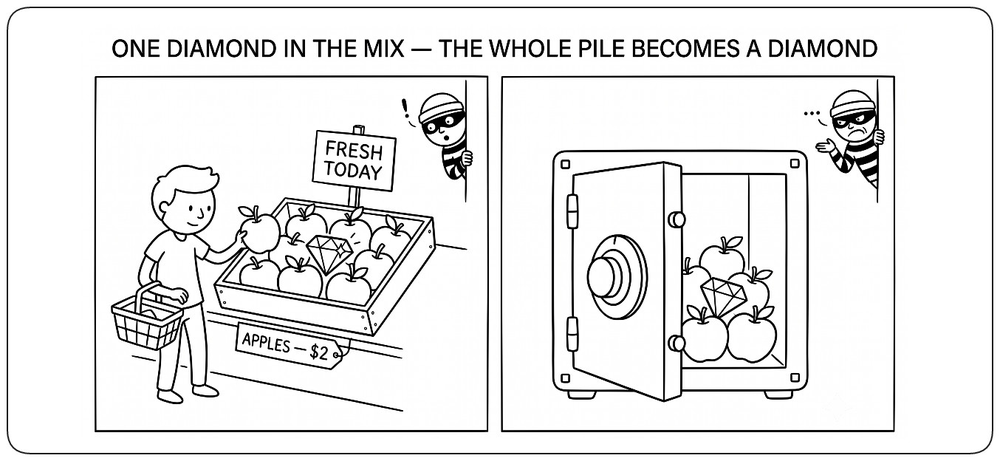
!!When data with different classifications is combined, the result inherits the highest classification present, because a single sensitive field forces the same protection across the whole dataset!!. This high-water mark principle is especially important in analytics pipelines, data lakes, and ML training, where aggregation often hides the sensitivity of individual inputs. Classification always follows the most sensitive data — not the average.
Collect Only What You Need [Minimize Collection] {1}
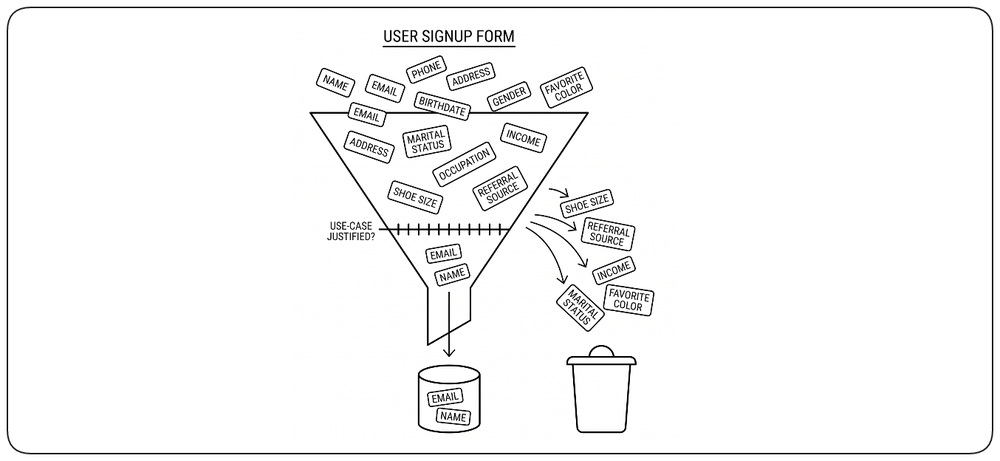
!!The most protected data is the data you never collected!!. Every field stored is a field to secure, encrypt, back up, audit, and eventually delete — and, if breached, to disclose. Data minimization inverts the reflex to capture everything "just in case": each attribute must justify its existence against a real use case, not a hypothetical one. What isn't collected can't leak, can't be subpoenaed, can't be sold, and doesn't age into a liability.
Store Proof, Not Secrets [Store Proof] {1}
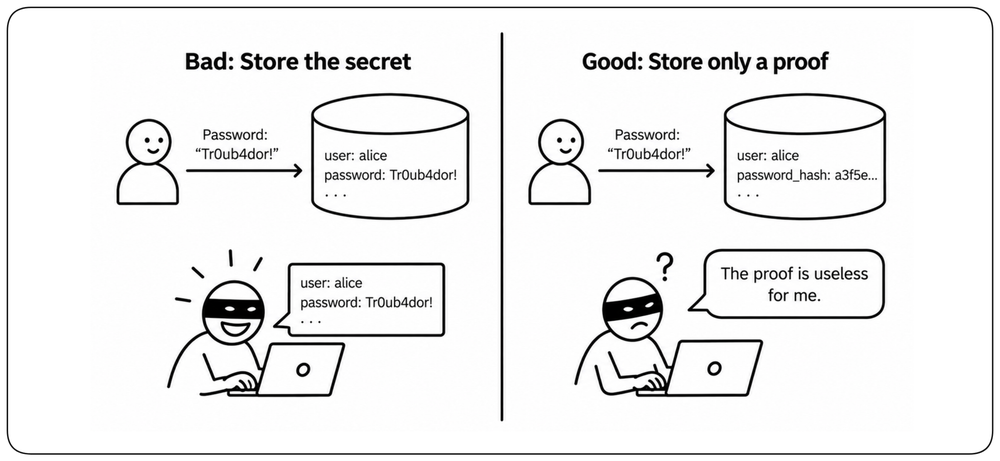
!!A system should store the minimum representation of sensitive information needed to perform its function — not necessarily the original value.!! If the system only needs to verify something, store what is needed to verify it, not the secret itself. Passwords are the classic example: authentication requires proving that a password matches, not recovering the password, so the original password never needs to be stored. This principle applies far beyond passwords: whenever the original sensitive value can be replaced by a derived representation, doing so removes information that an attacker could otherwise steal.
Data by Reference, Not by Copy [By Reference] {1}
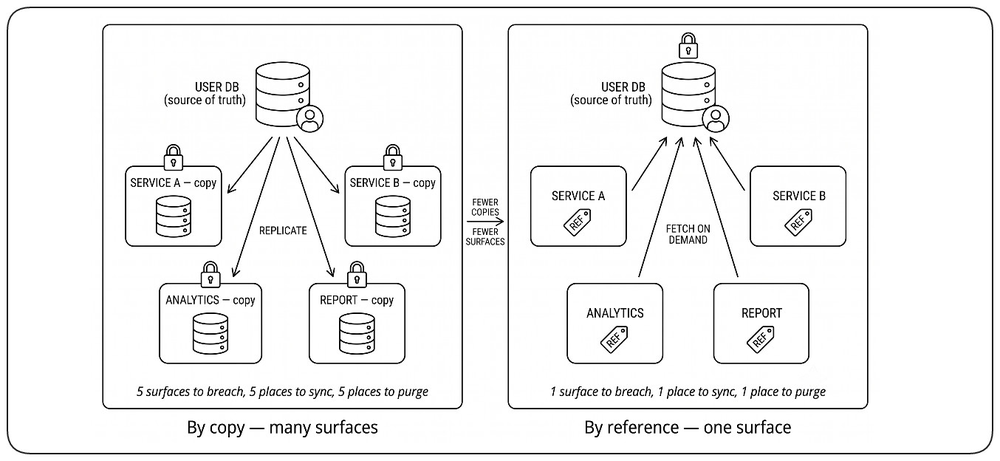
!!Every copy of sensitive data is another asset to protect!!. The moment a record is duplicated into a cache, a downstream service, an analytics warehouse, or a report, it multiplies the attack surface, the audit scope, and the number of places that must stay in sync when a customer asks to be deleted. Prefer controlled access to the authoritative source over unnecessary replication. When copies are required — for availability, performance, or analytics — make them explicit, minimized, governed, and independently protected.
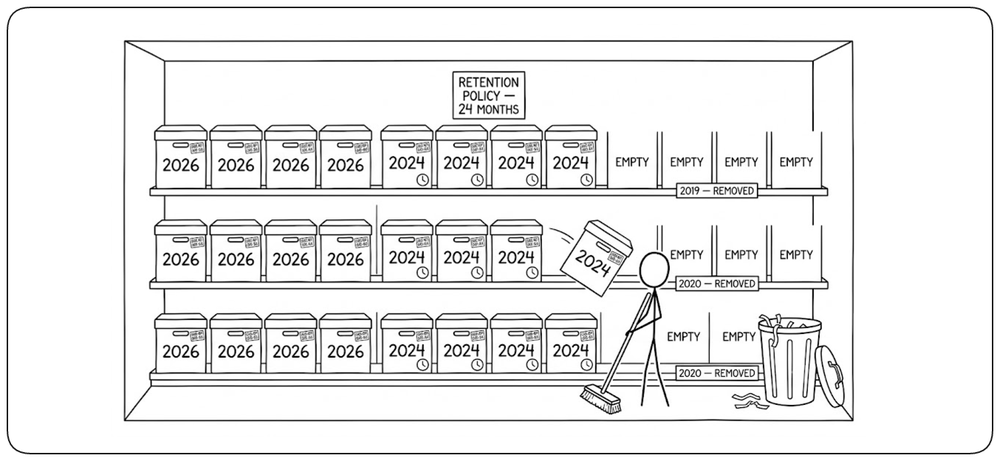
Delete Data as Soon as Possible [Data Lifecycle] {1}
Data has a lifecycle, and every day it survives is another day it can be stolen. !!Retention is a risk decision, not a filing decision!!. A record kept "in case we need it" becomes a liability the moment it is breached, subpoenaed, or reclassified as sensitive. Automated retention policies, TTLs on caches, expiring backups, and scheduled purges turn deletion from a manual afterthought into a system property. The safest data is data that no longer exists.
Access Control Comes Before Cryptography [Access First] {1}
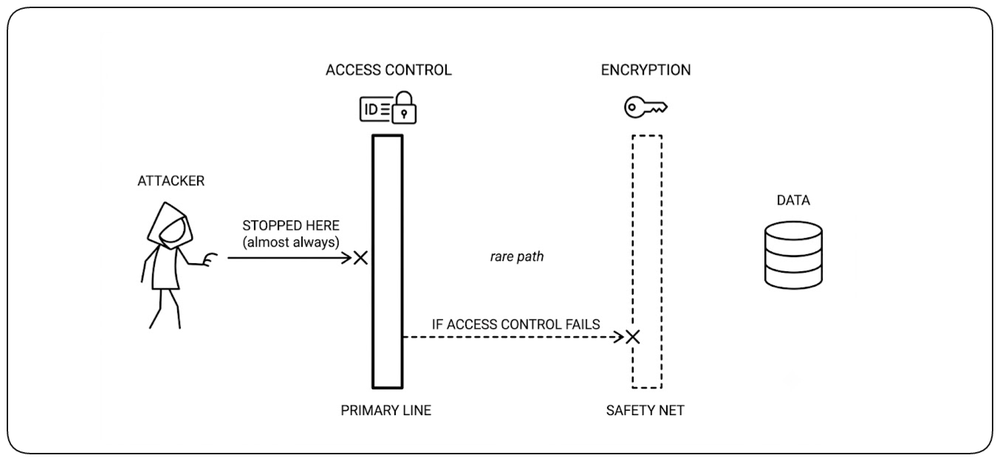
Most data breaches don't defeat encryption — they walk through the front door with a legitimate credential. !!Access control decides who may read the data; encryption protects it when the storage or transport layer is exposed!!. AES-256 protects nothing if an over-permissive role, a stale token, or a forgotten API key hands the data to the attacker as plaintext. Architects reflexively reach for stronger crypto when the real leverage is in tighter authorization: who can query, at what scope, under which conditions, and audited how. Get the access model right first — encryption complements it, but does not replace it.
Minimize Human Access to Data [Minimize Human Access] {1}
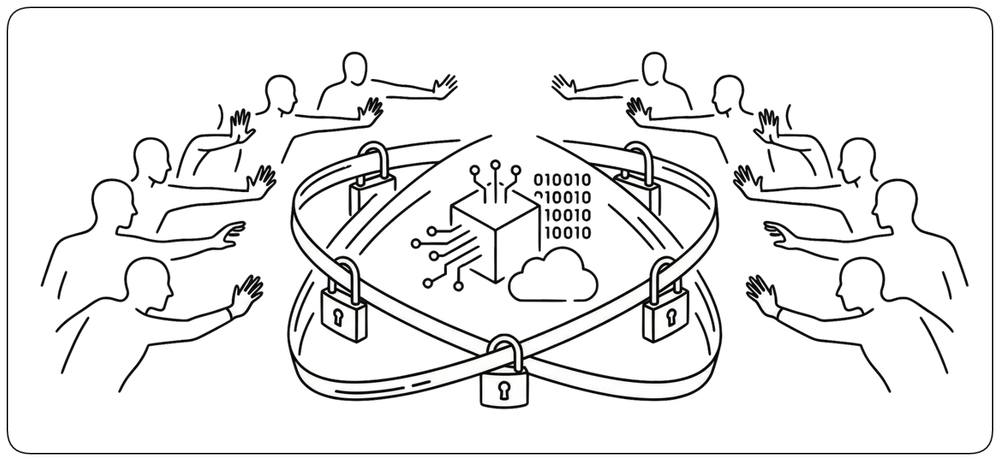
!!Systems should access data, not people, because every human touchpoint is an opportunity for error, exfiltration, or coercion, and every operator credential is one an attacker can steal!!. Automated pipelines, service accounts, and secure APIs move data between systems without ever exposing it to human eyes. When human access is unavoidable, it should be the exception: short-lived, scoped, approved, and logged. Humans are the audit case, not the default path.
Never Use Production Data Outside Production [Prod Data Stays in Prod] {1}
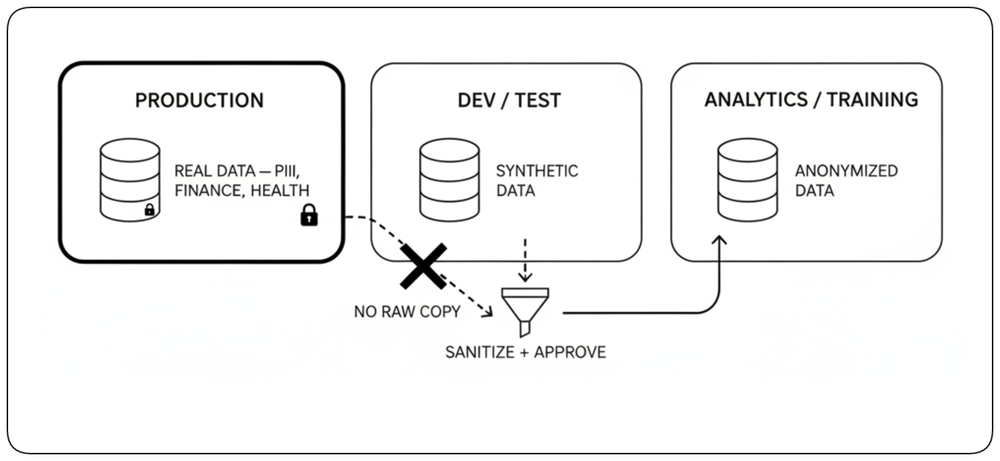
Production data carries production risk. Copying it into development, testing, analytics, or training environments extends the confidentiality perimeter to zones with weaker controls, broader access, and looser retention rules — a common source of breaches and regulatory violations (GDPR, HIPAA, PCI DSS). !!Lower environments should use synthetic or fully anonymized datasets by default.!! When real data is genuinely required for a specific use case, it must be sanitized, formally approved, time-boxed, and treated with the same controls as production itself.
Encryption Protects the Medium, Not the Access [Encryption] {1}
Encryption is the last line of defense: when the disk is stolen, the backup tape is lost, or the network is tapped, only ciphertext leaks. !!Encryption protects against loss of the medium, not against a legitimate user!!. An authorized application, a compromised process, or a query with valid credentials still sees plaintext — because they hold the key. Encrypt everything by default, but recognize the boundary: encryption complements access control, it does not replace it. The next question is always: who is allowed to decrypt what.
Separate Encryption Keys from Data [Key Separation] {1}
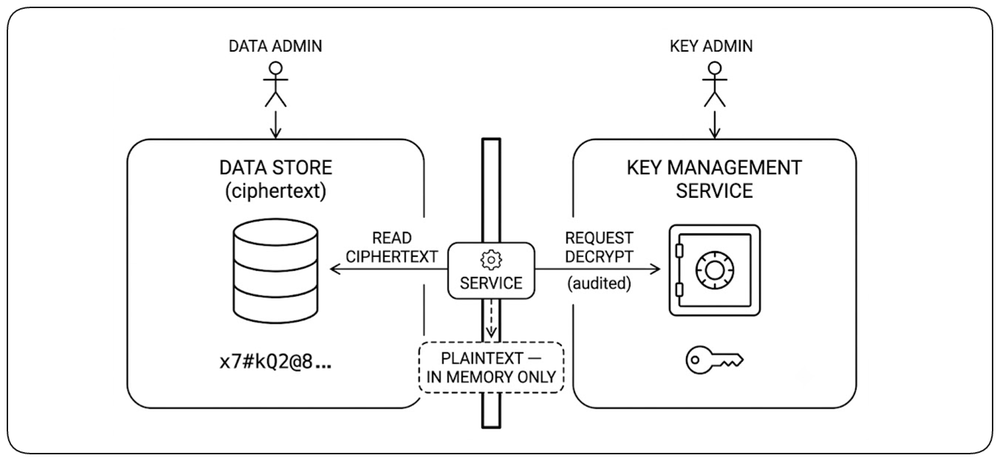
Encryption reduces to key management: !!lose control of the keys and the ciphertext is plaintext!!. Keys must never live alongside the data they protect — same database, same disk, same admin — because a single compromise then unlocks both. A dedicated Key Management Service holds the keys under separate custody, separate access, and separate audit; the data owner can read ciphertext, the key owner can authorize decryption, and no single role does both. Rotation, revocation, and per-tenant keys become possible only once this separation exists.
Integrity Is Not the Same as Confidentiality [Integrity] {1}
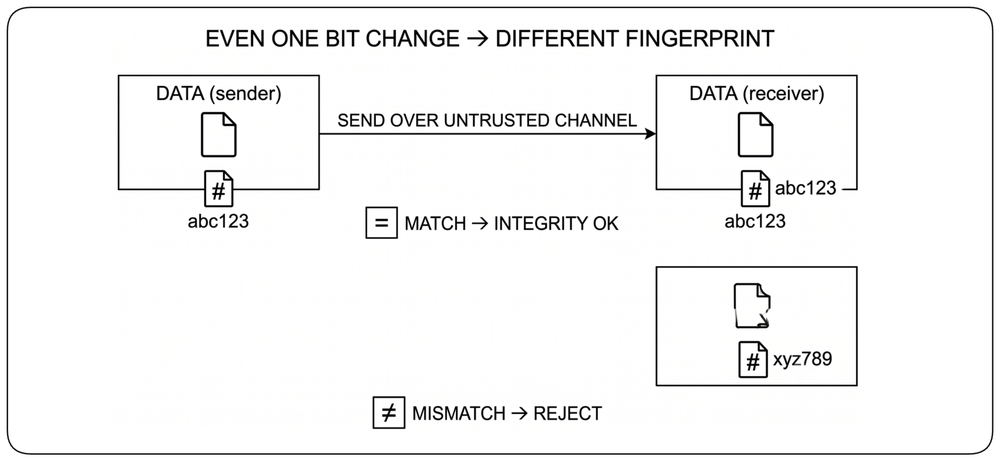
!!Encryption keeps data secret, but integrity keeps it honest: a message can be encrypted end-to-end and still be silently truncated, replayed, or replaced!!. Cryptographic hashes, HMACs, and digital signatures produce a fingerprint that even a single flipped bit would break: the sender computes it, the receiver recomputes and compares. Confidentiality and integrity are two independent guarantees — a serious system needs both, always paired.
Message Authenticity [Authenticity]
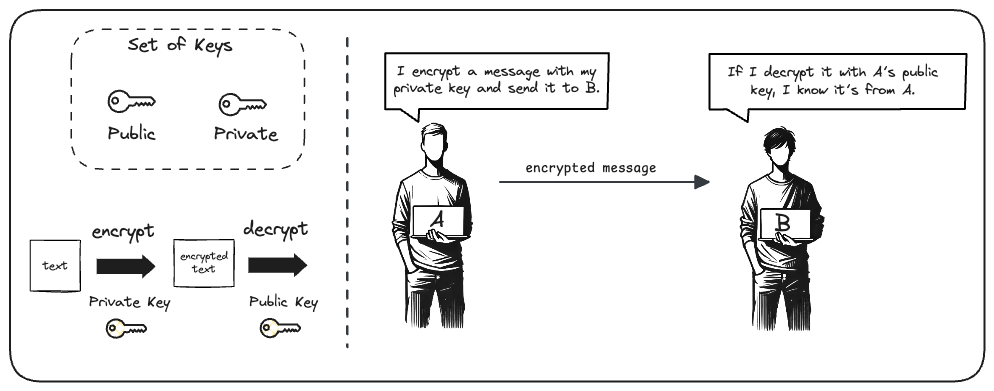
Message Authenticity and Non-repudiation focus on verifying the identity of the sender and ensuring that they cannot deny having sent the message. By using cryptographic mechanisms such as private and public keys, a sender can sign a message with their private key, creating a unique signature that only they could have generated. The recipient can then use the sender’s public key to validate the signature, confirming that the message genuinely came from the claimed sender. This process not only authenticates the sender’s identity but also ensures they cannot later claim they did not send the message, providing undeniable proof of origin.
Three Pillars, Not One [Three Pillars] {1}
Data protection is often reduced to "encrypt everything", but !!confidentiality, integrity, and authenticity are three independent guarantees — you need all three!!. A ciphertext can be replayed. A signed message can be readable by anyone. An integrity check says nothing about who wrote the data. Real systems treat them as a triad, not a menu: encrypt to keep it secret, hash or HMAC to prove it wasn't changed, sign to prove where it came from. Missing any one leaves an entire class of attack wide open.
Inventory and Control [Inventory]
Why Inventory and Control Matter [Why It Matters] {1}
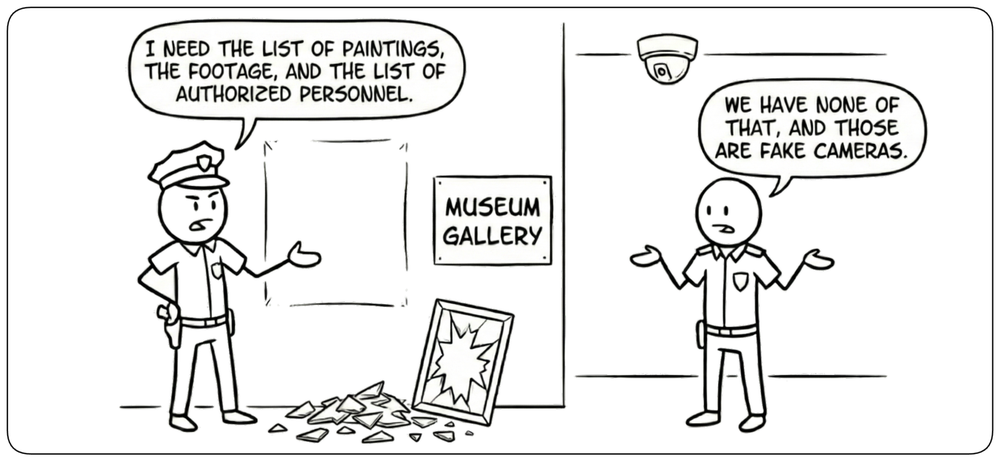
Security starts with visibility. !!You cannot protect what you don't know exists, and you cannot defend against threats you haven't identified!!. Inventory works two ways: knowing what you protect (assets, systems, data) and knowing who has access (users, actors, potential threats). Unknown assets become blind spots, but so do untracked access patterns and unauthorized personnel. Both dimensions — your resources and your threat landscape — form the foundation of every security control.
Unified Asset and Software Inventory [Unified Inventory]
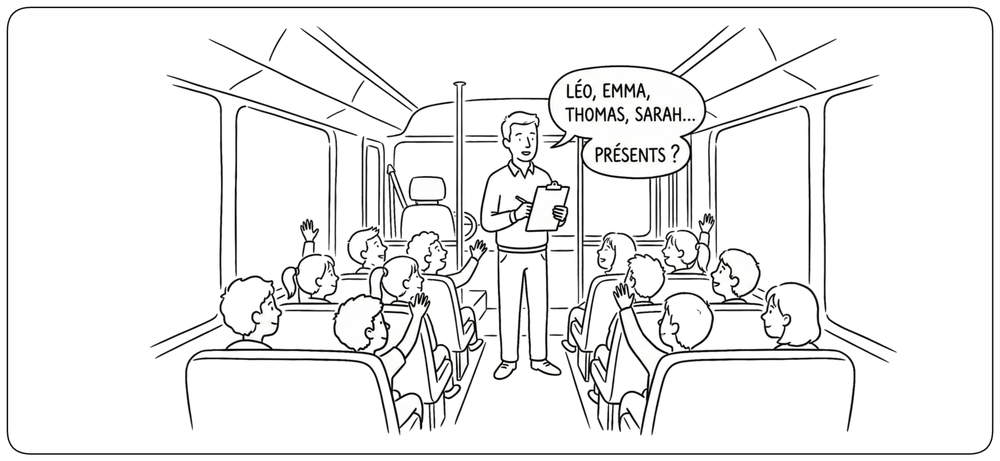
Every device, VM, container, and library running in an organization is part of its attack surface. Any asset that is unknown, unmanaged, or outdated becomes a blind spot an attacker can exploit. !!Unified inventory joins two catalogues!! — the hardware layer (servers, endpoints, cloud resources, IoT) and the software layer (applications, services, libraries, dependencies). Together they form the complete picture without which nothing else can be protected, patched, or monitored.
Software Bill of Materials (SBOM) [SBOM]
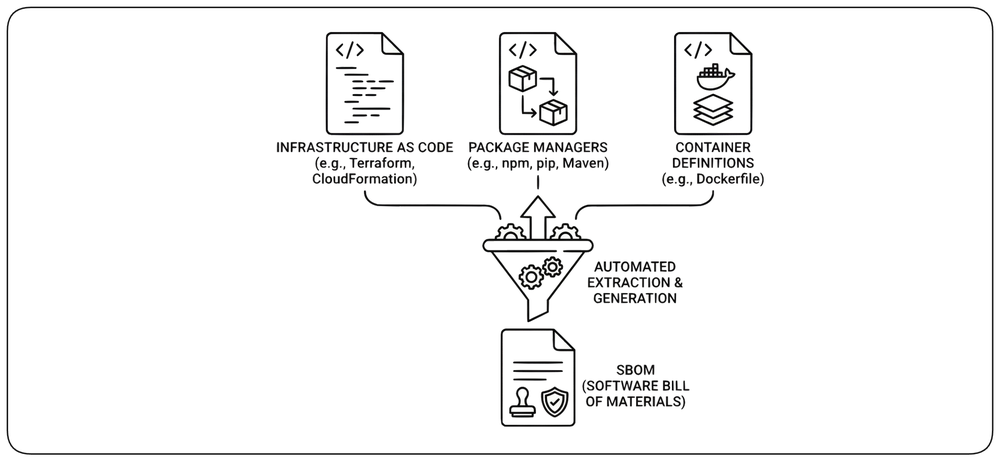
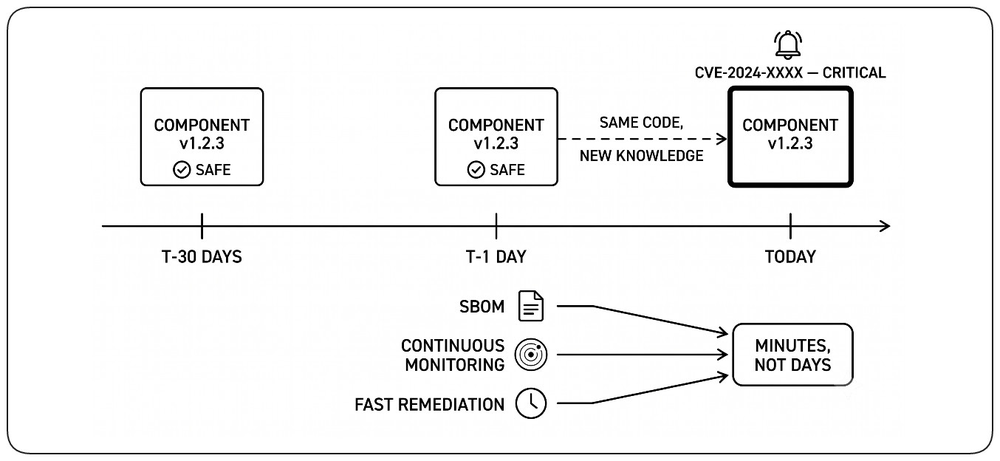
A !!Software Bill of Materials!! is a machine-readable inventory of every component, library, and dependency inside an application — automatically extracted from infrastructure code, package managers, and container definitions. Increasingly mandated by regulations such as the U.S. Executive Order on Cybersecurity, it turns opaque software into a visible supply chain, so that when a new CVE hits, the affected components are identified in minutes rather than days.
The Deployment Visibility Gap [Deployment Gap]
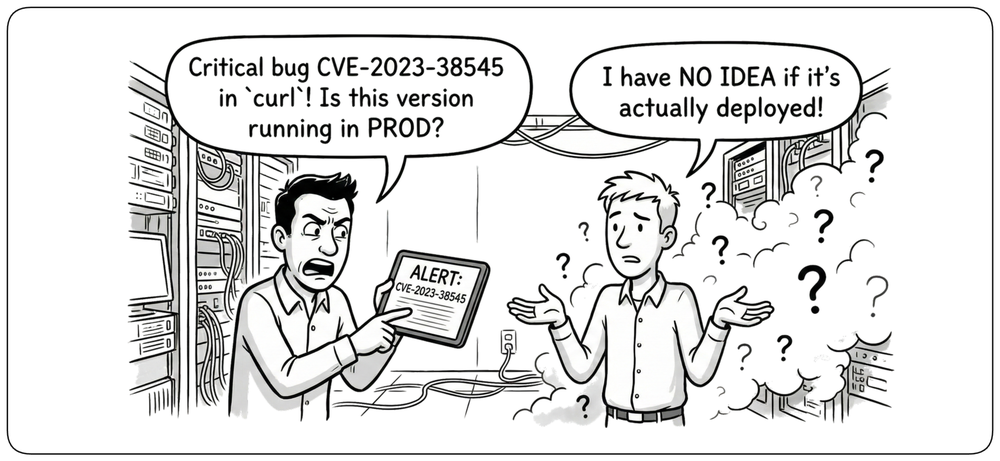
Knowing what components exist in your software (SBOM) is only half the equation—you must also know where those artifacts are actually deployed and running. When a critical vulnerability is announced, rapid impact assessment requires answering: "Where is this running?" Without deployment-to-artifact mapping, organizations face a critical blind spot: they can identify that a vulnerable library exists in the artifact repository, but they cannot determine which environments, services, or instances are affected. This gap transforms every security advisory into a lengthy investigation rather than an immediate, targeted response. Security teams waste hours auditing deployments manually, trying to answer basic questions about exposure and impact.
Artifact Manager: The Single Source of Truth [Artifact Manager]
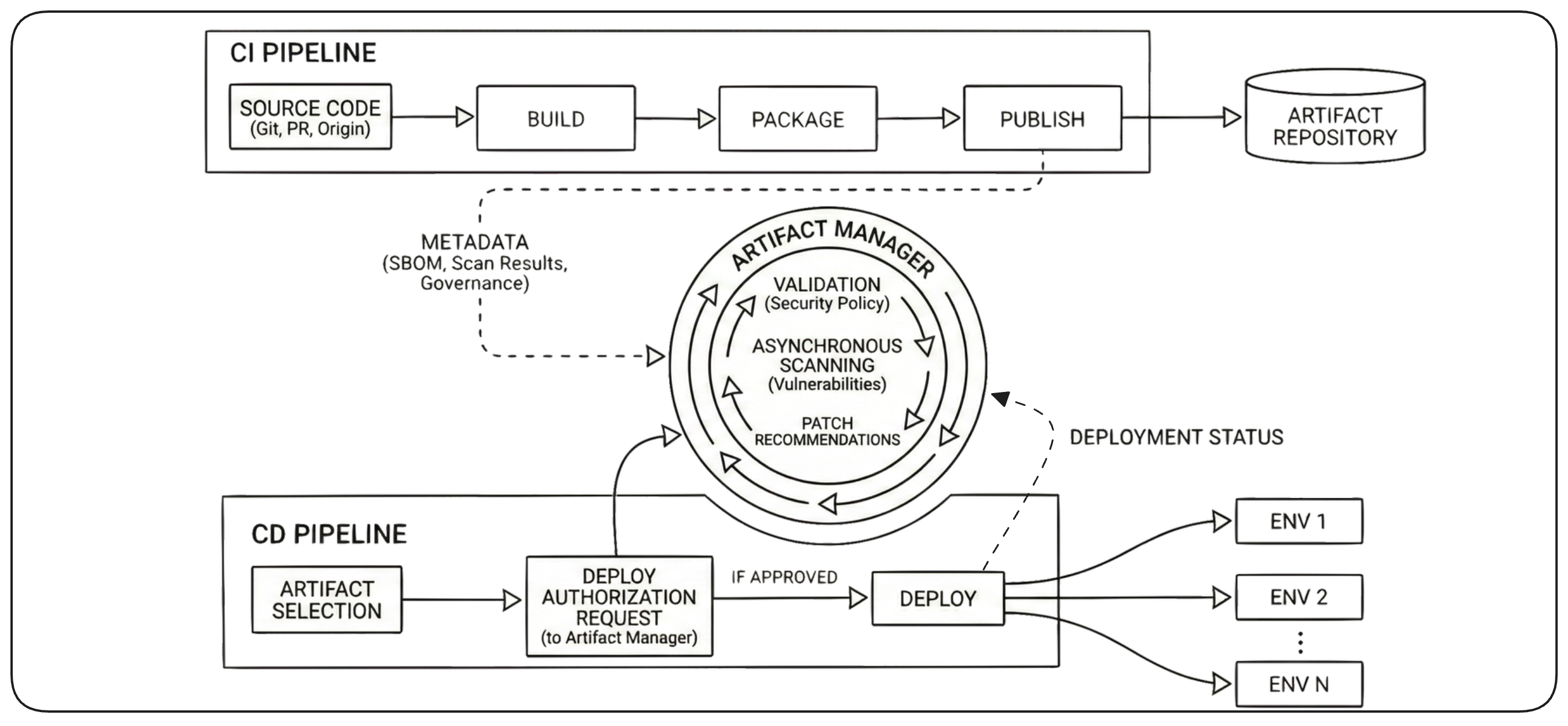
An Artifact Manager acts as the single source of truth for every artifact. CI publishes each one with its SBOM, scan results, and build provenance; CD must query the manager before deploying, and reports back where the artifact runs. This bidirectional flow reveals what an artifact contains, what checks it passed, and precisely where it lives — turning a new CVE from a multi-day audit into a minutes-long targeted response.
Controlling Supply Chain Security [Supply Chain Control]
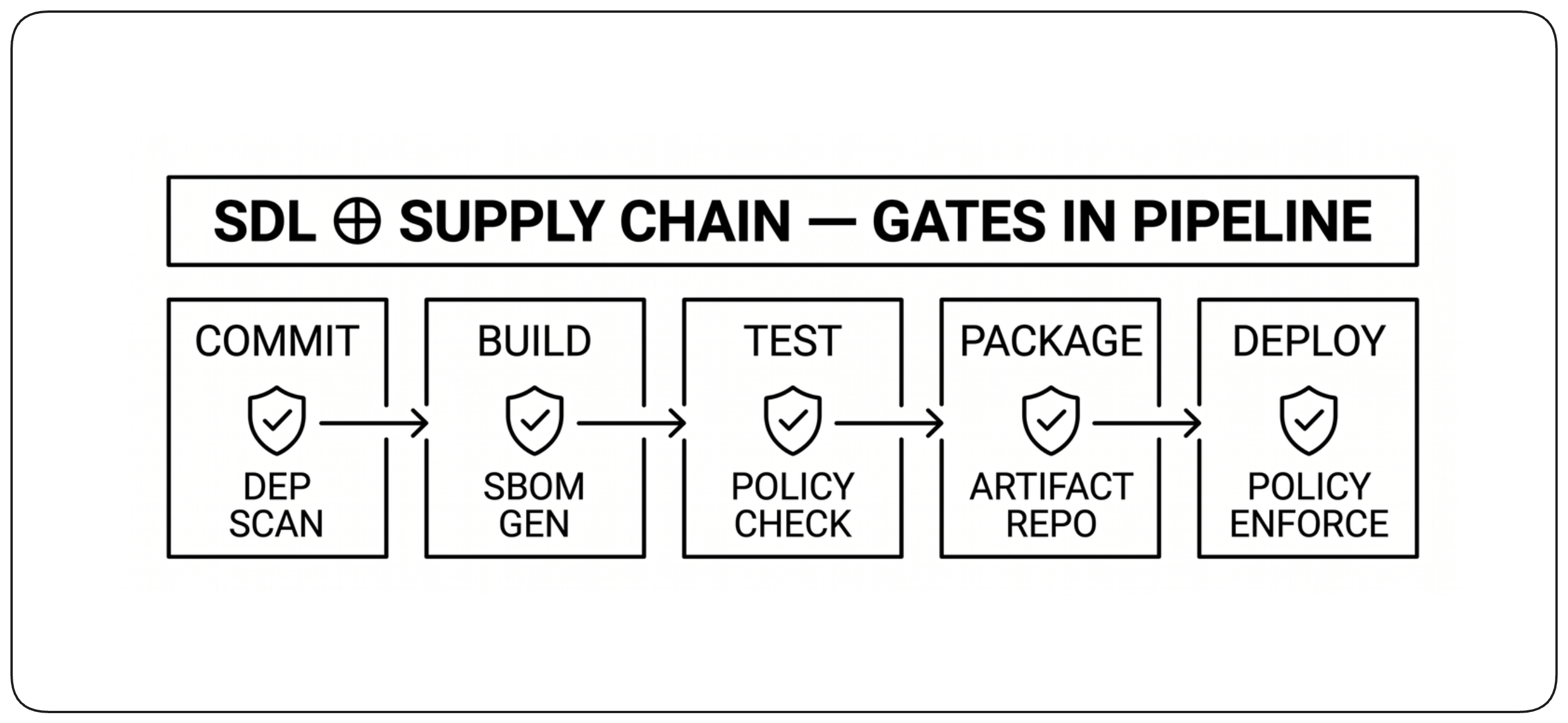
Modern software rides on thousands of external dependencies — libraries, frameworks, container images, build tools — each one a potential attack vector. !!Visibility alone is not enough!!: the SBOM tells you what is there, but only active control decides what is allowed in. Supply chain security is what turns that inventory into enforcement, blocking compromised or unapproved components before they ever reach production.
CI Pipeline: The Primary Control Gate [CI Control Gate] {1}
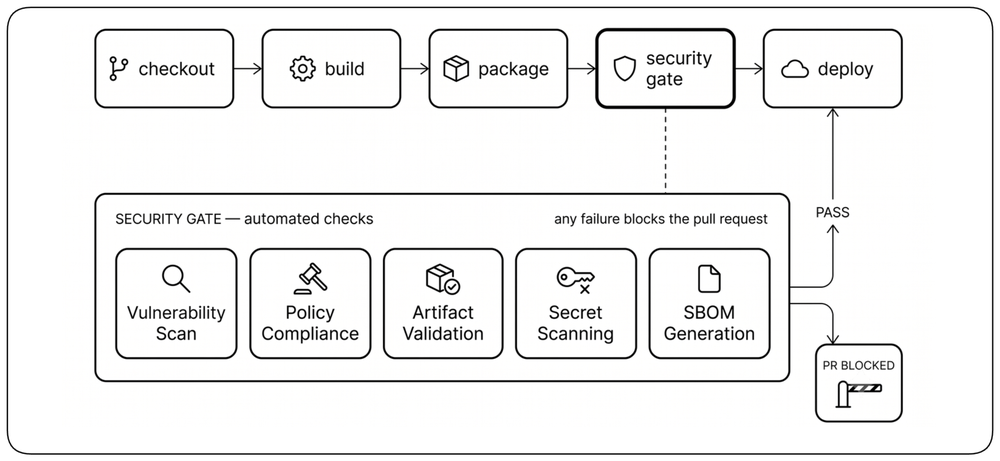
Supply chain security begins in the CI pipeline. !!Every change entering production passes through automated validation gates!! — SBOM generation, vulnerability scanning, policy compliance, artifact validation — and any failure blocks the pull request before it ever reaches production. Treating security as a build-time quality gate, alongside tests, is what makes it cheap: issues are caught when they are still one line of code, not one incident.
Trust the Build, Not the Developer [Trust the Build] {1}
!!Developers produce source code; the pipeline produces software!!. What runs in production is never what a developer built on their laptop — it is what the pipeline rebuilt from that source, then signed, scanned, and validated. This shift is what makes provenance, attestations, and reproducible builds meaningful: the artifact carries proof of where it came from and how it was made, independent of any individual's machine. As AI-generated code and third-party contributions become the norm, the trust boundary moves from the human writing the code to the automated system that transforms it.
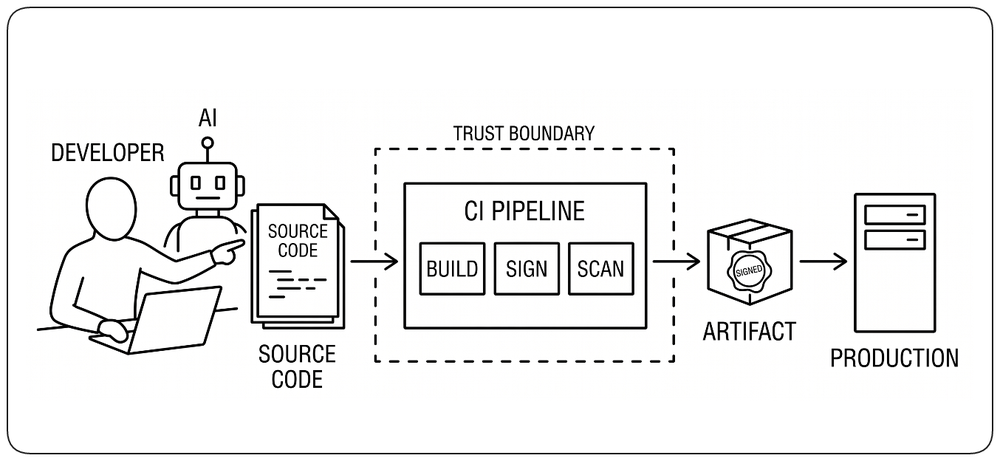
No Side Doors: The Pipeline Is the Only Path to Production [No Side Doors] {1}
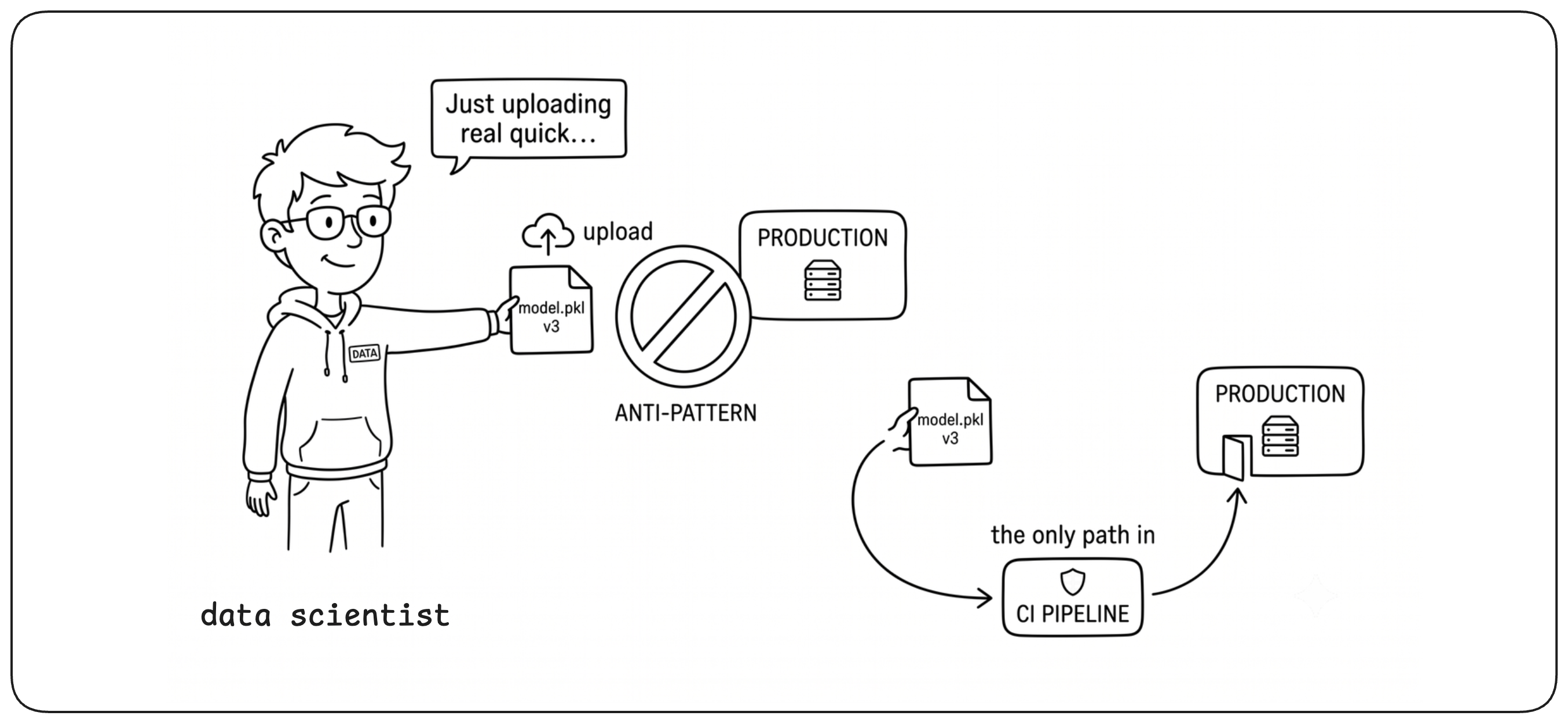
A control gate is only as strong as its ability to be the only gate. !!Every artifact that reaches production must be pinned to an exact version and travel through the CI pipeline!! — code, configuration, container images, machine-learning models, datasets, feature flags, everything. Nothing floating, nothing "latest", nothing hand-carried. A single bypass invalidates every gate: one manual upload to a bucket, one hand-edited manifest, one "quick fix" pushed directly to a registry, and the whole chain of scans, SBOMs, policies, and secret detection becomes optional. Production trusts only the pipeline identity.
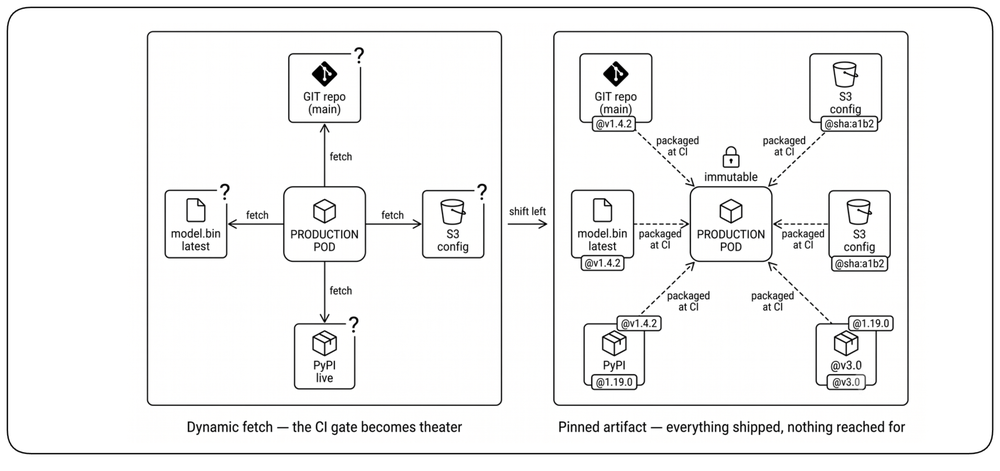
No Dynamic Fetches at Runtime [No Runtime Fetch] {1}
Applications themselves must not bypass the gate either. !!Production must fetch nothing dynamically at runtime, because any code pulled in after the CI scan is code no one has vetted!! — no pip install at container startup, no model download from an external registry. If allowed, these become side doors of their own: unscanned content flowing into production, disguised as a runtime detail. Everything the workload needs is baked into the deployed artifact at CI time, so the artifact scanned at the gate is the exact artifact that runs — otherwise the CI gate becomes theater, and production quietly rewrites itself from a source no one scanned.
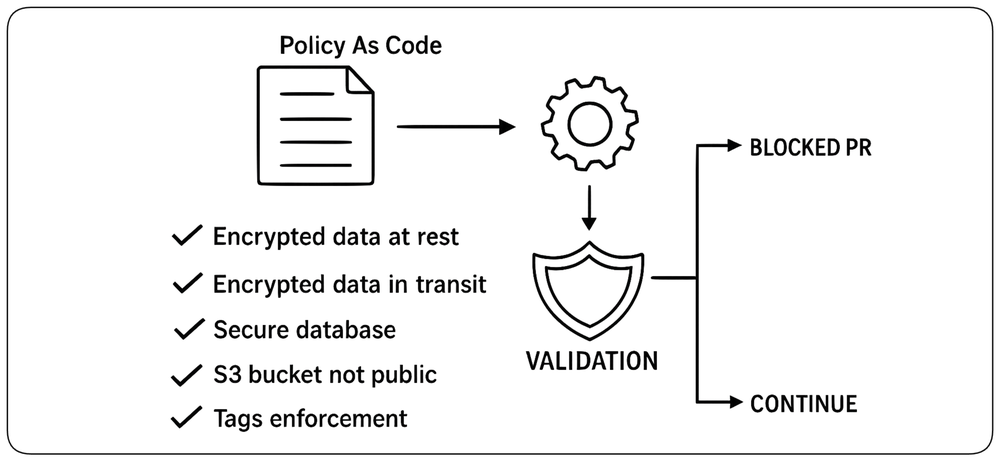
Policy-as-Code: Automated Governance Enforcement [Policy Enforcement]
If the pipeline is the only gate, the question becomes: what does it check? !!Policy-as-code turns governance from documentation into executable rules!!. Encryption required, storage never public, resources tagged for ownership, data residency respected — every rule lives in the CI pipeline as code, and any violation blocks the deployment automatically. Compliance becomes built-in rather than bolted on.
Control Your External Dependencies [Artifact Control]
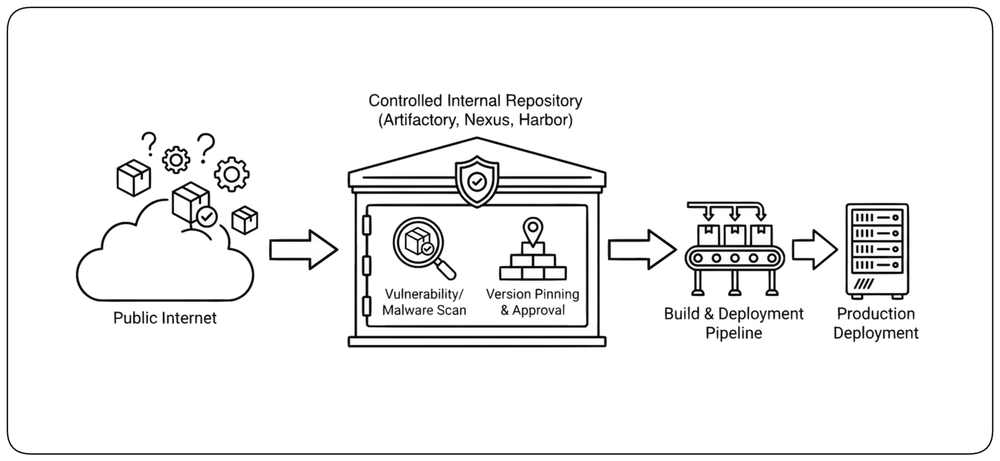
External packages, libraries, and container images must never enter the build pipeline directly from the public Internet. !!Public repositories are sources of software, not sources of trust!!. They flow through a controlled internal repository (Artifactory, Nexus, Harbor) that scans every artifact for vulnerabilities and malware, pins versions to approved releases, and provides a single control point to block or patch a CVE across every project the moment it is disclosed.
Third-Party Component Approval [Component Approval]
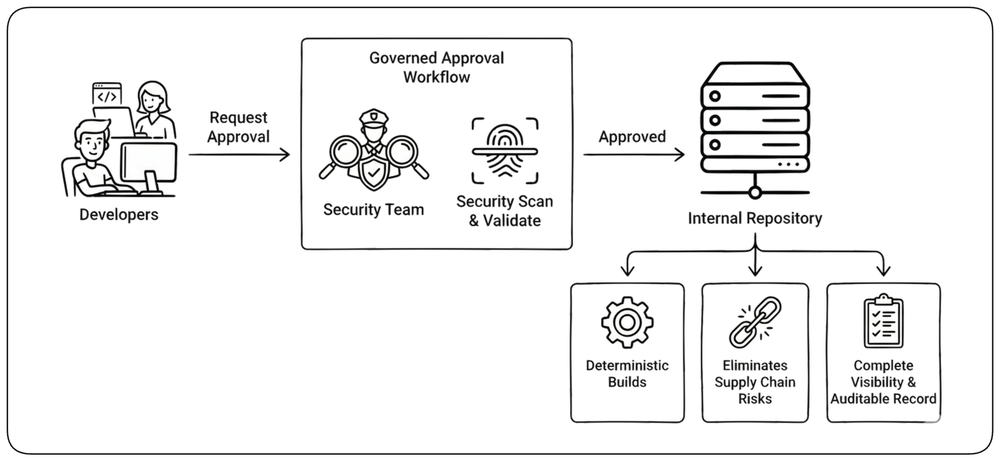
!!Approved components enter an internal trusted repository!! — only from there can they reach the build. Requests for a new external library trigger a coordinated legal, security, and compliance review; once approved, the component is mirrored in and becomes available to every team. Everything else stays out.
Automated Dependency Monitoring and Patching [Dependency Management]
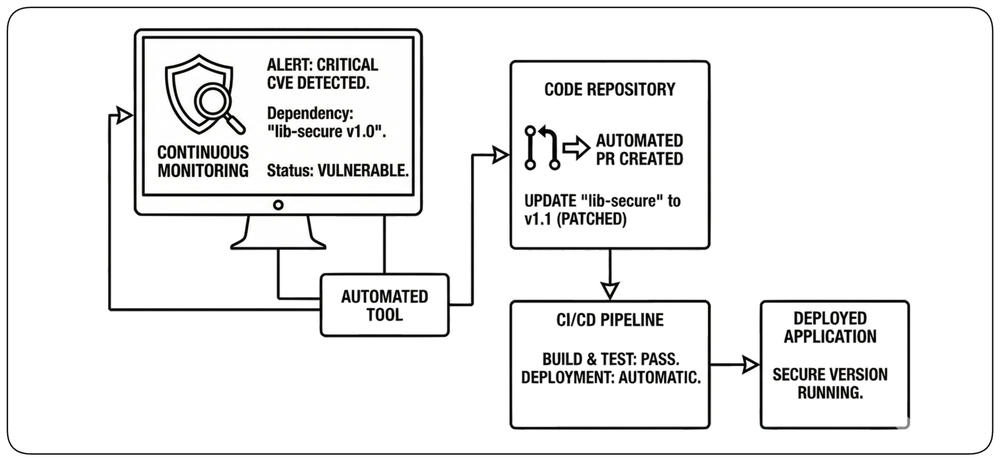
A library safe today may have a critical CVE tomorrow. !!Approved does not mean approved forever!! — automated tools continuously watch deployed dependencies, cross-reference them against the SBOM repository, and open pull requests with patched versions the moment they become available. What used to require a manual codebase audit becomes a query, turning dependency management from reactive firefighting into automated hygiene.
Vulnerability Management [Vulnerability Management]
Vulnerabilities are inevitable; leaving them unaddressed is optional. Where inventory sees what exists and supply chain filters what enters, vulnerability management shrinks the window between a weakness being discovered and it being eliminated.
You Can't Fix What You Can't See [Discovery] {1}
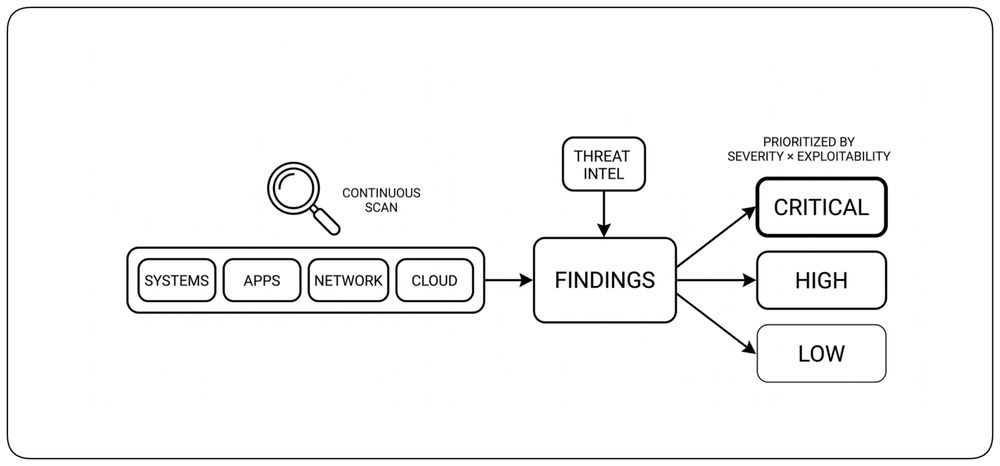
Vulnerability management starts with continuous visibility across every asset — systems, applications, dependencies, configurations. !!Scanners are an implementation; the principle is that the search for weaknesses never stops!!. Assets change, dependencies release new versions, and threat intelligence uncovers exploits in components that were safe last week. A blind spot in the inventory is a vulnerability by itself: the flaw you didn't see is the one that will be exploited.
Prioritize Risk, Not CVSS [Risk-Based Prioritization] {1}
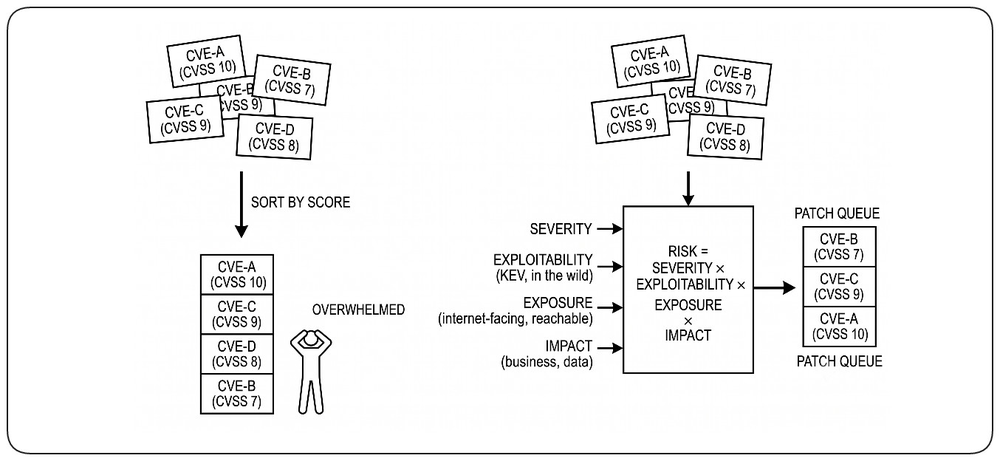
!!Severity is a signal; risk is a decision!!. A CVSS 10 in a component your service never calls is often less urgent than a CVSS 7 already being exploited against an internet-facing endpoint. Real risk multiplies severity by exploitability, exposure, and business impact — patching by score alone drowns teams in noise while leaving the truly exploitable holes open. Order the queue by likelihood-of-exploitation × blast-radius, not by CVSS.
Speed Matters More Than Perfection [Remediation] {1}
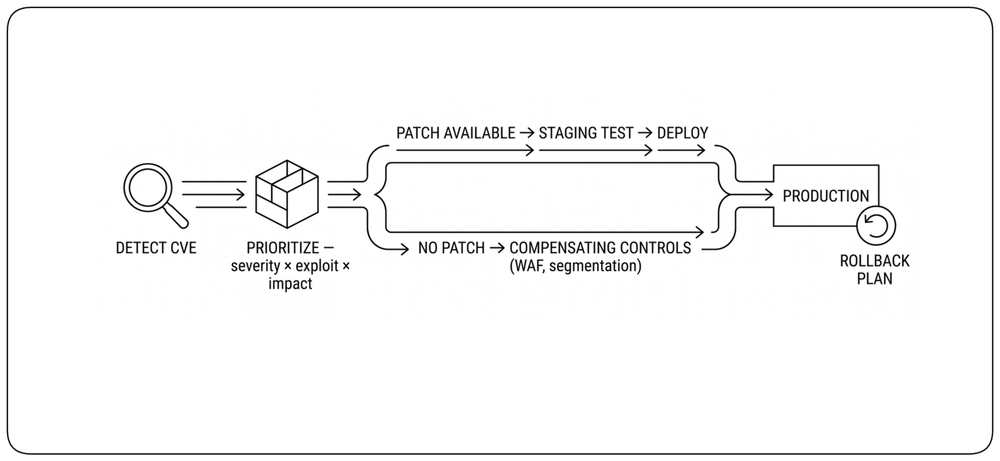
The danger is not having a vulnerability; it is leaving it exploitable for weeks. !!Mean Time To Remediation is the metric that matters!!. A partial mitigation deployed in hours — a WAF rule, an access restriction, a network segment — beats a perfect patch that ships in a month. Automated patch pipelines, rollback plans, and compensating controls exist to compress the window between disclosure and neutralization. Fix fast, then fix well.
Assume New Vulnerabilities Will Be Discovered Tomorrow [Emerging Vulnerabilities] {1}
!!Every dependency you trust today can become critical tomorrow: yesterday's safe component is tomorrow's zero-day, so the real question is not whether but how fast you can find and cut it out!!. Log4Shell, XZ Utils, Heartbleed — none of these were "risky" the day before their CVE dropped. This is why the SBOM, continuous monitoring, and fast remediation are not optional infrastructure: when a new CVE lands at 2am, the question is not "are we affected?" but "how quickly can we prove where it runs and cut it out?".
Never Trust Your Assumptions — Validate Your Defenses [Validation]
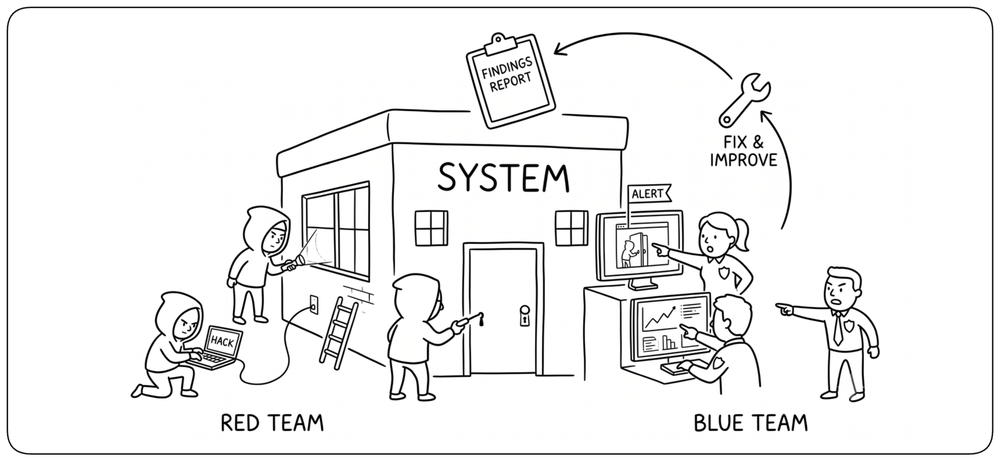
Pentests are not there to find "one more bug". !!They verify that the controls you designed actually work — together, under attack, in the real system!!. A firewall rule, an IAM policy, a WAF signature, and a monitoring alert can each be correct in isolation and still leave a path through when combined. Red team exercises validate the system, not the components — the reality check on every assumption baked into the architecture.
Network and Perimeter Security [Network & Perimeter]
Every attacker who lands inside the network wants to move sideways. This section is about two complementary defenses: !!segmenting the interior so a breach cannot spread!!, and !!controlling the frontier so only authorized traffic crosses in or out!!.
Network Segmentation [Network Segmentation] {1}
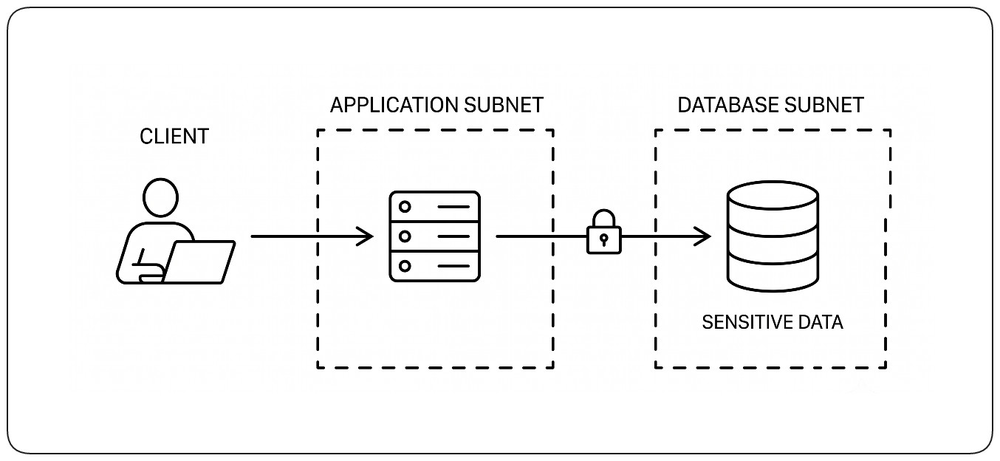
Network segmentation is one of the most effective ways to limit the spread of an attack once an entry point has been compromised. !!Dividing a network into isolated zones denies attackers free movement inside the environment!! — VPCs, subnets, and security groups each enforce their own access rules. A breach in the application zone stops there; the database zone, in its own segment, remains untouched. Combined with strong ingress and egress controls, segmentation dramatically reduces the blast radius of any single compromise.
Hard Isolation vs Logical Isolation [Hard vs Logical]
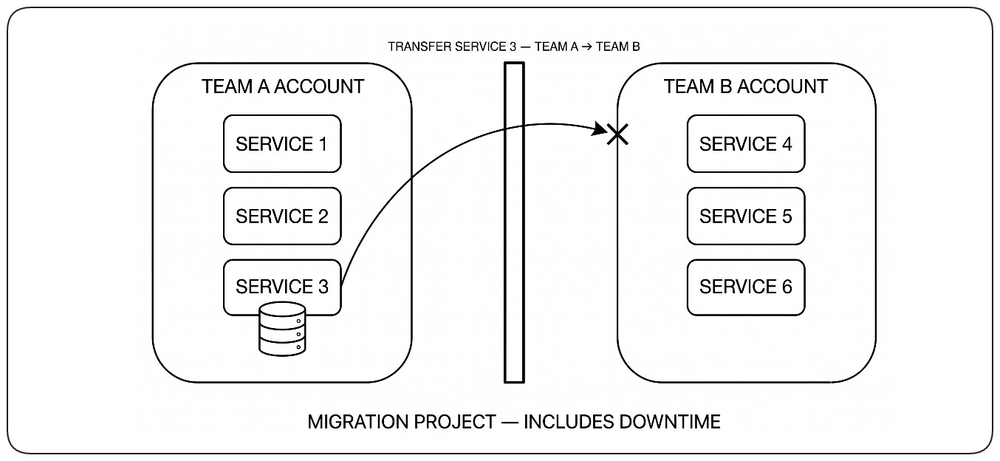
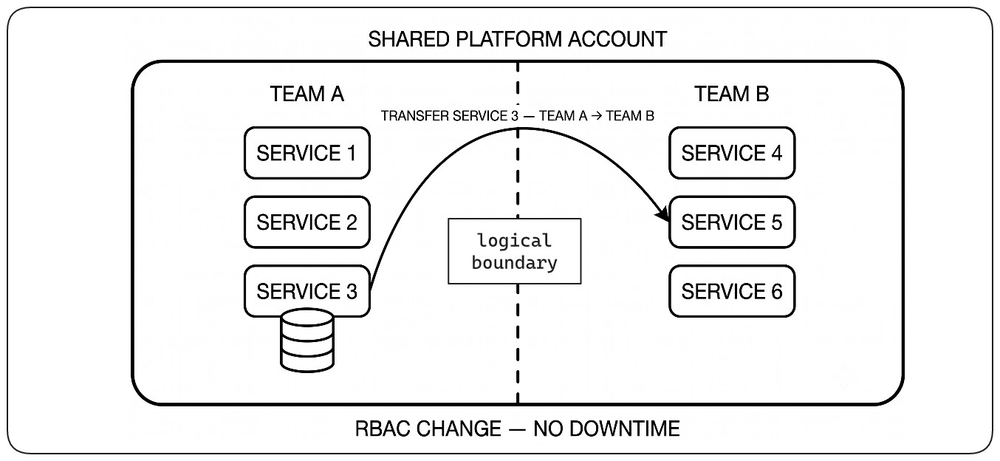
Every architecture eventually faces the same design decision: should this boundary be enforced by infrastructure or by configuration? !!Hard isolation places the boundary in the infrastructure itself!! — separate accounts, tenants, networks, or clusters — so it remains effective even if a configuration is wrong. !!Logical isolation places the boundary in software!! — RBAC, IAM policies, tags, namespaces — making it more flexible, but only as strong as the rules that enforce it. Hard isolation favors containment. Logical isolation favors flexibility. Good architecture is knowing where each belongs.
Default to Logical Isolation [Default Logical]
!!Logical isolation should be the default!! because it preserves flexibility, reduces operational cost, and makes systems easier to evolve. Its weakness is that it depends on configuration, so it must be reinforced by automated tests, policy checks, and continuous validation. Hard isolation should be introduced only when the risk of a configuration error justifies the additional complexity and cost — tenant separation, regulated data, blast-radius-critical workloads. Start soft, harden where the risk pays for it.
Controlling Inbound Traffic [Ingress Control] {1}
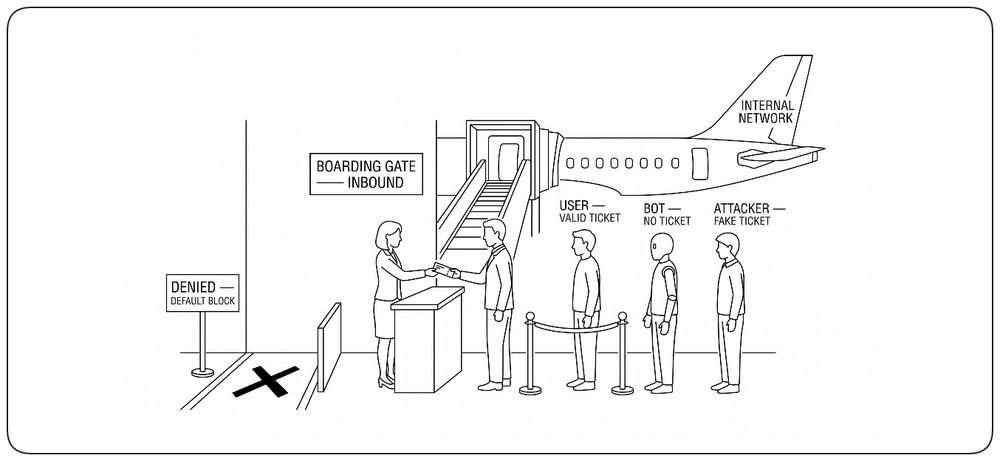
!!Inbound traffic should be denied by default and allowed only through explicit, controlled entry points!!. Each exposed service should accept only the protocols, sources, and identities it requires. Firewalls, load balancers, API gateways, WAFs, authentication, rate limits, and DDoS protection work together to reduce the attack surface and block malicious traffic before it reaches the application. Every allowed path should be intentional, observable, and continuously reviewed.
Controlling Outbound Traffic [Egress Control]
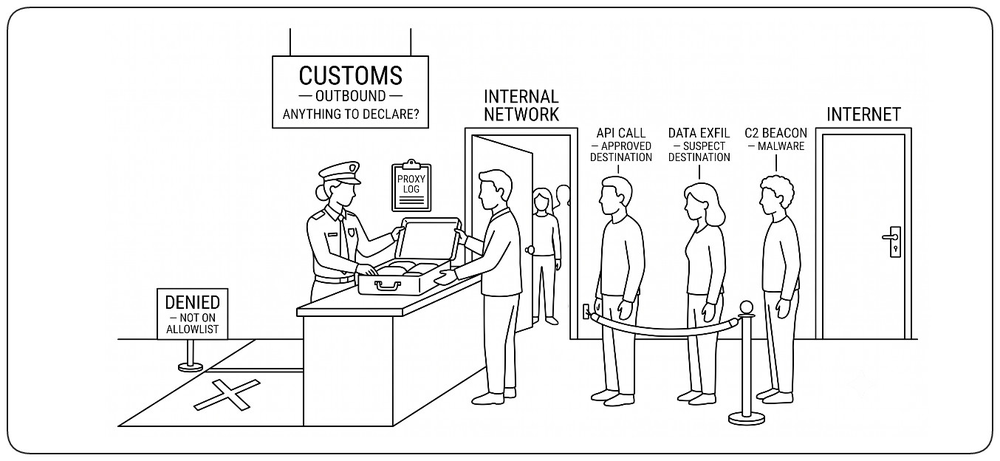
Nothing should leave the system by default. Outbound connections must be explicitly allowed only to approved destinations, through controlled paths. Egress firewalls, proxies, allowlists, and monitoring prevent compromised workloads from exfiltrating data, contacting command-and-control servers, or downloading malicious content. Every permitted connection should be necessary, observable, and easy to revoke.
Secure Remote Access with VPN [VPN]
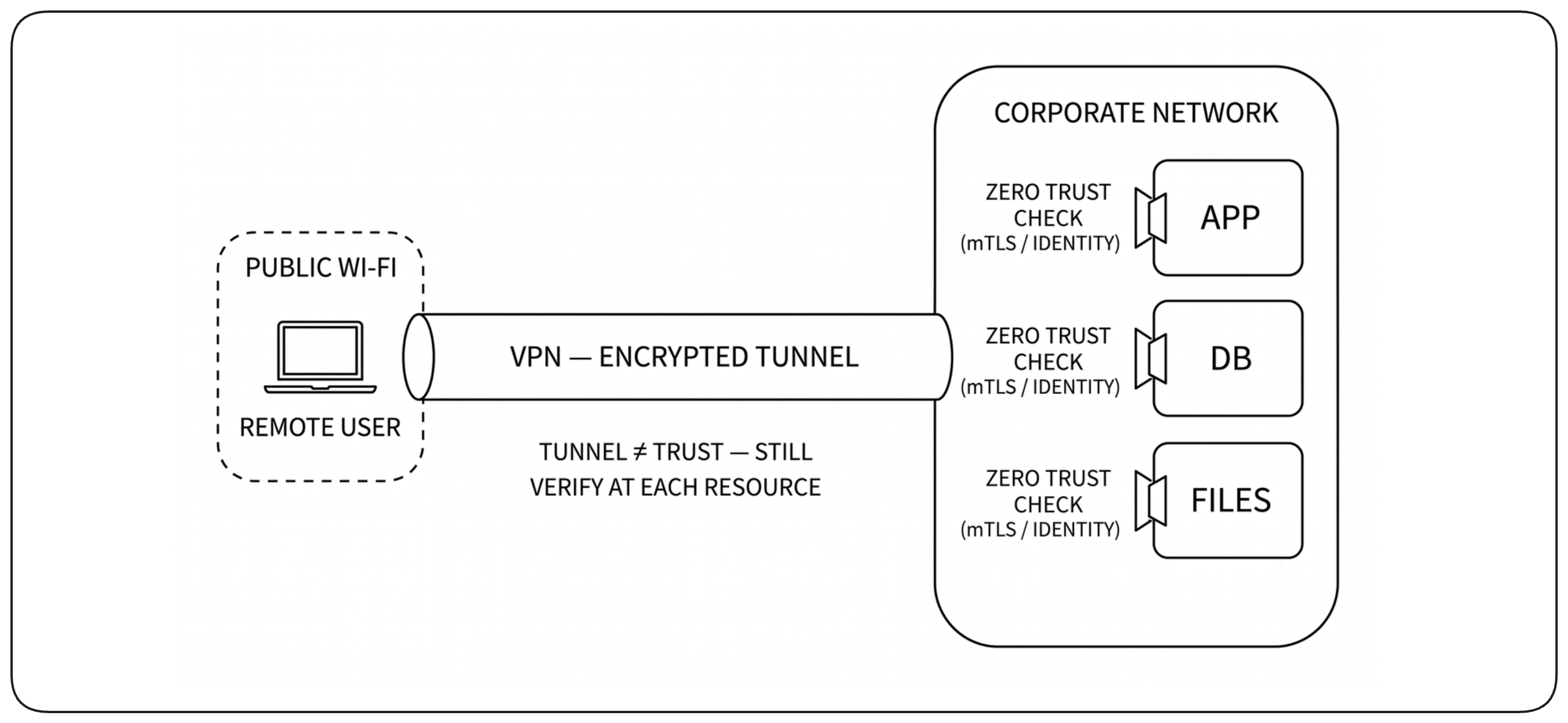
A Virtual Private Network (VPN) creates an encrypted tunnel between a remote user or site and an internal network. It effectively extends the security perimeter beyond the physical network, allowing internal resources to be reached without exposing them directly to the public Internet. !!But extending the perimeter does not establish trust!!: access must still be restricted through identity, least privilege, and resource-level authorization.
Environment Isolation [Environment Isolation]
Why Development Must Never Reach Production [Dev Prod Separation] {1}
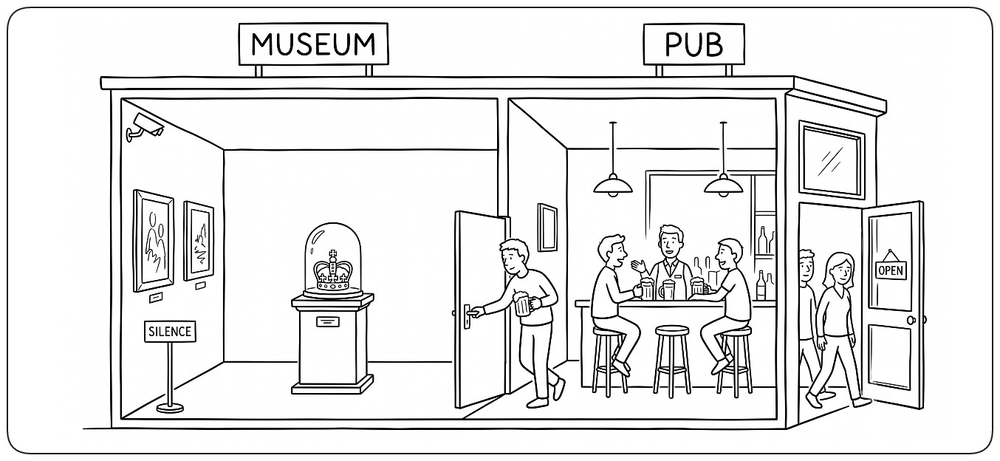
Development and production belong to different trust zones. Production operates under stricter controls, monitoring, patching, and change-management rules, while development contains experimental code, broader permissions, debugging tools, and frequent human access. A direct Dev-to-Prod path creates both a route for attackers and a route for accidental changes. !!Lower-trust environments must never be able to influence production directly.!!
Time-Bound Access to Production [Time-Bound Access] {1}
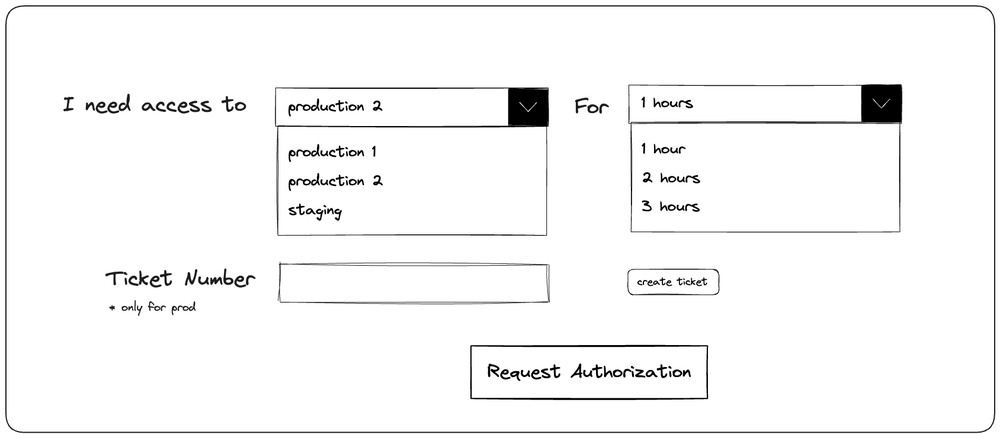
Human access to production must never be permanent. !!Engineers request access for a specific task, for a specific duration, and access disappears when the window closes—no manual revocation, no forgotten permissions.!! A just-in-time access system grants temporary elevated rights against a ticket or approval, scoped to the environment and bounded in time (minutes or hours, not days). This keeps day-to-day work outside production, makes every entry auditable, and shrinks the blast radius of any compromised account to the duration of an active window.
Pull-Based Deployments Are More Secure [Pull Architecture]
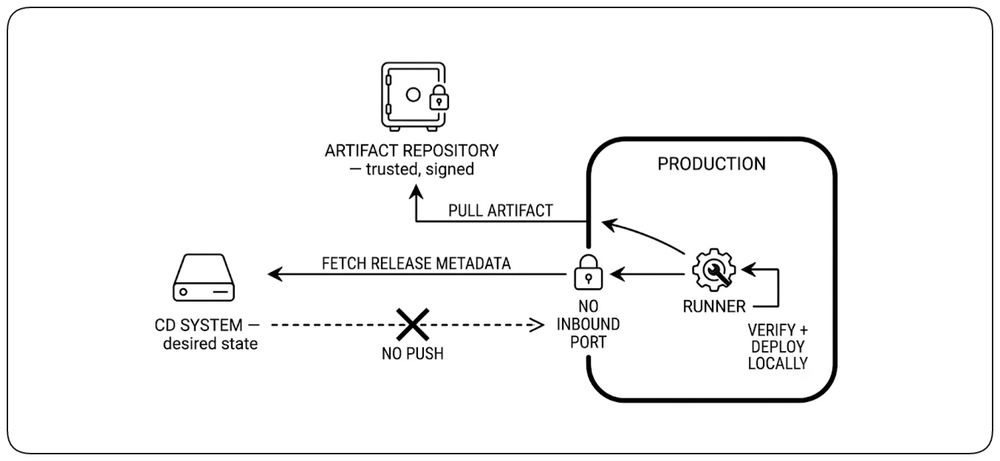
Push-based deployment requires production to expose an inbound control path to an external deployment system. That path becomes part of the attack surface: it must be authenticated, authorized, monitored, and protected. Pull-based deployment avoids this exposure by keeping production closed to inbound control. A runner inside the environment retrieves the desired release metadata from the CD system, pulls the approved artifact from the trusted repository, verifies it, and deploys it locally. The CD system defines the desired state, but the environment initiates every connection and applies the change. Pull-based deployment should be the default when practical.
Secure Gateway Pattern [Secure Gateway]
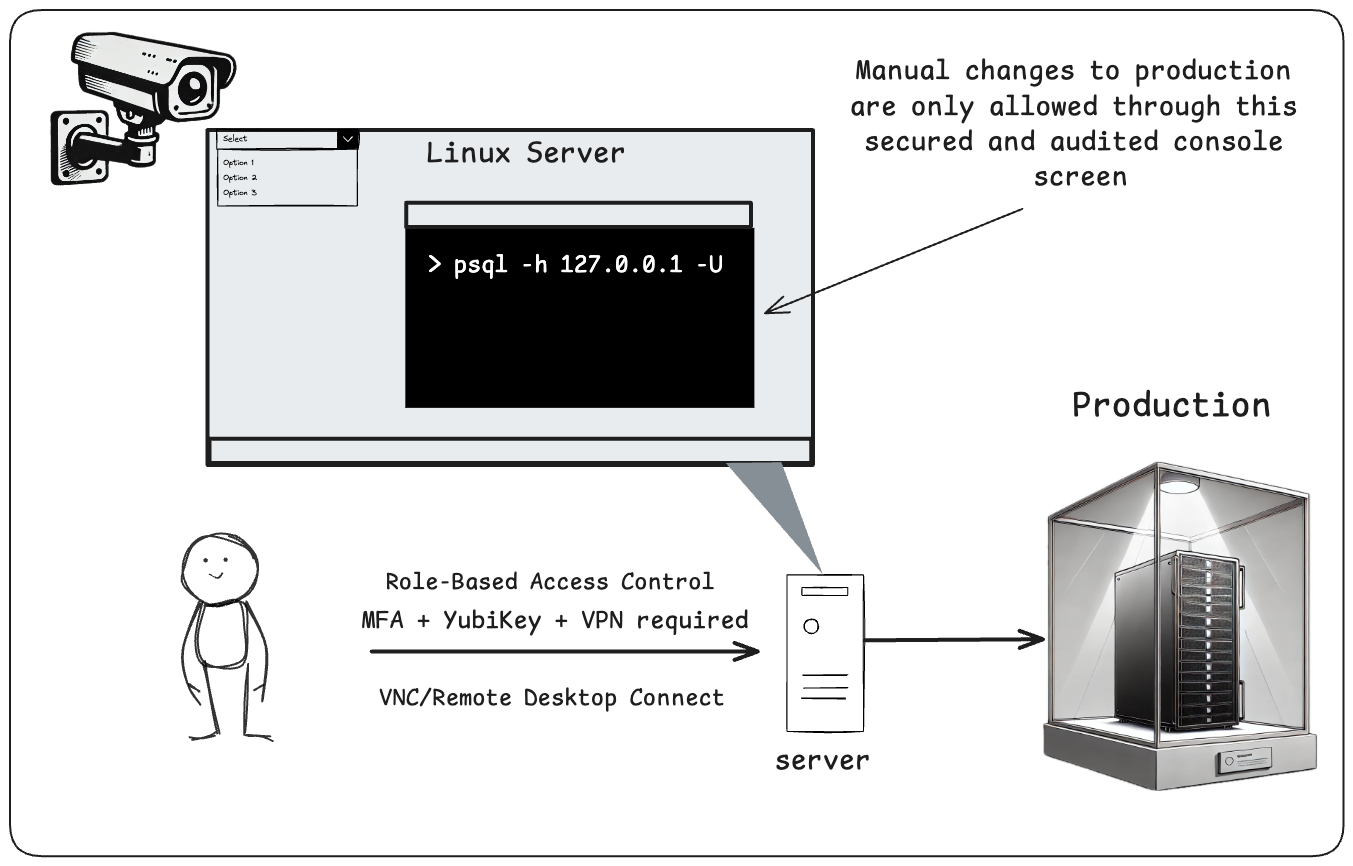
In a Secure Gateway, users remotely connect to a server through a VNC or remote desktop interface to access a secured console where all production changes are executed. This setup ensures controlled access, allowing critical tasks to be performed efficiently while minimizing risks.
The system enforces best practices such as role-based access control (RBAC) and the principle of least privilege, ensuring users only have the permissions necessary for their tasks. Authentication is strengthened through MFA, YubiKey, and VPN access, ensuring only authorized personnel gain access.
Temporary permissions are granted on demand, and all actions performed within the console are comprehensively logged to maintain traceability and accountability. Sensitive operations, such as copy-paste actions, are actively monitored to reduce the risk of data leakage or accidental errors. This approach ensures operational security, balancing flexibility with robust safeguards to protect production environments from misuse and human error.
Safe Proxies Pattern [Safe Proxies] {2}
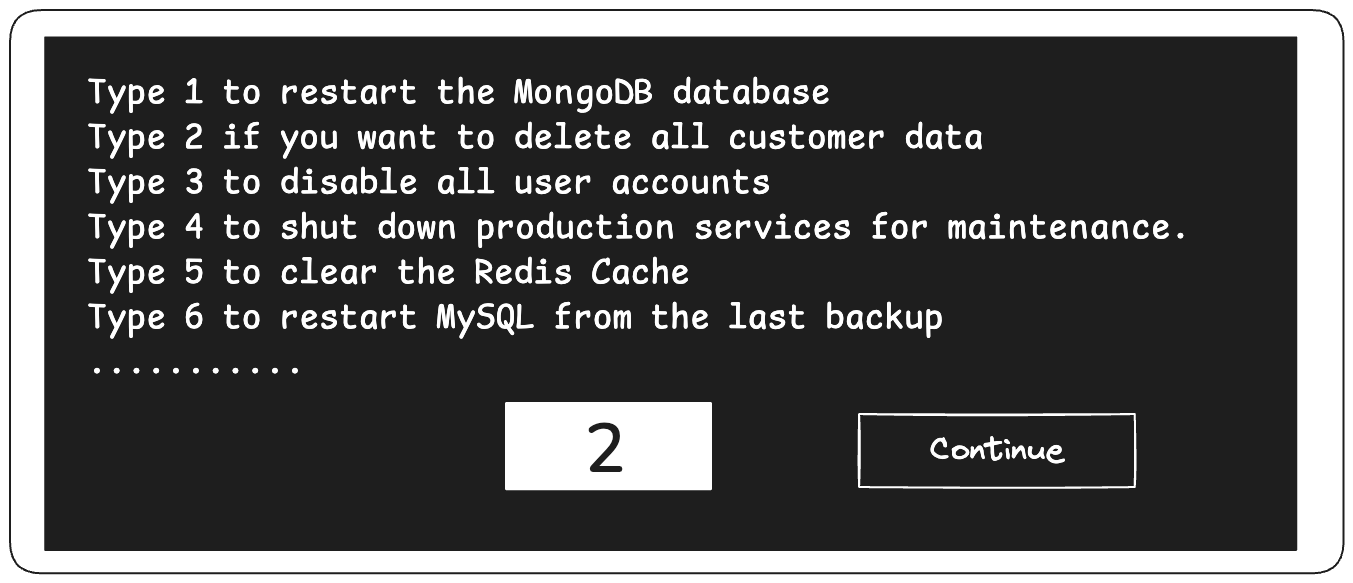
Another alternative is to use safe proxies as a control layer between users and production systems to limit direct access. Instead of granting unrestricted permissions, proxies allow only specific, pre-approved operations, ensuring that every action—whether routine or emergency—is logged and monitored. This approach minimizes the risk of mistakes, malicious activities, or unauthorized access.
By enforcing strict policies and permissions through safe proxies, organizations can secure production environments more effectively. This setup provides an additional layer of control and reliability without requiring significant changes to existing systems, ensuring both operational efficiency and security.
External Material
Breakglass Mechanism [Breakglass] {1}
Normal production access is heavily constrained—least privilege, approval workflows, safe proxies, no direct console. But during a critical outage or an urgent incident, an engineer may need elevated privileges that the standard path cannot grant in time. A breakglass mechanism provides that path—an exceptional route into production reserved for emergencies. !!Emergency access must remain possible, but it must be exceptional, temporary, visible, and fully accountable.!!
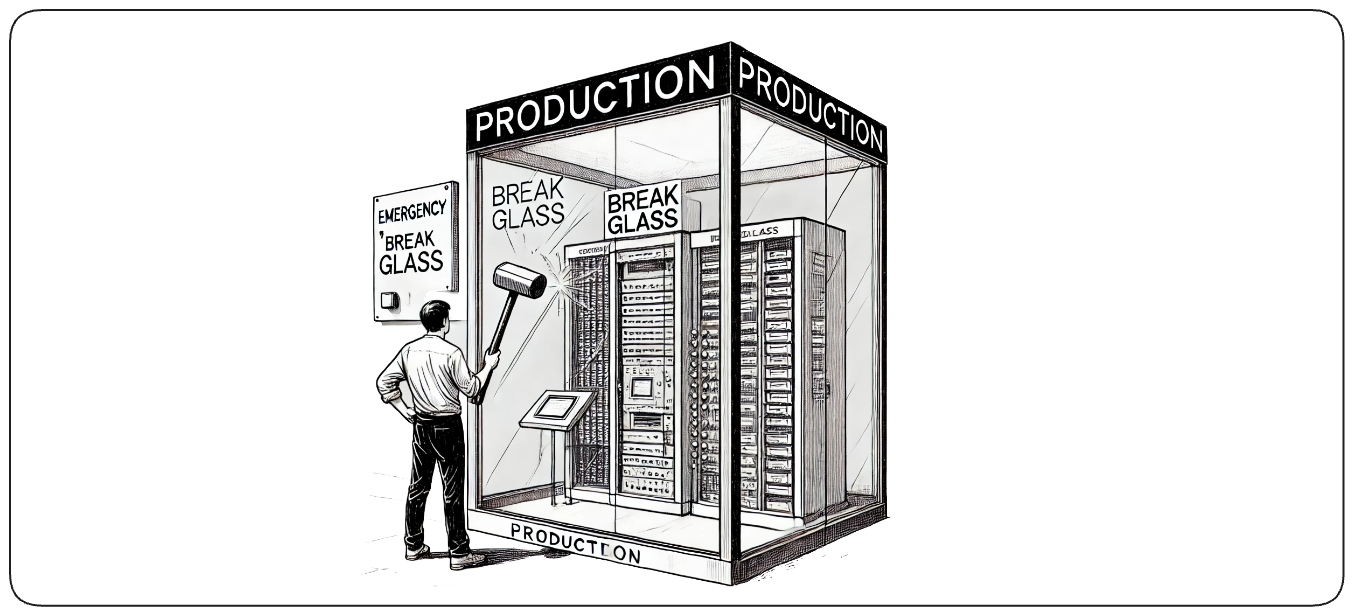
Breakglass access grants temporarily elevated privileges, requires explicit justification or approval at the moment of use, expires automatically after a short window, and produces comprehensive logging and real-time alerting so that every emergency action is reviewed after the fact. Post-incident review of every breakglass use is mandatory, and the mechanism itself must be tested regularly to ensure it works when actually needed. Above all, breakglass accounts must never become a normal administrative path—the moment engineers reach for them routinely, the mechanism has failed as a control.
Secure Development Practices [Developer Security]
Most vulnerabilities are introduced during development, long before an attacker ever probes the system. A missing input check, a swallowed exception, a credential hard-coded "for now" — each is a decision made in seconds that will outlive the developer who wrote it. The principles that follow are not tools or checklists but the architectural habits that make secure code the default: design with the attacker in mind, distrust every input, fail toward denial, keep secrets out of code, standardize what individual judgment gets wrong, and have someone else look.
Secure by Design [Secure by Design] {1}
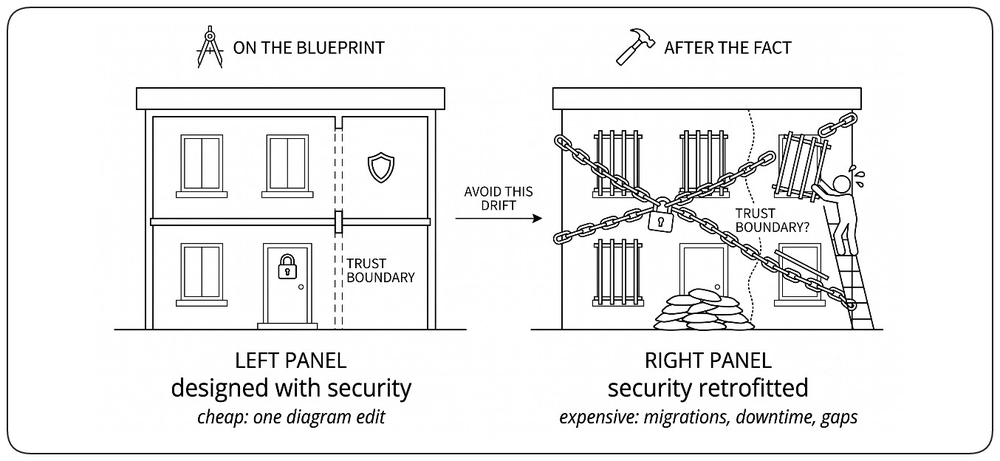
!!Security is a design decision, not an implementation detail!!. Retrofitting security into a system that was drawn without it is expensive and rarely complete — trust boundaries drift, privileges accumulate, and the attack surface grows past anyone's mental model. Threat modeling, least privilege, minimized attack surface, and explicit trust boundaries belong on the whiteboard, not in the PR review. An architectural flaw caught during design costs a diagram edit; caught in production, it costs a migration.
Never Trust Input [Never Trust Input] {1}
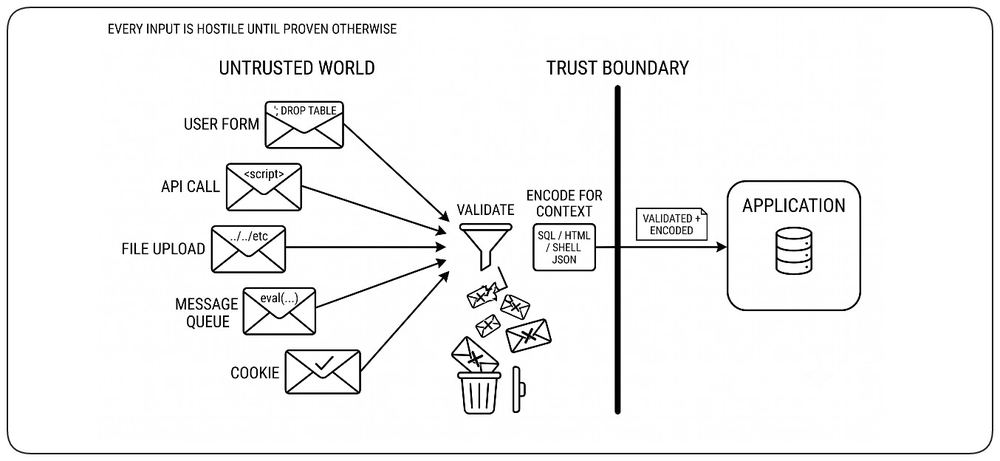
!!Every byte crossing a trust boundary is hostile until proven otherwise!!. The principle is not about user forms — it is about boundaries: an API response from another team, a message pulled off Kafka, a row read from an external database, a file dropped by a partner, an internal service call from a sibling system. Any data whose provenance you do not fully control can carry SQL injection, XSS, deserialization exploits, path traversal, or command injection. The defense is structural, not vigilant: validate at the boundary against a strict schema, encode for the exact context where the data will be used (SQL, HTML, shell, JSON), and use parameterized APIs that make injection syntactically impossible. The boundary is where the check happens, not the origin of the request.
Fail Securely [Fail Securely] {1}
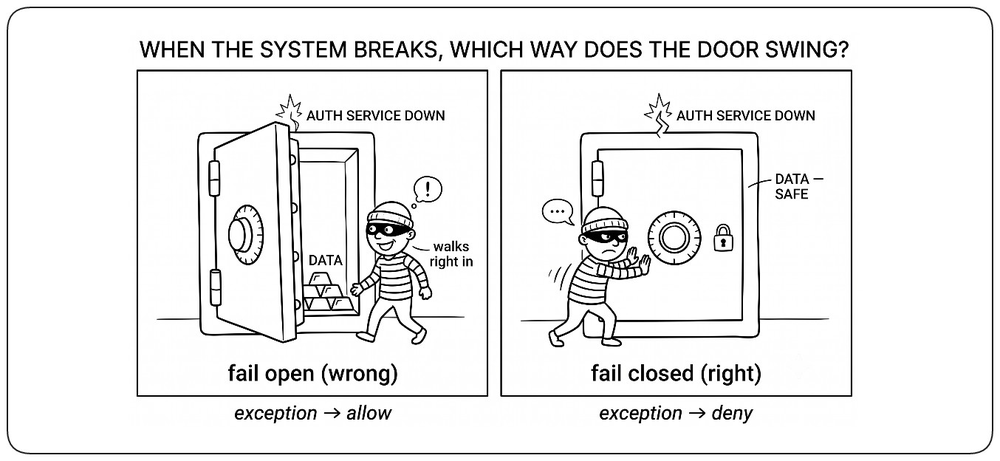
When code hits an unexpected state, !!the default must be to deny, not to allow!!. An uncaught exception in an authorization check should refuse the operation, not skip it. A timeout on a policy engine should block the request, not admit it. A missing feature flag should keep the door closed, not open. Attackers actively probe for these edges — malformed inputs, race conditions, network partitions — precisely because so many systems fail open by accident. The rule is structural: every code path that can throw, timeout, or return null must be examined for its failure mode, and the answer must always be "deny".
Secrets Are Not Configuration [Secrets Handling] {1}
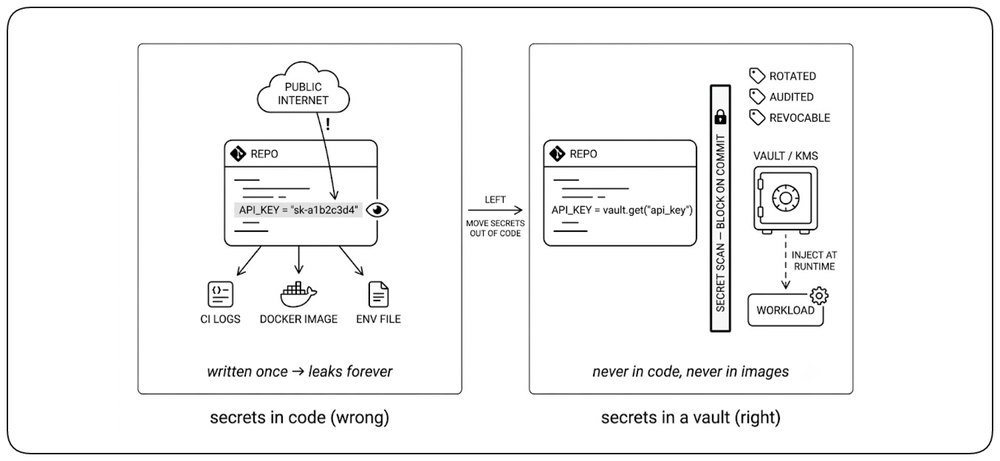
!!A password, API key, database credential, or signing key is not a config value — it is a capability, and once written to disk in plaintext it must be treated as compromised!!. Committing it to a repo, baking it into an image, or dropping it in an env file is the same as publishing it: once written to disk in plaintext, it must be treated as compromised. Secrets belong in a dedicated vault (KMS, Secrets Manager, HashiCorp Vault), injected into the workload at runtime, rotated on a schedule, and revoked instantly on compromise. And the pipeline must catch what the developer forgot — secret scanning on every commit turns a class of catastrophic mistakes into a blocked pull request.
Engineer Secure Paths, Not Secure Developers [Secure Paths] {1}
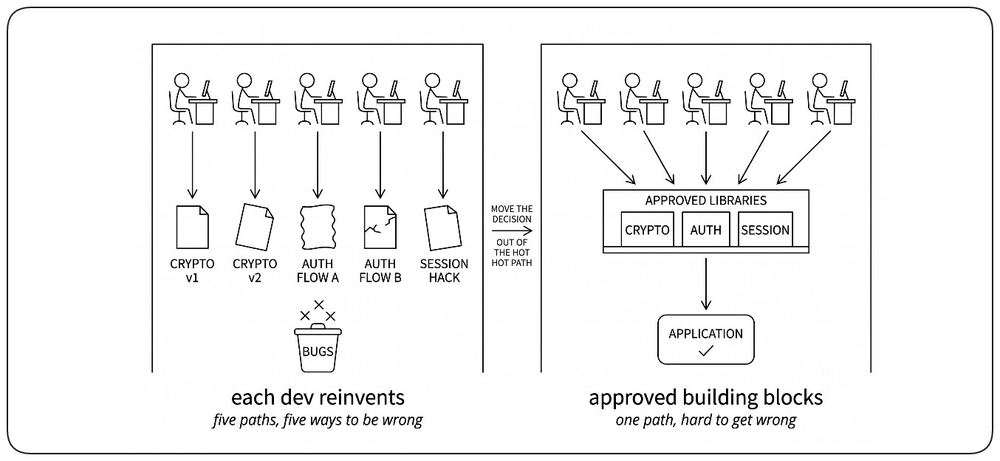
Every developer left to reinvent security will eventually get one decision wrong — and one is enough. The answer is not more training, more checklists, or more discipline. !!Make the secure path the easy path, and the insecure path harder to write than the right one!!. Approved cryptographic libraries replace hand-rolled crypto, sanctioned authentication frameworks replace bespoke session logic, safe query builders make raw SQL awkward, framework defaults handle escaping and CSRF automatically. The system does the remembering; the developer only has to reach for the nearest tool and land safely.
Independent Review [Independent Review]
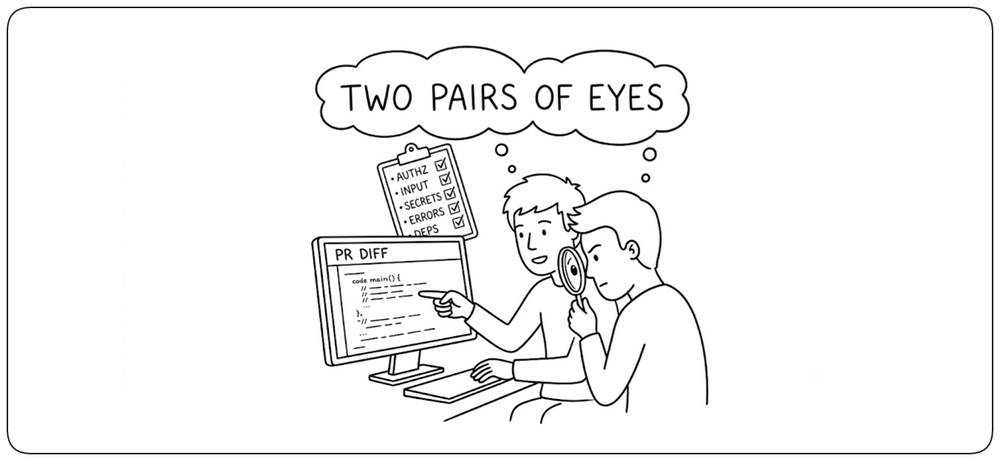
!!Secure software is produced by secure engineering systems, not by expecting developers to never make mistakes!!. Even with standards, safe libraries, and disciplined design, the author of a change is temporarily too close to it to see what's missing — a forgotten authorization check, a mishandled exception, an over-broad IAM policy, a dependency added without vetting. Peer review, protected branches, and required approvals turn this from a hope into a system property: the merge simply cannot happen without a second signature. It is the final expression of the entire chapter's philosophy — that security is a property of the system, not of the individual.
Security Incident Response [Security IR]
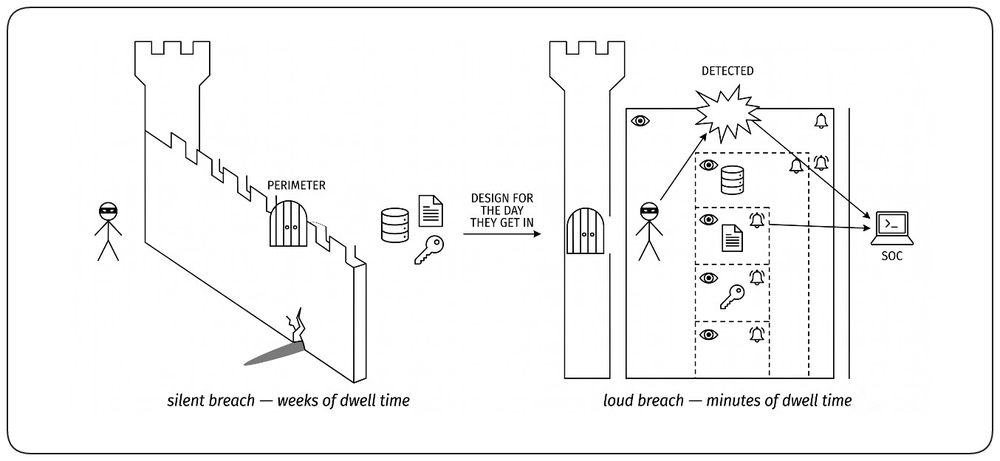
This is where every earlier principle of the chapter earns its return. Defense in Depth slowed the attacker down, Blast Radius kept the damage local, Segmentation stopped the propagation — and now Detection reveals the intrusion, Response contains it, and every incident becomes an architectural improvement. Operational incident response asks is the service working, and how do we restore it? Security incident response asks a fundamentally different set of questions: are we compromised, how far did the attacker get, what evidence must we preserve? The tools overlap — logs, alerts, dashboards — but the objectives do not. The principles that follow assume that prevention has already failed and focus on what the system must be designed to do the day an attacker is inside.
Assume Compromise [Assume Compromise] {1}
!!The question is not whether an attacker will get in, but when — and how long it takes you to notice!!. Some layer of defense will fail: a stolen credential, a leaked token, a zero-day, a compromised supplier. Once that assumption is accepted, the design shifts from "keep them out" to "detect them fast, limit their reach, evict them cleanly". Systems built on prevention alone fail silently. Systems built on assumed compromise fail loudly and recover.
Detect the Attacker, Not Just the Service [Threat Detection] {1}
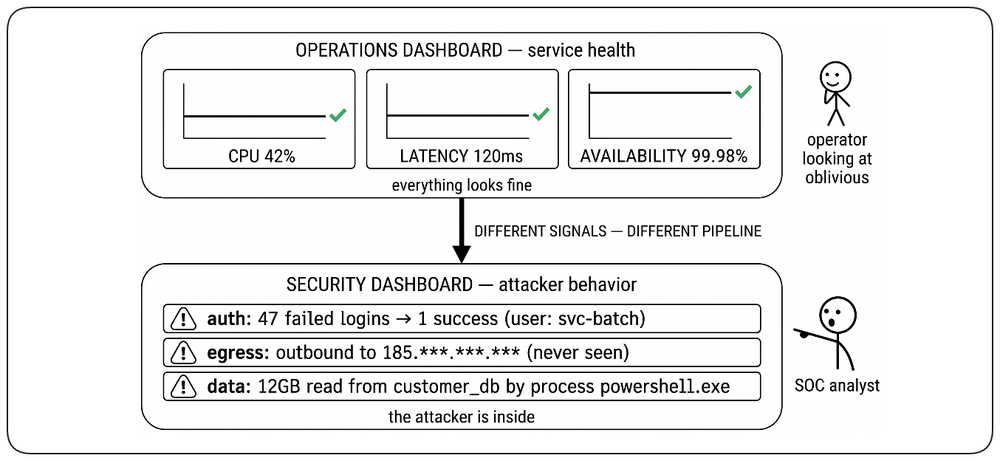
Operational monitoring watches whether the system is working. Security detection watches whether the system is being used against you. !!A healthy CPU graph can coexist with an attacker exfiltrating your customer database!!. Security telemetry looks for a different pattern: failed logins followed by a success, a service account authenticating from an unusual region, a workload calling an address it has never contacted, a process reading files it has no business reading. These signals rarely surface on availability dashboards — the system must be instrumented separately, with rules that model attacker behavior, not user experience.
The Audit Trail Must Outlive the Attacker [Tamper-Resistant Logs] {1}
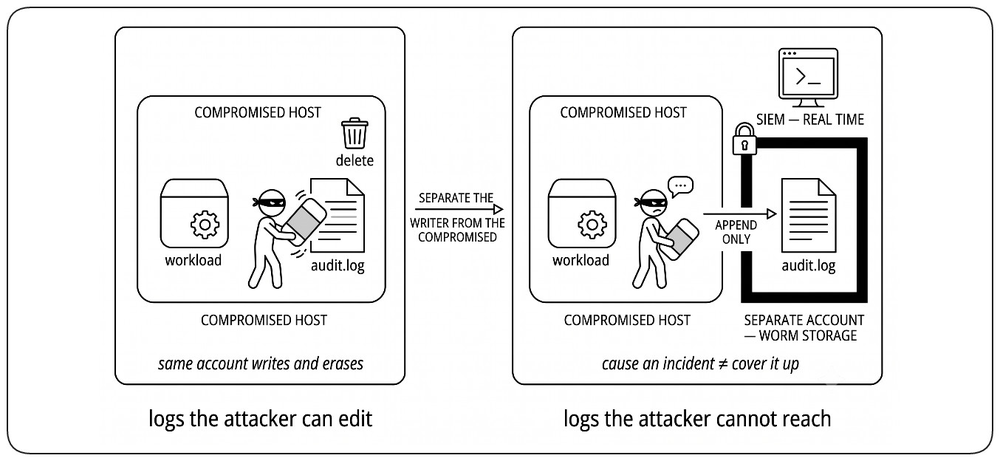
The first thing a competent attacker does after gaining access is erase their tracks. !!Audit logs an attacker can modify are evidence the attacker controls!!. Audit trails must be written to storage the compromised system cannot rewrite: an append-only bucket in another account, a WORM archive, a SIEM ingesting in near-real time. The rule is simple — the account with the ability to cause an incident must not have the ability to cover it up. Without that separation, every investigation eventually reads "logs unavailable".
Contain Before Recover [Contain First] {1}
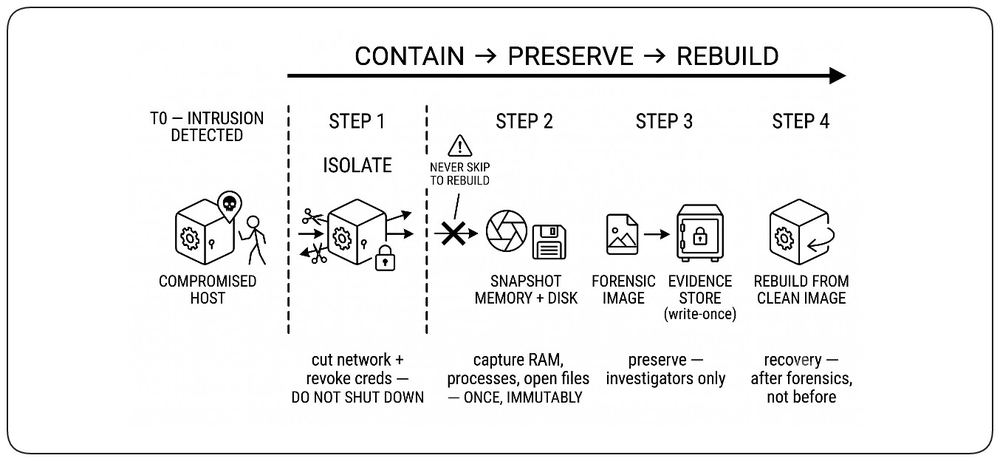
The operator's instinct is to restore: kill the process, wipe the machine, get the service healthy again. But recovery on a still-spreading intrusion is not recovery — it is the attacker burrowing deeper while defenders fix symptoms. !!The first objective is not to fix the system, it is to stop the attack from continuing!!. Isolate first: cut the network, revoke the credentials, block egress. Then snapshot memory and disk before the rebuild — destroying that evidence may permanently prevent understanding the initial compromise. Contain, preserve, recover — in that order, every time.
Every Incident Strengthens the System [Learn From Incidents] {1}
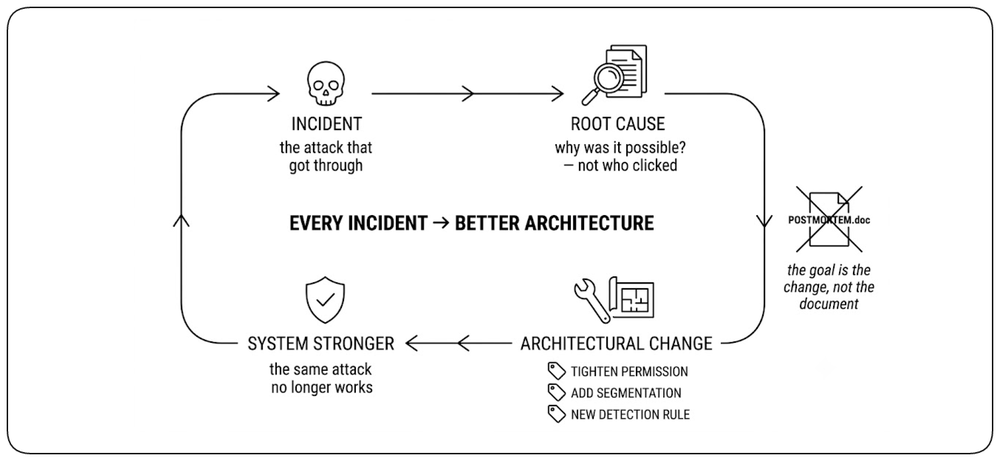
A security incident is expensive. The only way to make that cost pay for itself is to turn the incident back into architecture. !!A technical root cause is rarely the architectural root cause!!. "The attacker used a phishing email" or "a credential was leaked" stops one level too early — the useful answer is why was that credential powerful enough to matter, why was the blast radius that large, why did detection take so long. Every serious incident should tighten a permission, add a segmentation boundary, or remove a capability. An organization that runs the same investigation twice has not yet done the first one.