Design for Maintainability
Chapter Info
Calculating... Writing Progress: 70%
Maintainability represents the ease with which software systems can be modified to correct faults, improve performance, adapt to changing environments, or evolve to meet new requirements. In today's rapidly changing business landscape, maintainability is essential for survival. Systems that resist change become expensive liabilities, slowing development teams and increasing the risk of introducing bugs with every modification.
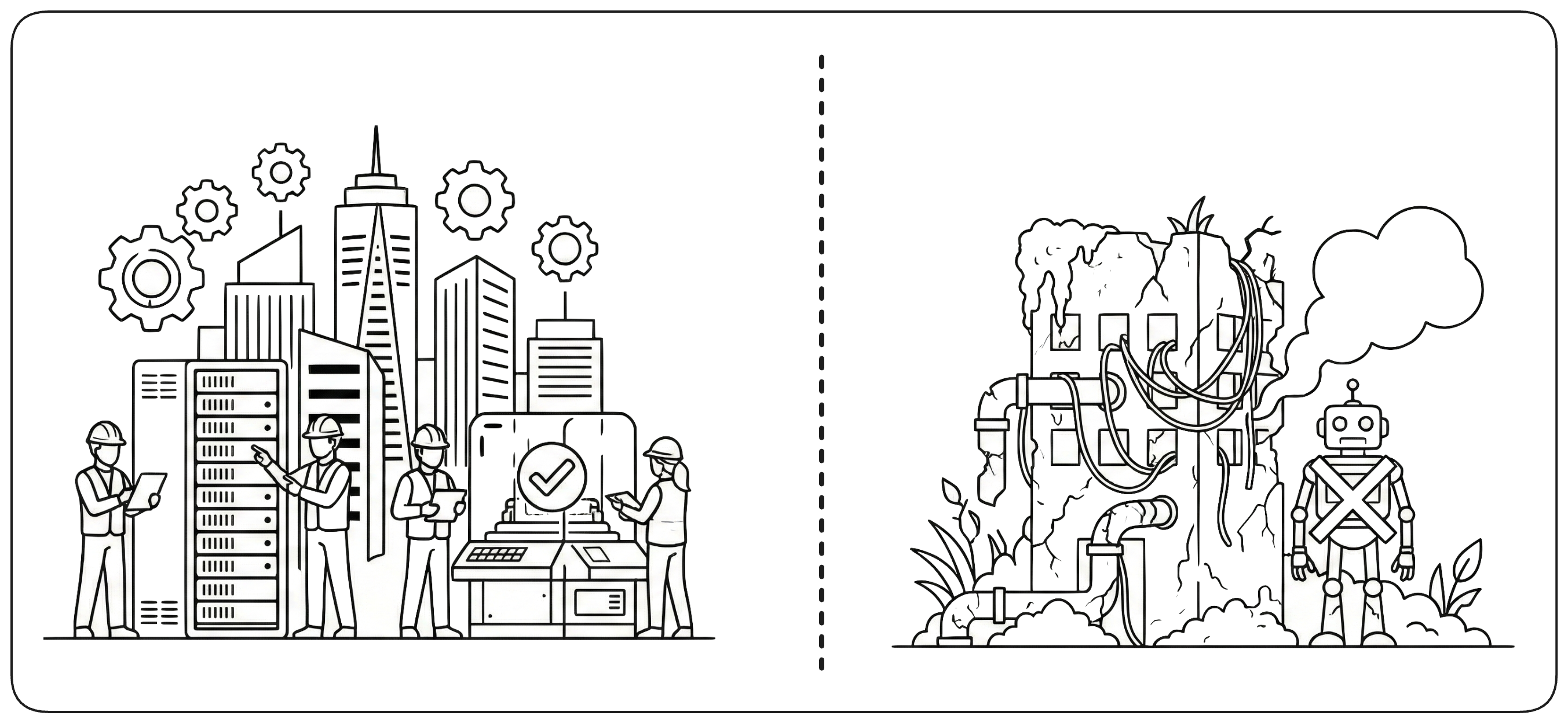
Well-maintained systems enable teams to respond quickly to market opportunities, fix production issues efficiently, and continuously improve product quality. Maintainability encompasses code readability, architectural clarity, comprehensive documentation, effective testing strategies, and the ability to evolve without breaking existing functionality. A maintainable system reduces the cost of change, enables faster feature delivery, and preserves team velocity as the codebase grows and matures over years.
The principles and practices in this chapter provide a foundation for building systems that remain productive assets rather than becoming technical debt. These concepts apply across all scales of software development, from small applications to large distributed systems, and remain relevant regardless of specific technologies or programming languages chosen.
Foundational Concepts [Foundations]
Code is Read More Than Written [Readability] {1}
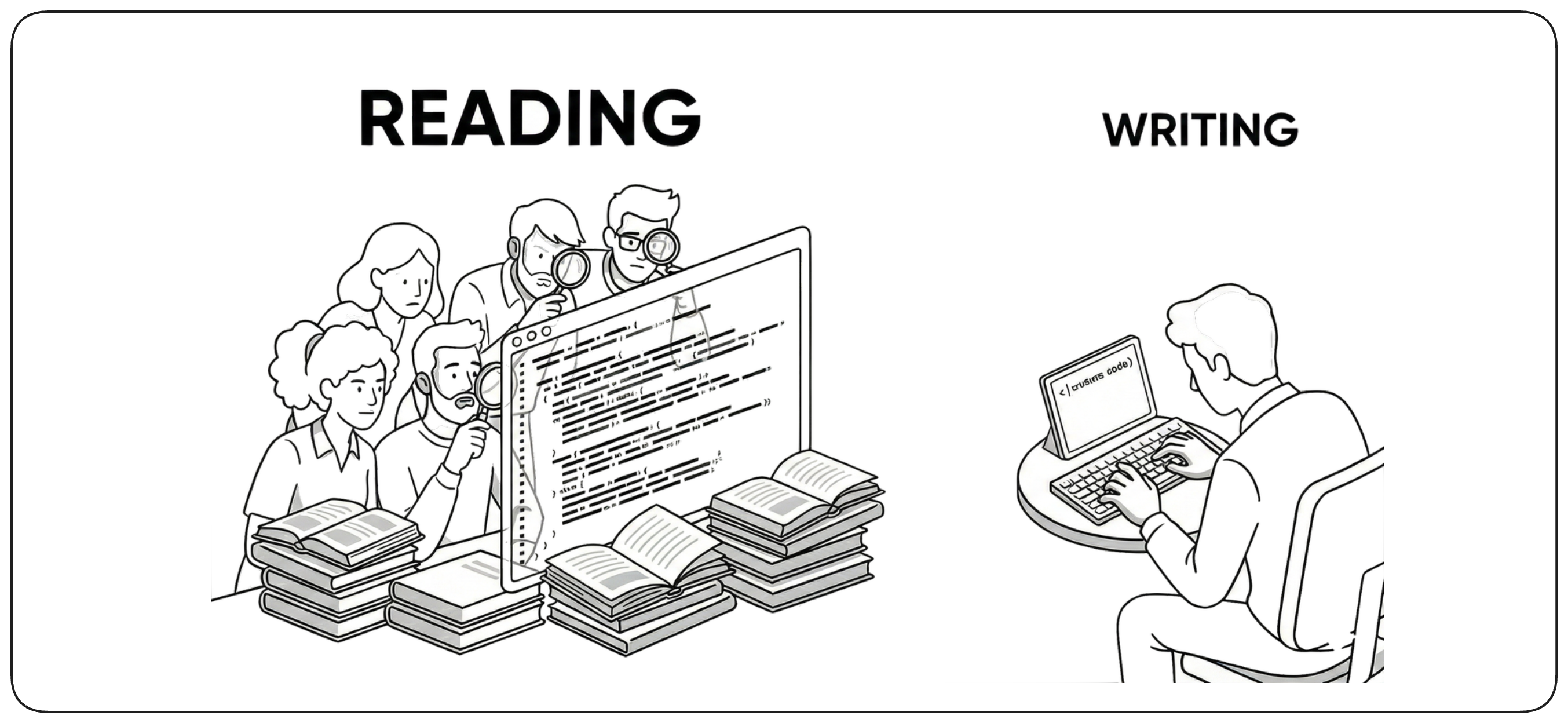
Every line of code is written once but read dozens or hundreds of times throughout its lifetime. Developers must read and comprehend existing code every time they debug issues, modify functionality, or extend capabilities. This fundamental asymmetry means optimizing for readability provides exponentially greater value than optimizing for writing speed. Clear naming conventions, consistent structure, and self-documenting code dramatically reduce cognitive load. When code reads like well-crafted prose with obvious intent, maintenance becomes significantly easier and faster. Investing in readability pays compound interest through faster onboarding, fewer bugs, and more confident refactoring throughout the system's lifetime.
Technical Debt Compounds Over Time [Technical Debt] {1}
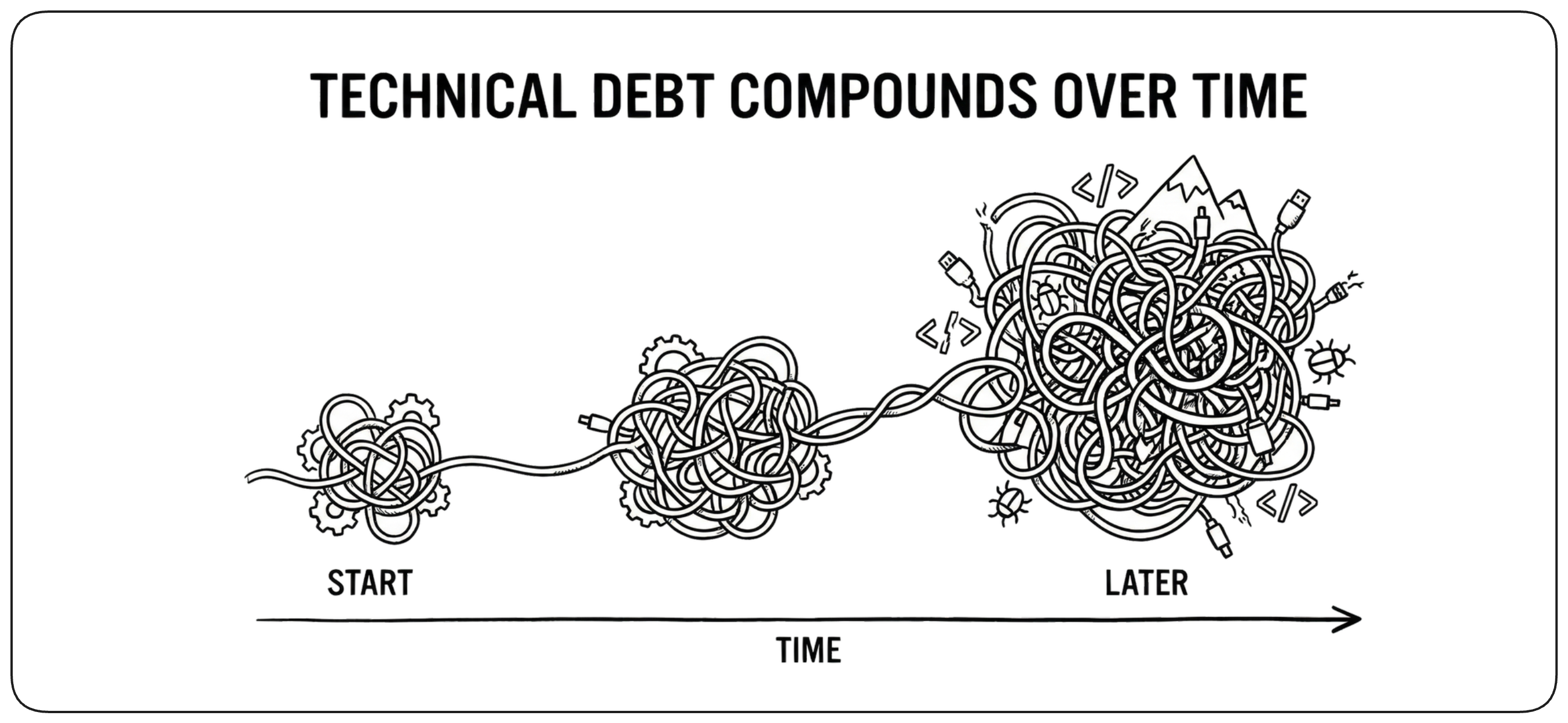
Technical debt accumulates silently and compounds relentlessly like financial debt. Small shortcuts and quick fixes that seem harmless today become major obstacles tomorrow. The interest manifests as increased development time, more frequent bugs, difficulty adding features, and eventually the inability to make changes without breaking existing functionality. Regular refactoring, thorough code reviews, and continuous architectural improvements keep systems maintainable. The key is establishing sustainable balance between delivering features and paying down debt. Teams ignoring technical debt eventually find themselves moving slower despite working harder, while teams addressing it systematically maintain consistent velocity over years.
Maintainability Enables Velocity [Velocity] {1}
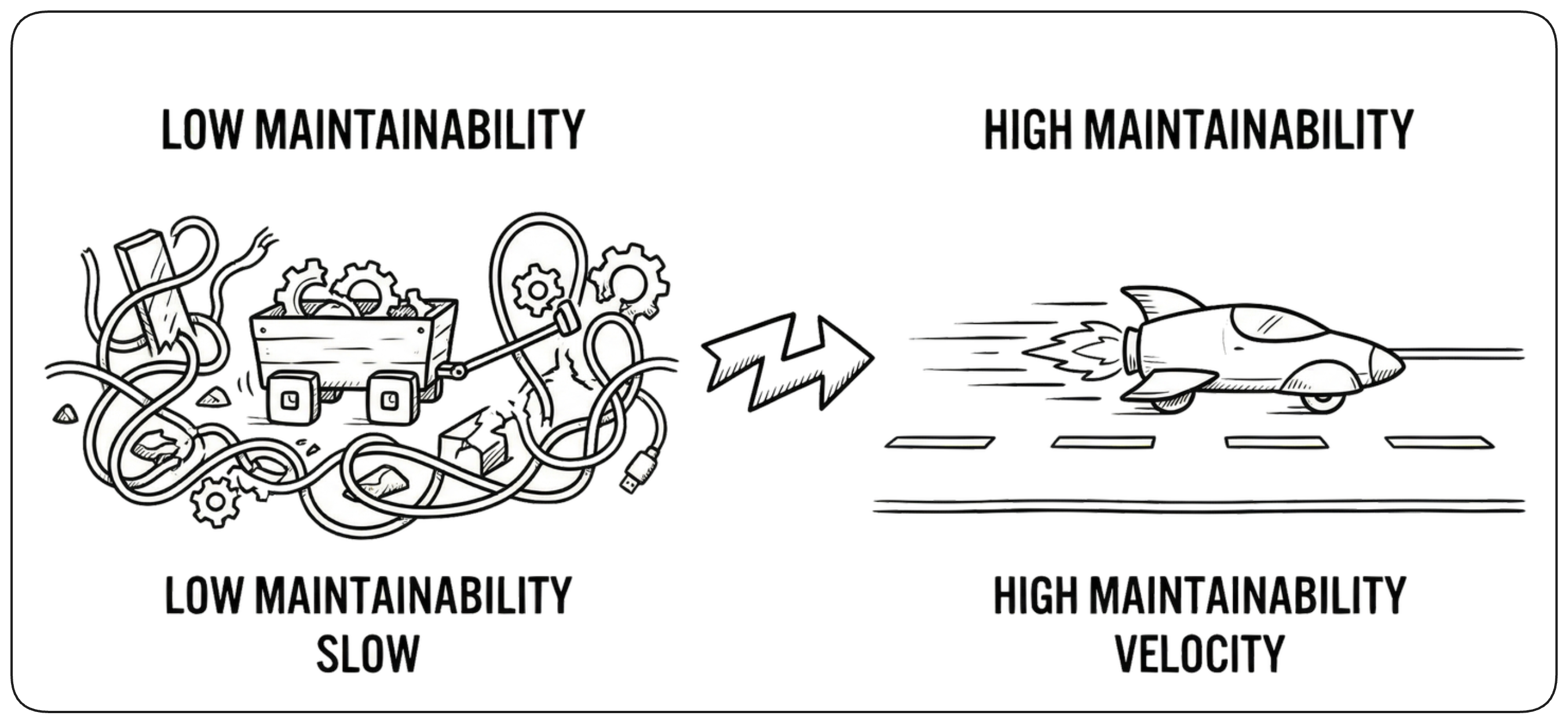
Maintainable code directly enables faster development velocity over time. When code is easy to understand and modify, developers implement changes quickly and confidently with minimal risk. Clear architecture allows developers to locate relevant code quickly, understand context rapidly, and make surgical changes without fear of breaking distant parts. Conversely, poorly maintained code creates friction—understanding takes hours instead of minutes, changes require touching dozens of files, and every modification carries high risk. As systems grow, the difference between maintainable and unmaintainable codebases becomes exponential. Investing in maintainability is fundamentally an investment in sustained team productivity and business agility.
Core Design Principles [Design Principles]
Write Self-Documenting Code [Self-Documenting] {1}
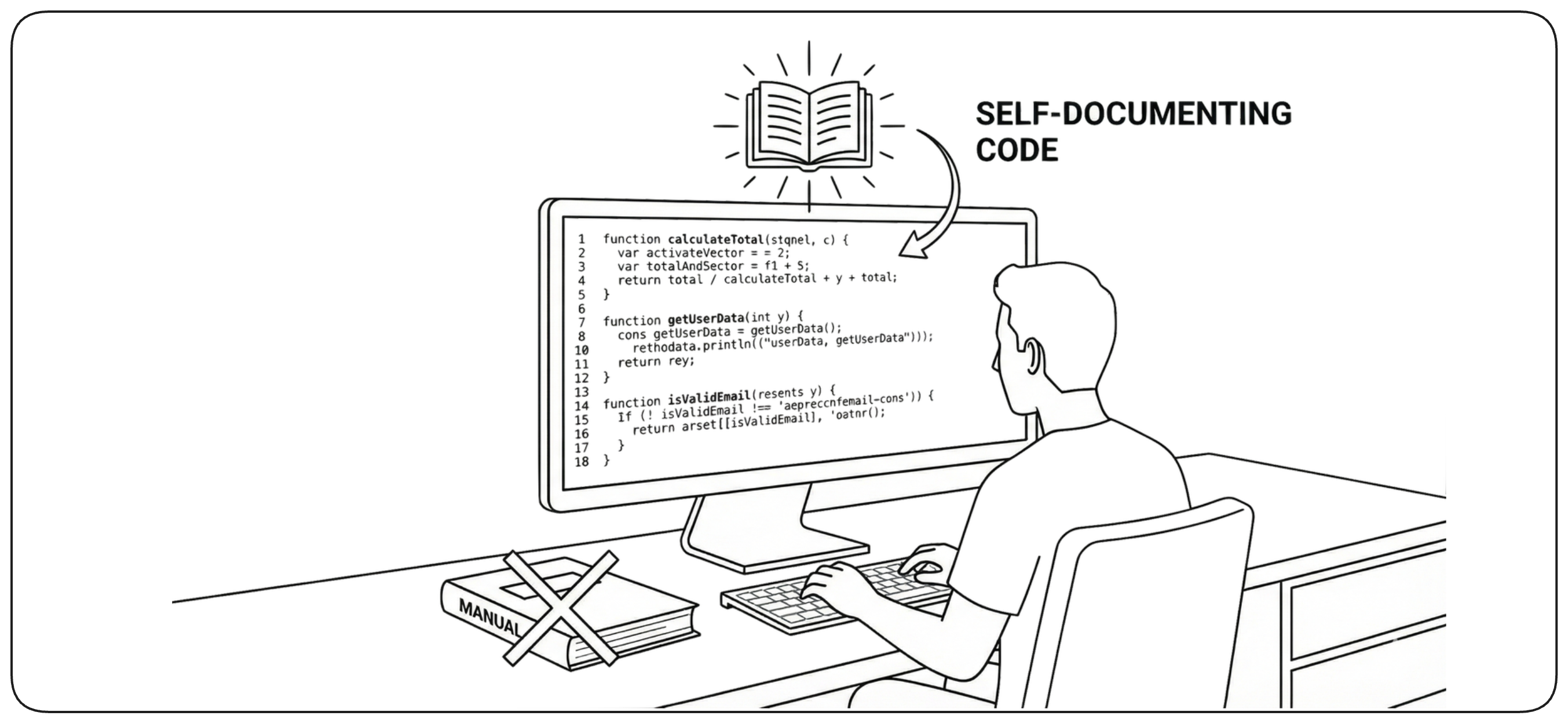
Self-documenting code explains its purpose through clear structure, meaningful names, and obvious logic rather than relying on external documentation. Well-named variables, functions, and classes reveal intent immediately without forcing readers to decipher cryptic abbreviations or hunt through separate documentation files. When code reads naturally with obvious purpose, it serves as living documentation that remains accurate because it is the actual implementation. Function names like calculateMonthlyInterestPayment() convey more information instantly than abbreviated names like calcIntPmt(). The goal is making code so clear that comments become largely unnecessary except for explaining complex business logic or non-obvious design decisions.
Follow Consistent Patterns [Consistency]
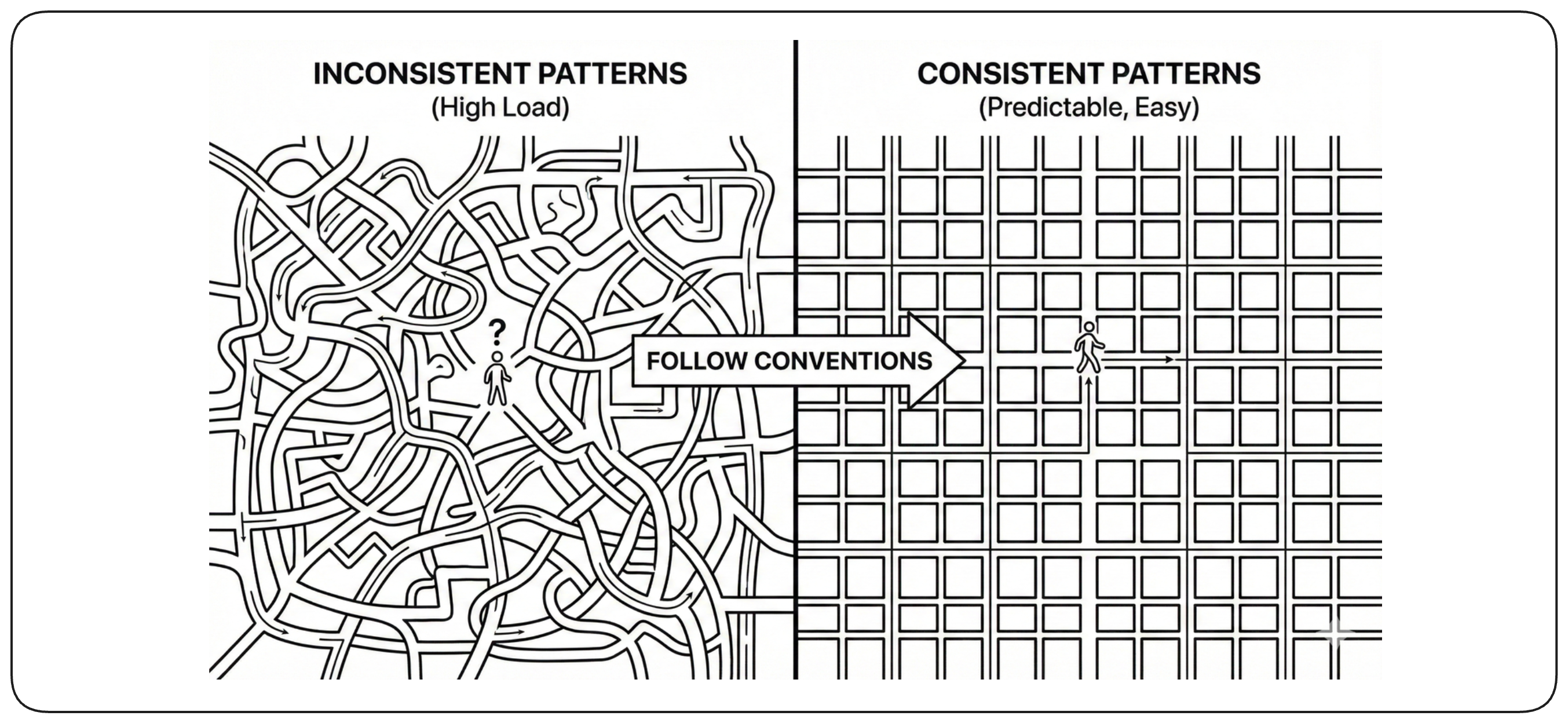
Consistency dramatically reduces cognitive load and makes codebases easier to navigate. When similar problems are solved similarly throughout the codebase, developers apply existing knowledge to new areas immediately without learning unique approaches for each module. Consistent naming conventions create shared vocabulary, consistent file organization enables intuitive navigation, and consistent architectural patterns make system behavior predictable. Establishing and following conventions through style guides, architectural patterns, linting rules, and team agreements makes maintenance predictable and reduces decision fatigue. When everyone agrees on conventions for endpoints, migrations, and error handling, developers work across the entire codebase confidently.
Keep Units Small and Focused [Small Units]
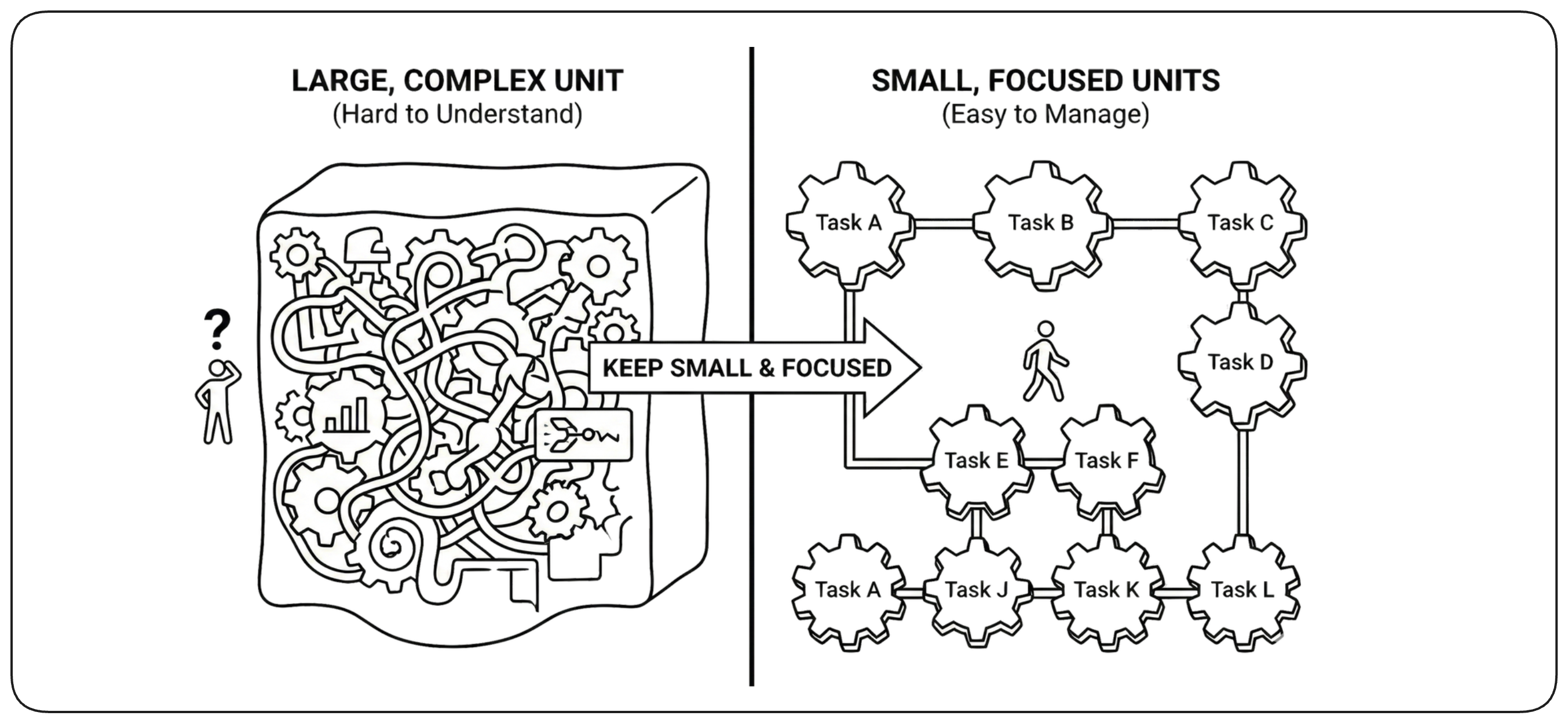
Small, focused functions and classes are fundamentally easier to understand, test, and modify than large multi-purpose units. When a code unit does one thing well, its purpose becomes immediately clear, its behavior stays predictable, and testing remains straightforward. Large, complex functions become progressively harder to reason about because human working memory has strict limits. Following the Single Responsibility Principle keeps code maintainable by ensuring each component has a clear, limited purpose that can be understood and modified independently. As practical guideline, functions should fit on a single screen and do exactly one thing describable concisely in a sentence.
Minimize Dependencies and Coupling [Low Coupling]
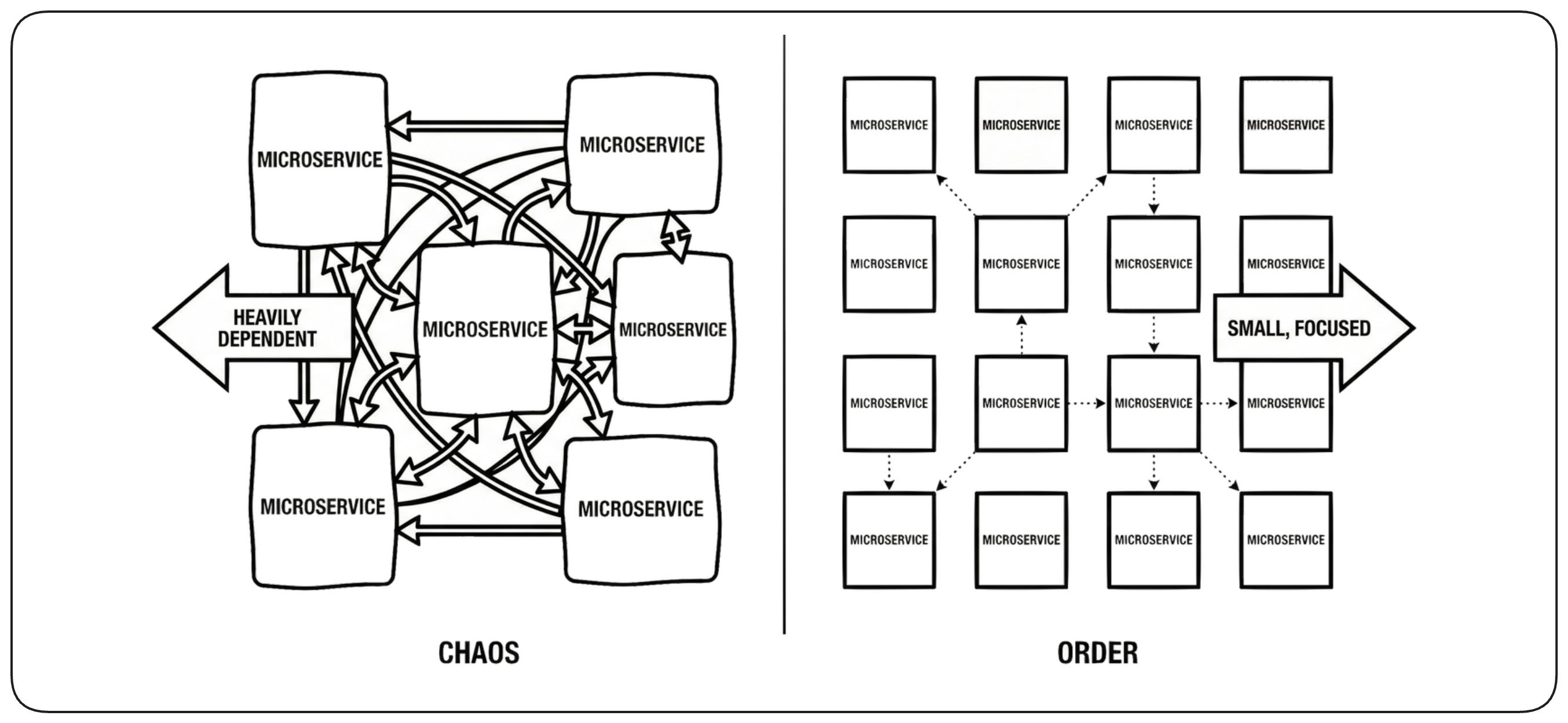
Tight coupling between components creates fragility and dramatically increases maintenance difficulty. When components are tightly coupled, modifying one part requires understanding potentially dozens of others and frequently necessitates changing multiple components simultaneously. Every strong dependency is a chain restricting flexibility and amplifying change impact. Well-defined interfaces with clear contracts, dependency injection patterns, and thoughtful abstraction boundaries enable loose coupling that makes systems more maintainable and testable. The goal is creating components that know as little as possible about each other's internal implementations while still working together effectively. This separation allows components to evolve independently and enables parallel development.
Separate Concerns Clearly [Separation of Concerns]
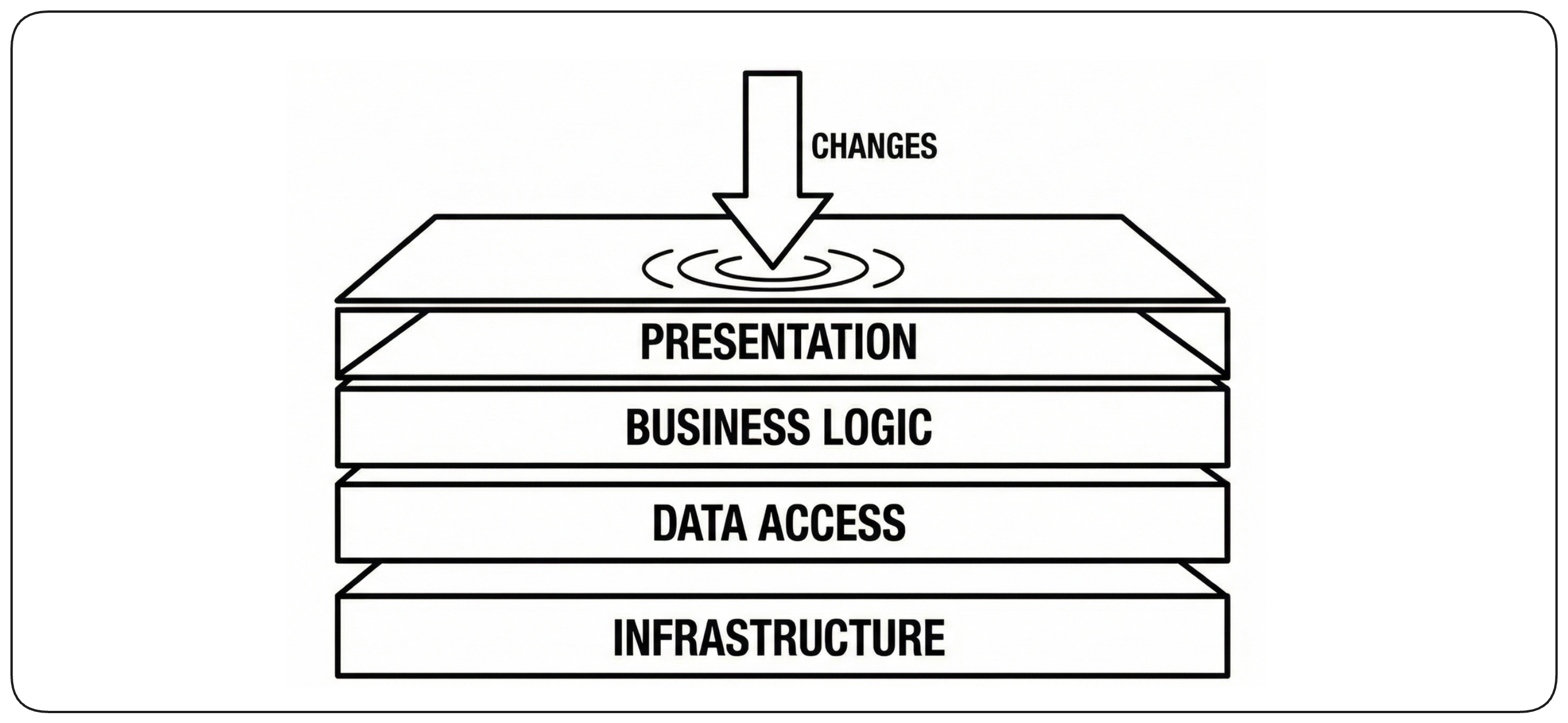
Separating different concerns into distinct layers and modules makes systems dramatically easier to understand, modify, and test. When business logic, data access, presentation, and infrastructure are clearly separated with explicit boundaries, changes to one area don't ripple unpredictably through others. Clear separation allows developers to focus on one aspect at a time without simultaneously juggling unrelated concerns and enables team specialization. Well-separated concerns also facilitate different rates of change—UI requirements often change more frequently than business logic. Proper separation allows each layer to evolve at its natural pace without forcing unnecessary changes elsewhere.
Make Dependencies Explicit [Explicit Dependencies]
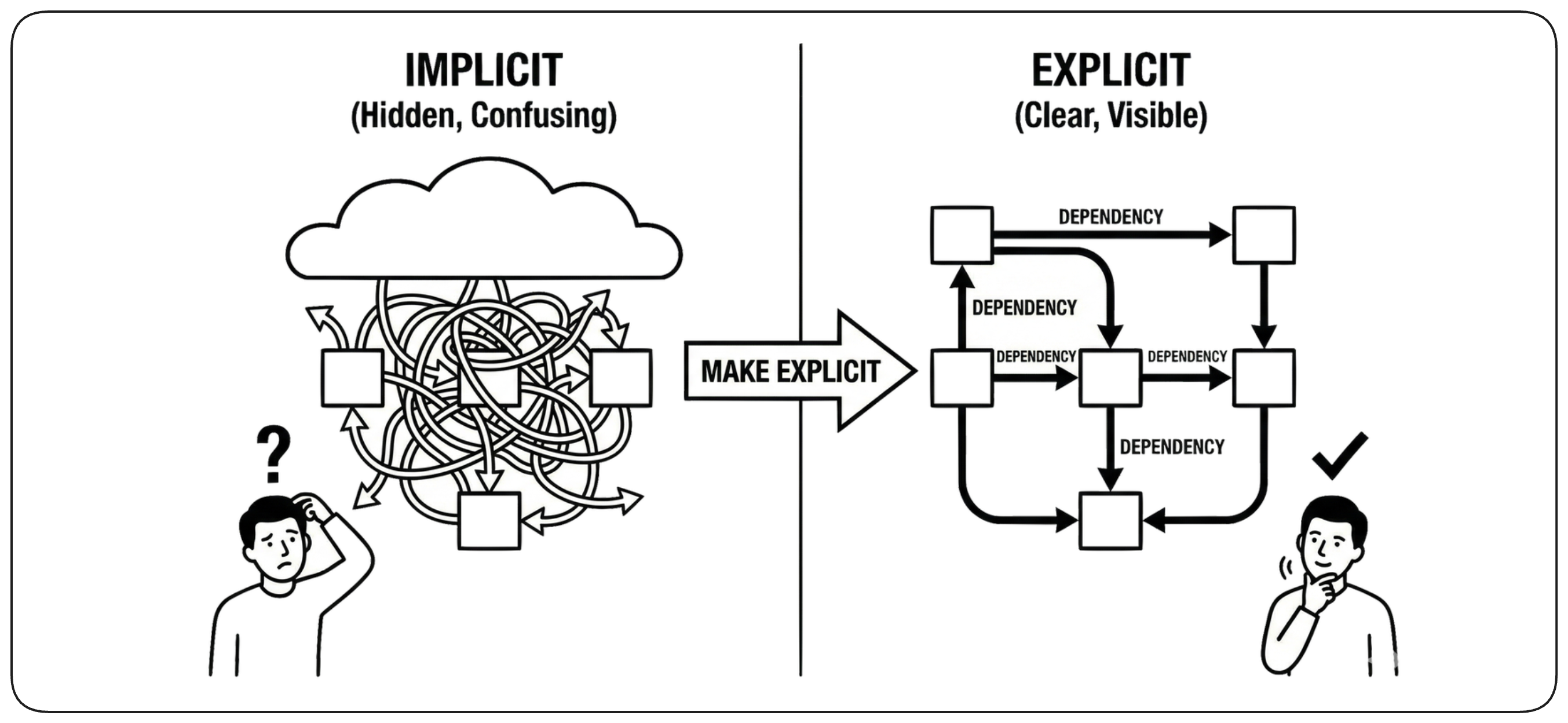
Hidden dependencies are one of the most insidious sources of maintenance difficulty. When dependencies are implicit through global state, singleton patterns, or service locators, relationships between components become invisible and understanding the full picture requires extensive code archaeology. Explicit dependencies communicated through constructor parameters, function arguments, or clear import statements make all relationships obvious and verifiable at a glance. This transparency dramatically improves code comprehension and makes change impact predictable and manageable. Explicit dependencies transform testing from nightmare to straightforward task by enabling easy substitution of test doubles. When every dependency is declared explicitly, there are no surprises.
Refactor Continuously [Continuous Refactoring] {1}
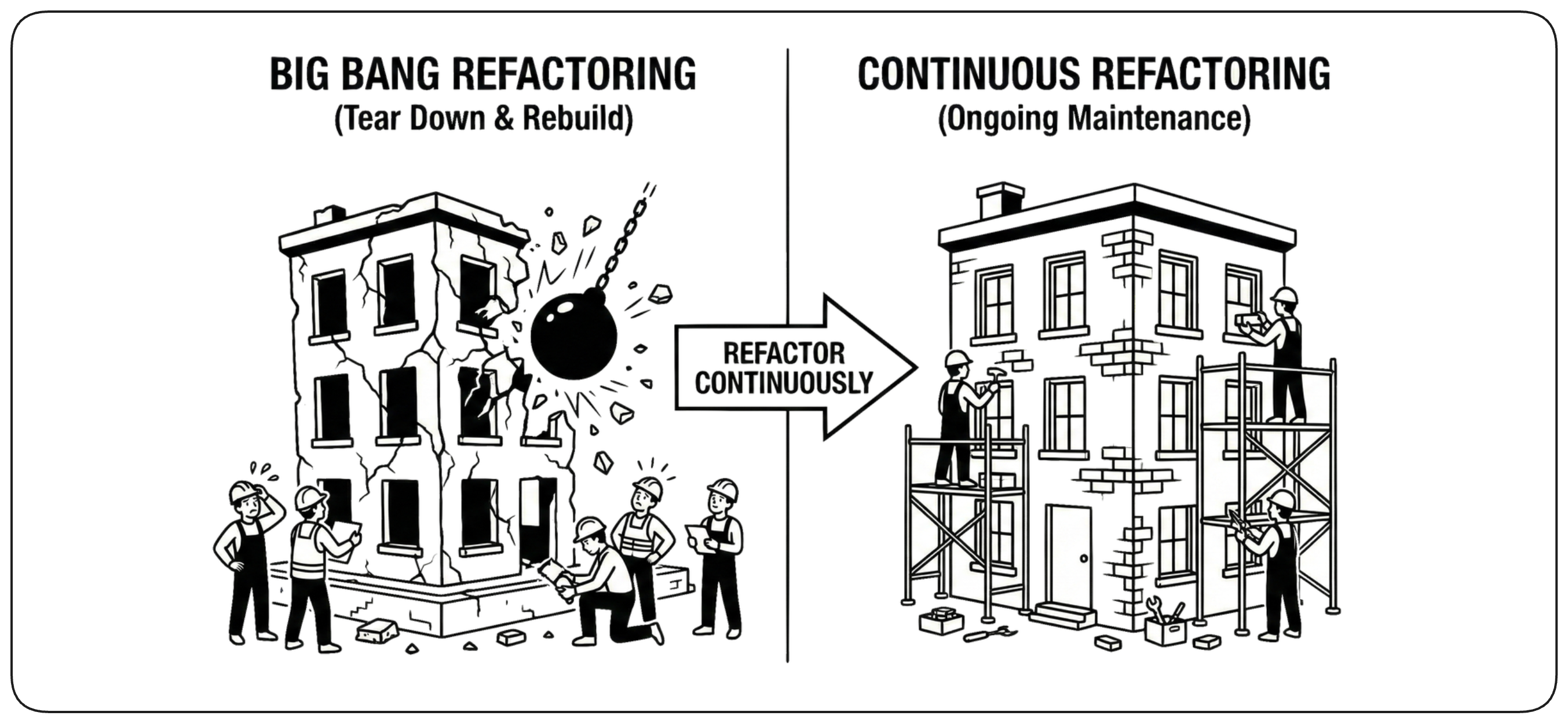
Refactoring should be regular, integrated daily development work rather than a special event or scheduled project. Small, incremental improvements made continuously keep code quality high without requiring large dedicated efforts competing with feature development. The Boy Scout Rule—"leave the code better than you found it"—encourages developers to make small improvements whenever touching code, creating cumulative quality improvements over time. Every time you understand confusing code, improve its clarity so others don't face the same confusion. Every time you fix a bug, consider whether better structure would have prevented it entirely. Continuous refactoring requires good test coverage and team culture valuing quality alongside velocity.
Code Quality Practices [Code Quality]
Use Meaningful Names [Naming]
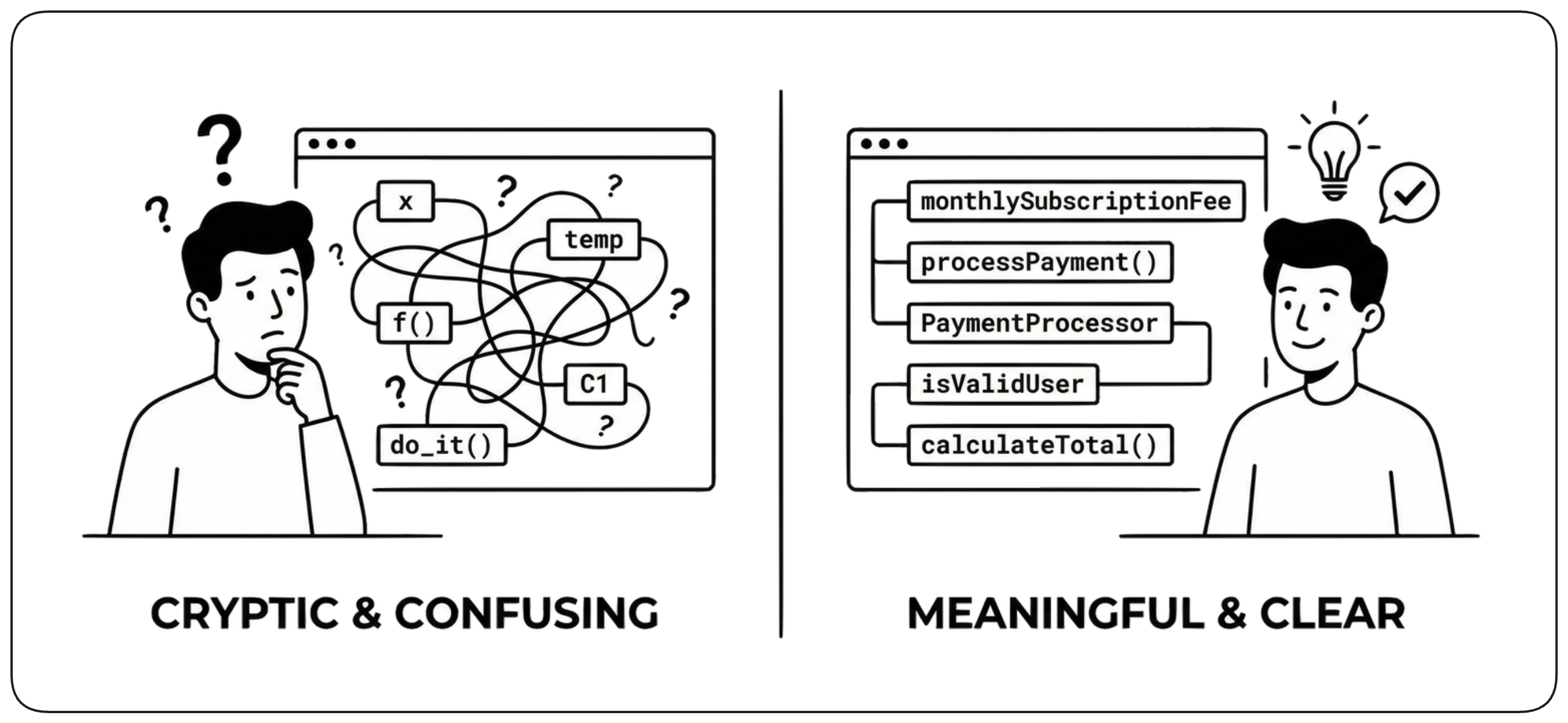
Names are the primary tool for communicating intent in code, and choosing clear, meaningful names is one of the highest-impact practices for improving maintainability. Well-chosen names eliminate the need for explanatory comments and make code instantly understandable. Names should clearly communicate what something is, what it does, or why it exists without requiring context from surrounding code. Avoid cryptic abbreviations, single-letter variables outside narrow loop contexts, and generic names. Function names should describe actions clearly using verbs like processPayment(). Variable names should describe content precisely like monthlySubscriptionFee. Class names should describe concepts clearly like PaymentProcessor. Good naming is skill developed through practice.
Avoid Deep Nesting [Reduce Nesting]
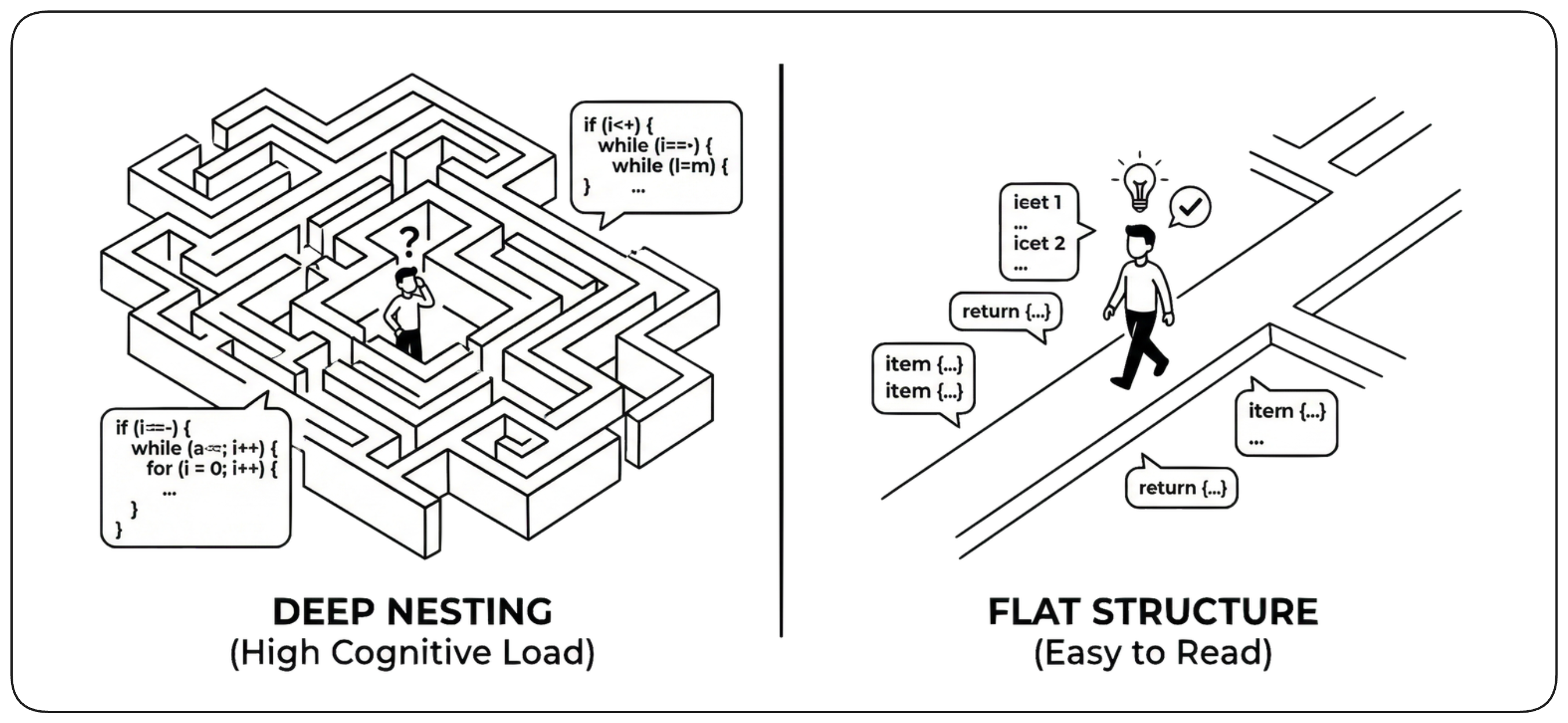
Deep nesting creates significant cognitive load by forcing developers to track multiple levels of conditional logic simultaneously. Code with many nested indentation levels becomes progressively harder to follow because readers must maintain complex mental state about which conditions are active at each point. Deep nesting often indicates that a function is doing too much and should be decomposed into smaller focused functions. Flattening control flow through techniques like early returns, guard clauses, and extracting nested logic into separate functions dramatically improves readability. Guard clauses handling edge cases early allow main logic to remain at top indentation level. Keep functions to three or fewer indentation levels.
Handle Errors Explicitly [Error Handling]
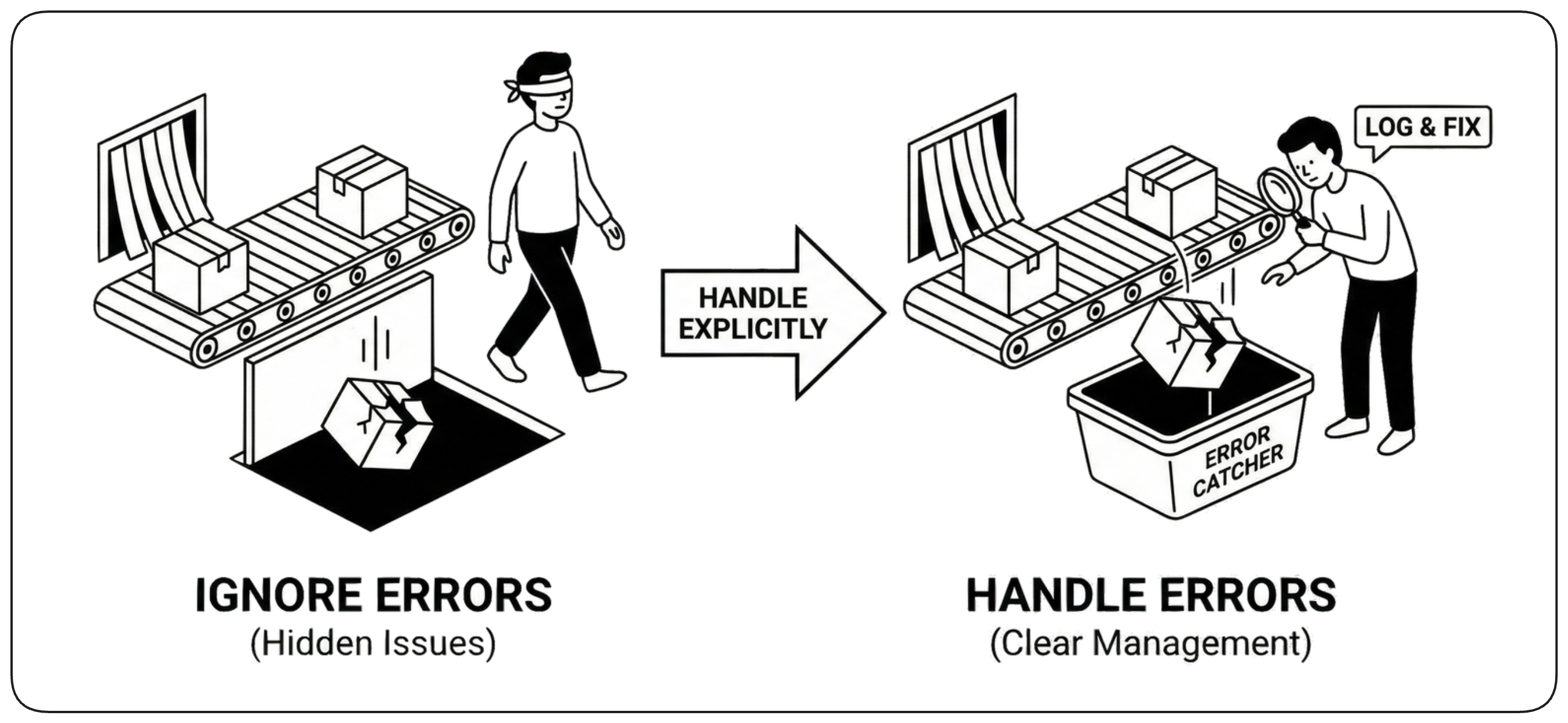
Error handling should be explicit, deliberate, and visible rather than hidden or ignored. Silently swallowing errors or using generic catch-all error handlers that obscure problems creates maintenance nightmares because failures become invisible until causing cascading issues or silent data corruption. Every error condition should be acknowledged explicitly with clear handling strategies—retry, fallback, logging, alerting, or failing fast with meaningful error messages. Make error conditions obvious so readers understand what can fail and how failures are handled. Use specific exception types rather than catching all exceptions generically. Provide meaningful error messages including relevant debugging context—what operation failed, what input caused failure, what system state existed.
Document Why, Not What [Document Intent]
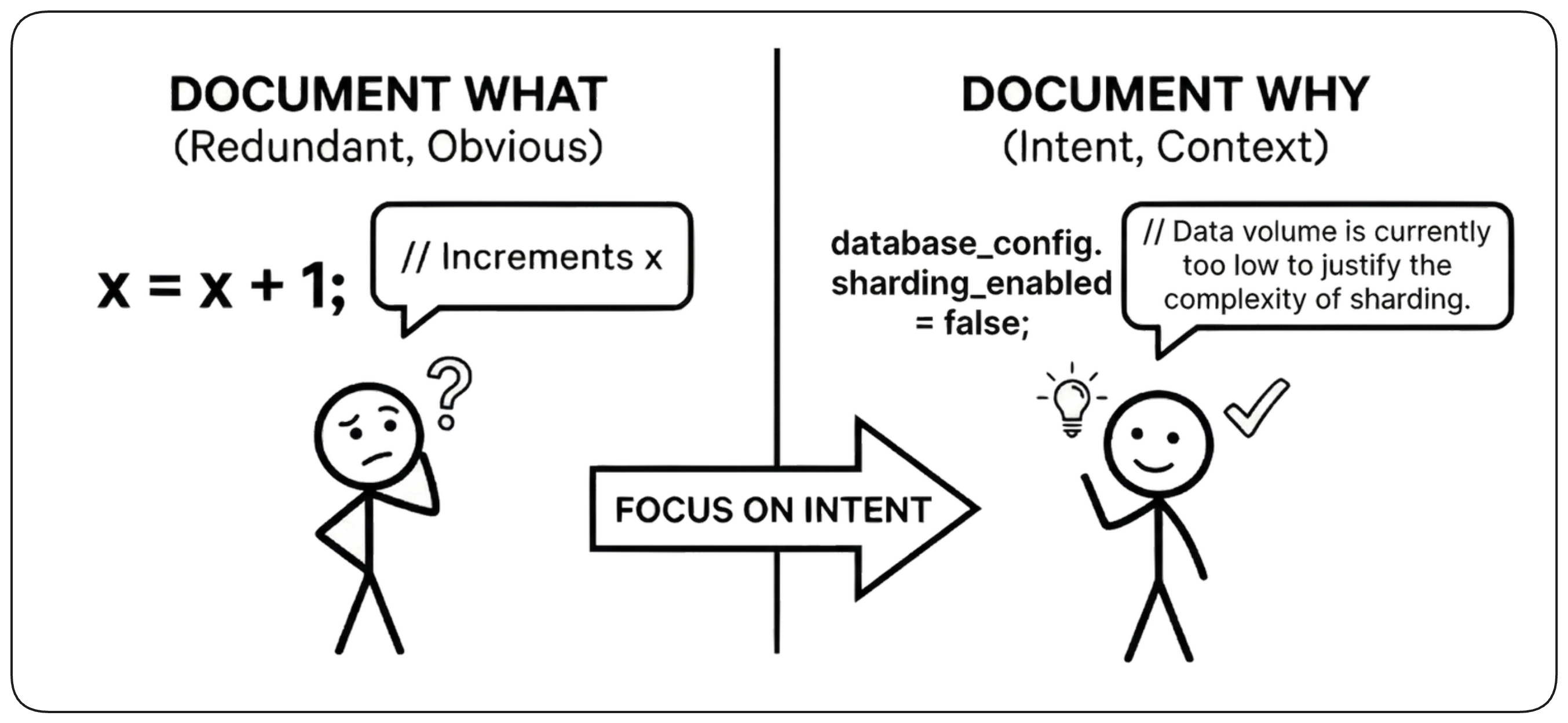
Comments should explain why code exists and why it takes specific approaches rather than merely describing what code does line by line. Well-written code should be self-explanatory about what it does through clear names and obvious structure. Comments that simply restate what code does add no value and create maintenance burden because they can become outdated when code changes. Valuable comments explain business logic, document non-obvious constraints, describe why alternative approaches were not chosen, or provide context that cannot be expressed in code itself. Comments like "calculate monthly payment" above calculateMonthlyPayment() waste space. Comments like "use iterative approach because recursive exceeds call stack limits" provide valuable context.
Use Types Effectively [Type Safety]
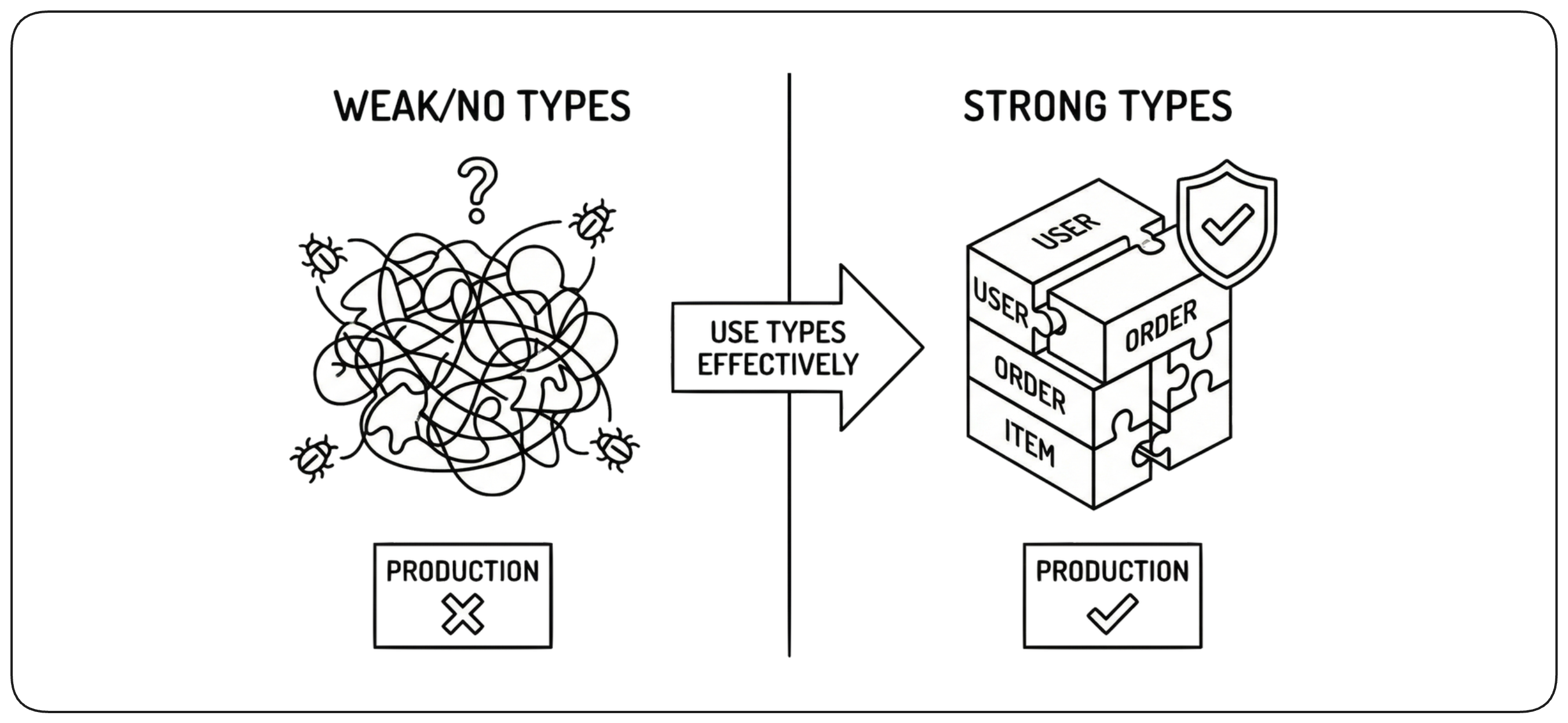
Strong type systems catch entire categories of bugs during development rather than in production and serve as always-current documentation of contracts between components. Types make interfaces explicit, prevent common mistakes automatically, and enable powerful refactoring tools that can safely update code across entire codebases. Using types to express intent and constraints rather than just satisfying compiler requirements dramatically improves code quality and maintainability. Types document what values are valid, what operations are allowed, what relationships exist between data structures, and what contracts functions expect. Type safety reduces the need for defensive runtime checks because the type system guarantees certain conditions statically. Strong typing is high-leverage tool for maintainability.
Architecture and Modularity [Architecture]
Organize by Feature, Not by Type [Feature Organization]
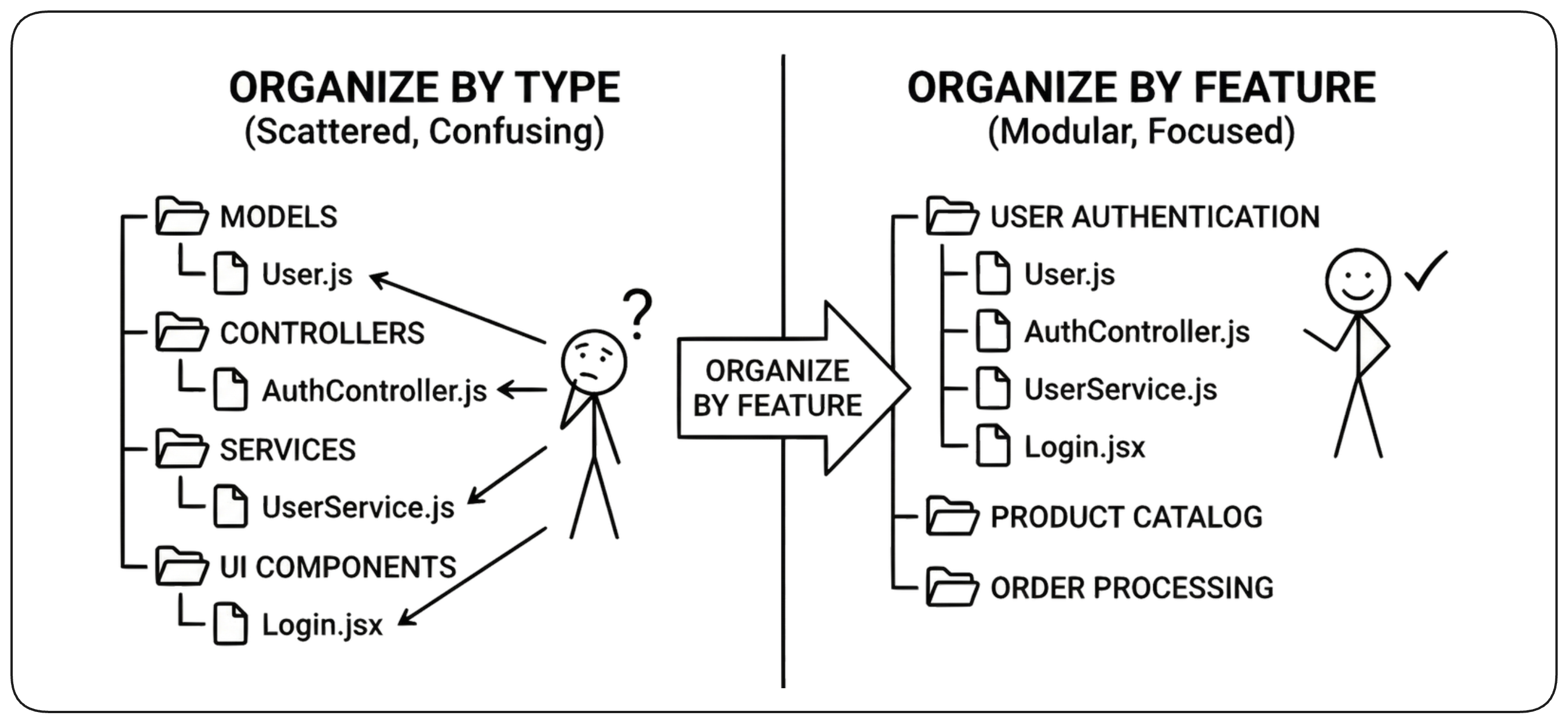
Organizing code by feature or business capability rather than by technical type creates dramatically better modularity. Feature-based organization places all code related to specific functionality in one location—models, controllers, services, tests, and UI components for user authentication live together rather than scattered across separate directories by type. This co-location makes understanding features easier because all relevant code is nearby, makes changes localized because modifications affect single feature directories, and enables teams to work independently on separate features with minimal coordination. Type-based organization forces developers to navigate across the entire codebase to understand single features. Feature-based organization scales naturally because each feature is independently comprehensible.
Create Clear Module Boundaries [Module Boundaries]
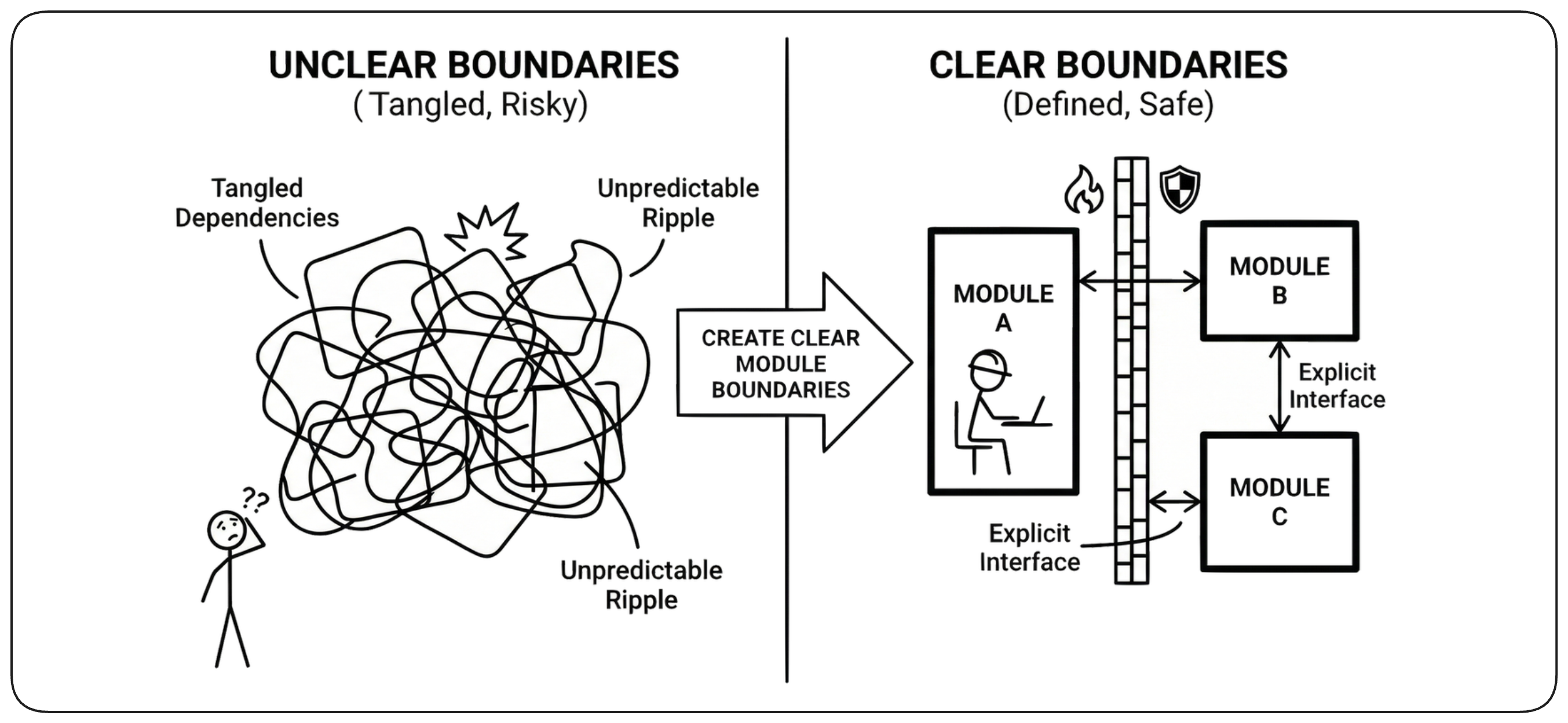
Clear module boundaries with well-defined responsibilities and explicit interfaces make systems dramatically easier to understand, modify, and evolve. When modules have explicit boundaries, changes can be localized within modules without affecting others, enabling parallel development and reducing merge conflicts. Unclear boundaries lead to tangled dependencies where changes ripple unpredictably, making even simple modifications risky and time-consuming. Well-defined boundaries act as firewalls containing changes and preventing unintended coupling from spreading. Establishing clear boundaries requires intentional design decisions about what belongs in each module, what interfaces each exposes, and what dependencies are allowed. Dependency rules should be explicit and enforced through architectural linters or build constraints.
Design for Extension [Extensibility]
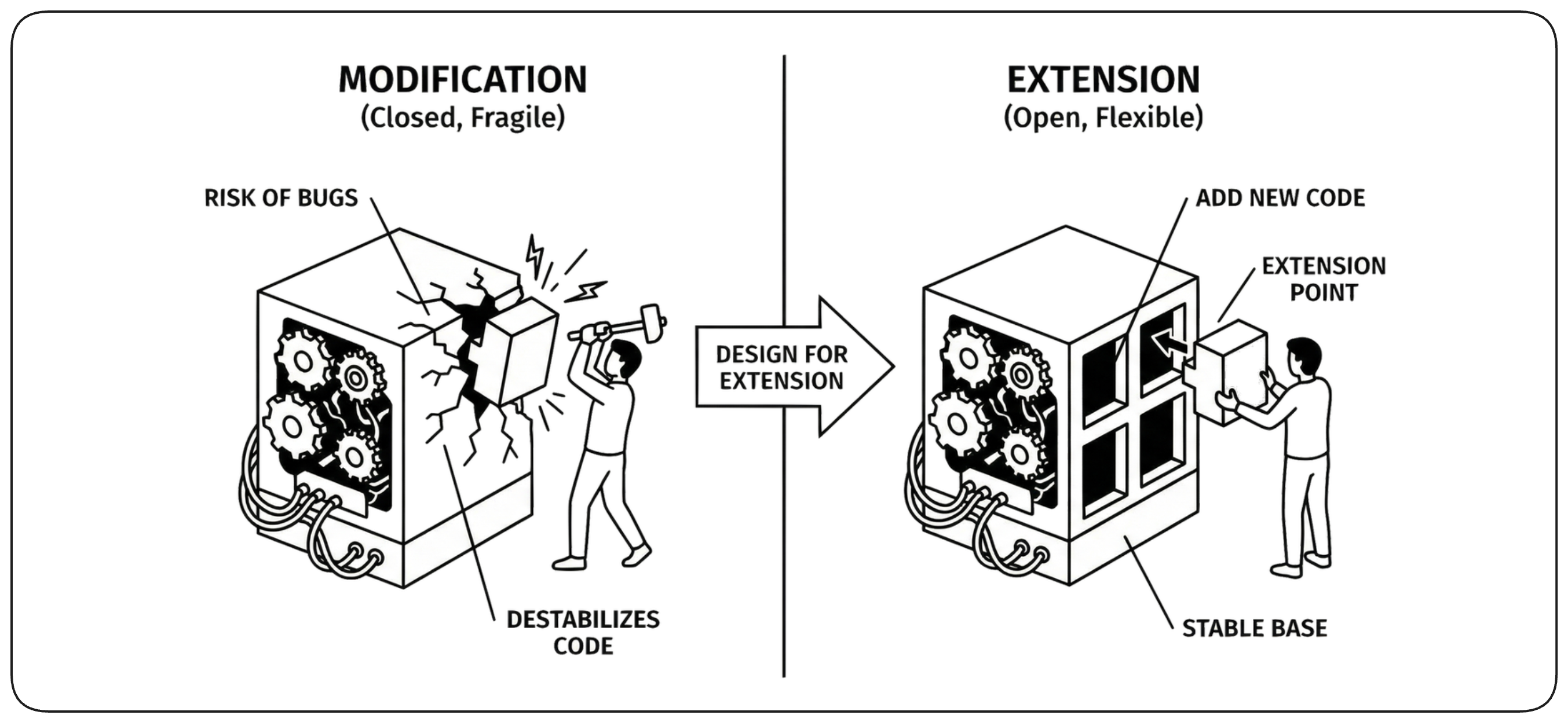
Designing systems to accommodate extension without modification—the Open/Closed Principle—dramatically improves long-term maintainability by enabling growth without destabilizing existing code. Extension points allow new functionality to be added through new code rather than modifying existing code, reducing the risk of introducing bugs into proven functionality. Well-designed extension mechanisms might include plugin architectures, strategy patterns, event systems, or configuration-driven behavior that allows customization without code changes. Predicting all future requirements is impossible, but identifying areas likely needing extension is practical. Payment processing will need new payment methods, authentication will need new providers, data exports will need new formats. Avoid premature abstraction in stable areas.
Maintaining Design Integrity While Adapting to Change [Design Integrity]
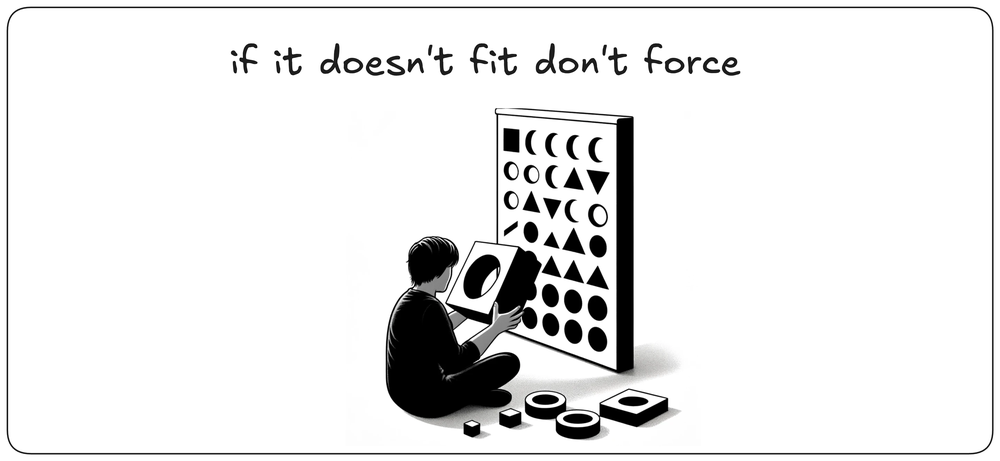
When faced with new requirements, it's crucial to resist the temptation of compromising the existing architectural design to accommodate specific use cases that don't align well. While quick adjustments may seem expedient, they often undermine the system's integrity and introduce long-term complexities. Instead, carefully evaluate whether new requirements genuinely fit within the core principles of the established architecture. If they don't, explore alternative solutions that maintain the system's consistency, scalability, and longevity. This approach might require more upfront effort, but it safeguards the design's robustness and flexibility. By adhering to this discipline, teams can ensure that the system evolves coherently, remaining adaptable to future needs without sacrificing its fundamental structure or performance.
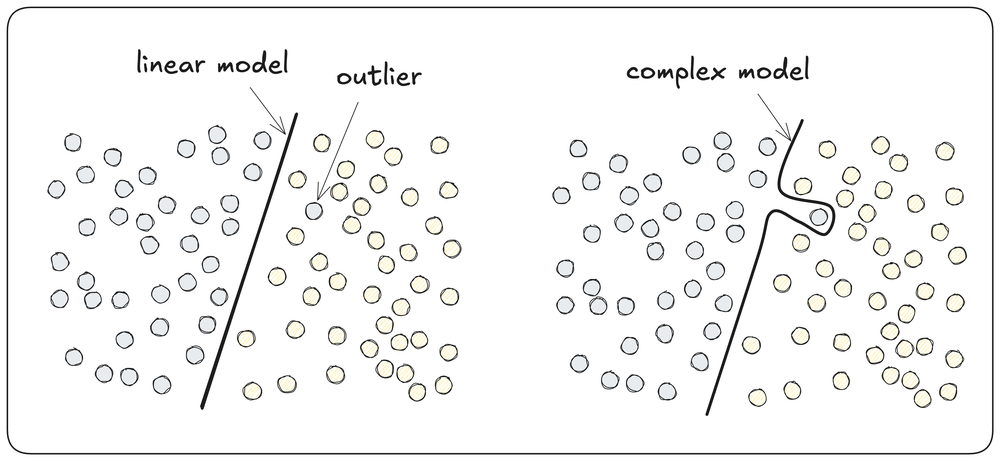
The principle of having simple models is universally recognized, including by data scientists. A linear model may not capture every outlier, but it provides a clear and understandable framework. In contrast, a complex model might account for all anomalies, yet risks overfitting, which compromises generalization and adds unnecessary complexity. Maintaining simplicity in architecture ensures the design remains robust, scalable, and easy to maintain.
The Facade Pattern [Facade Pattern]
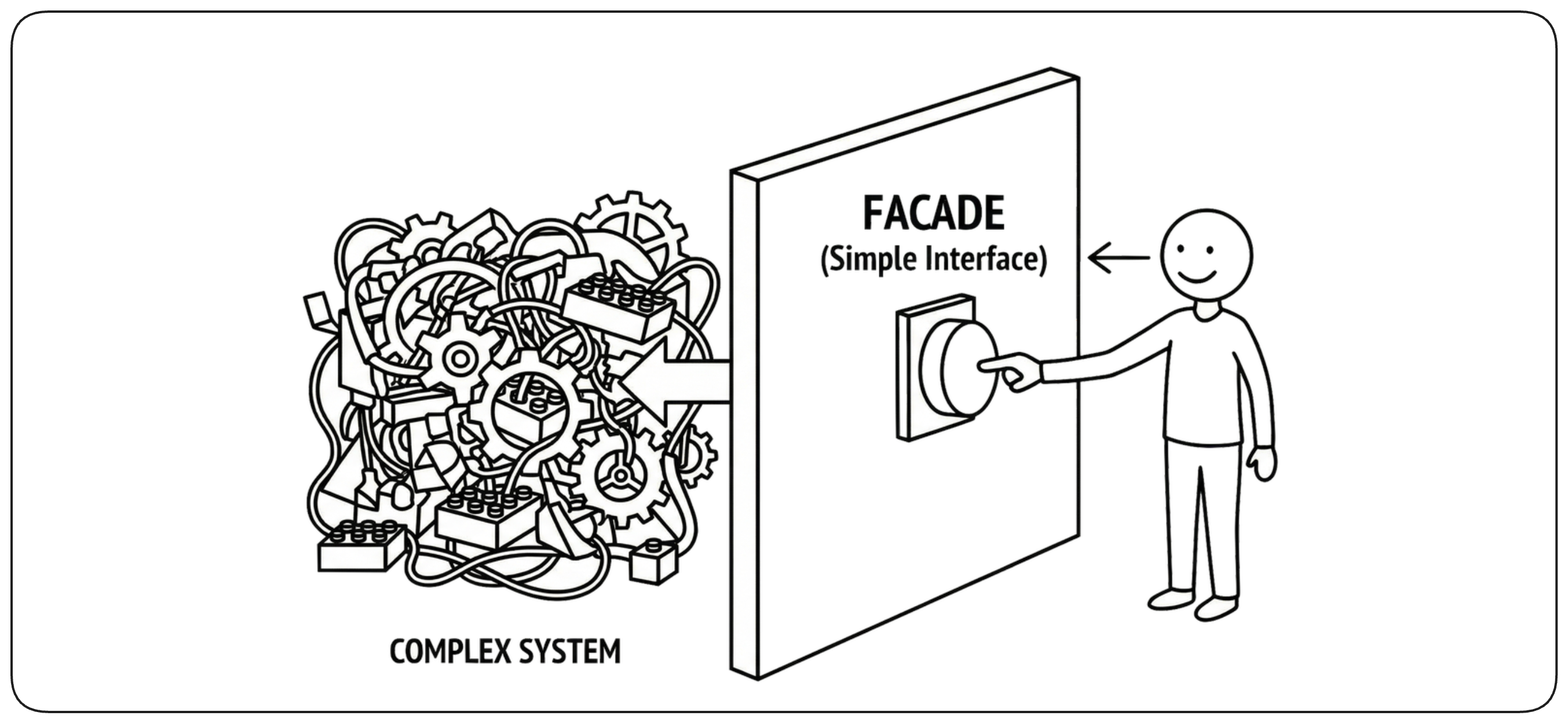
The Facade Pattern creates simple, stable interfaces hiding complex subsystems, allowing internal complexity to evolve without disrupting consumers. Like a building's welcoming lobby providing consistent entry regardless of internal renovations, a facade offers stable point of contact to intricate systems. When internal implementations need modification, upgrades, or complete replacement, the facade shields consumers from these changes by maintaining its familiar interface. For example, when upgrading a payment processing system from one provider to another, a facade can maintain the same simple "process payment" interface while the underlying implementation changes completely. This containment of change behind stable boundaries reduces modification impact and makes systems easier to maintain.
Testing for Maintainability [Testing]
Tests Enable Confident Refactoring [Test Safety Net] {1}
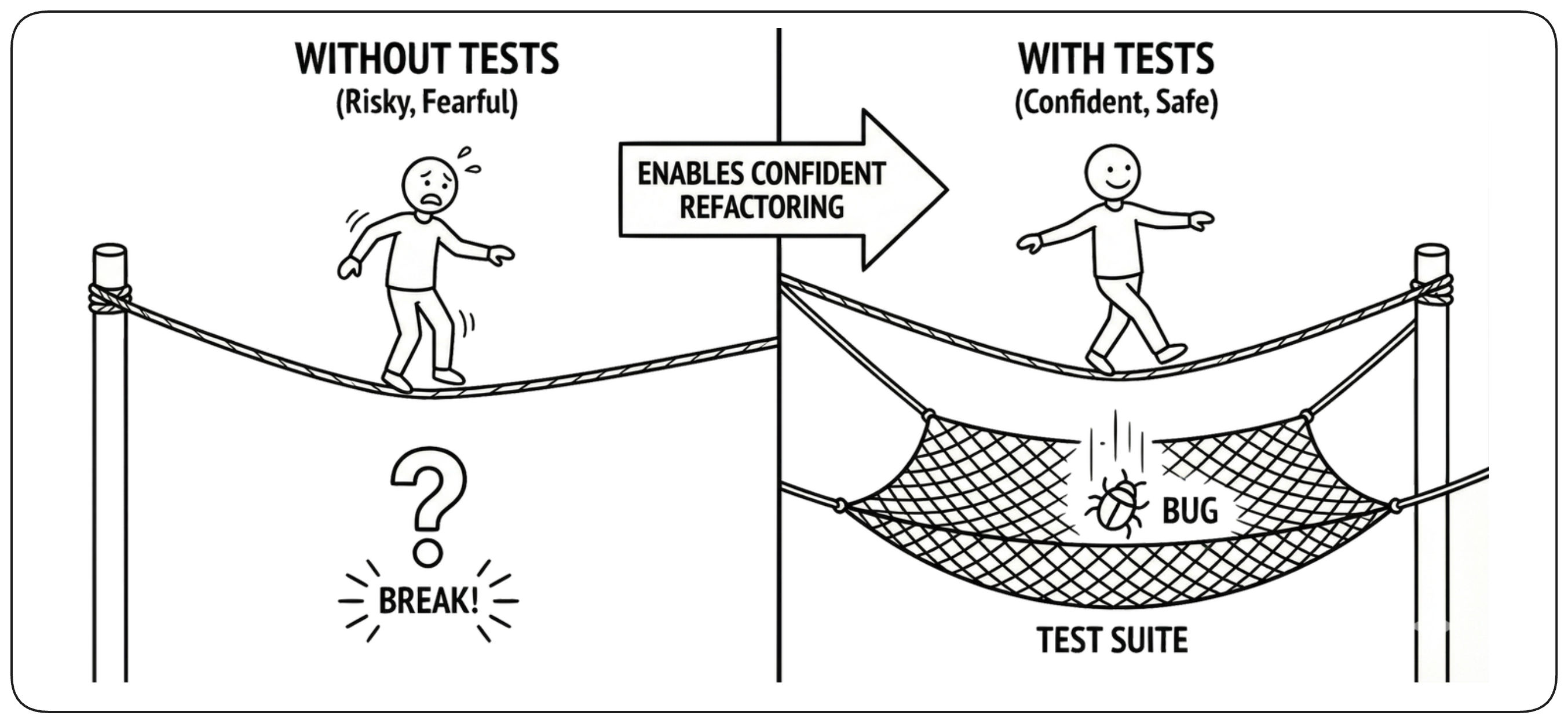
Comprehensive automated tests provide the confidence necessary to refactor code safely and maintain quality over time. When thorough tests exist, developers can modify code implementation knowing that tests will catch regressions immediately if behavior changes unintentionally. Without tests, refactoring becomes extremely risky because there's no automatic verification that changes preserve existing behavior. This fear of breaking things leads to code degradation over time as developers avoid improving code that works but is difficult to maintain. Tests transform refactoring from dangerous to safe, enabling continuous improvement that keeps code healthy. Tests also document expected behavior in executable form that cannot become outdated and force better design through requiring loose coupling.
Write Tests at Appropriate Levels [Test Pyramid]
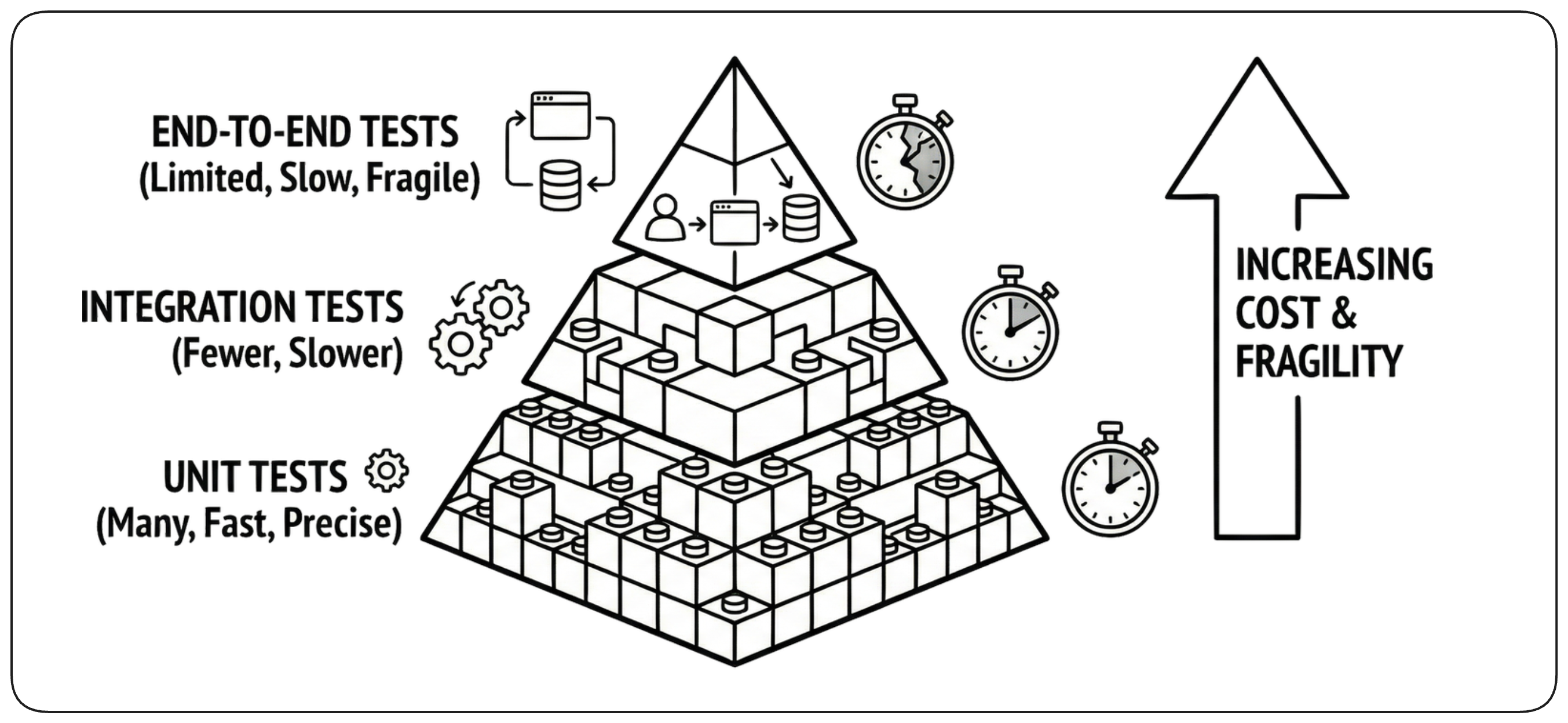
Effective test strategies employ tests at multiple levels—unit tests, integration tests, and end-to-end tests—in appropriate proportions to maximize coverage while minimizing execution time and maintenance burden. The testing pyramid suggests many fast unit tests forming the foundation, fewer integration tests in the middle, and limited end-to-end tests at the top. Unit tests verify individual components in isolation, execute quickly, and pinpoint failures precisely. Integration tests verify that components work together correctly. End-to-end tests verify complete workflows but are slower, more fragile, and harder to maintain. Over-reliance on end-to-end tests creates slow, brittle test suites that discourage frequent execution. The right balance depends on system characteristics.
Keep Tests Maintainable [Test Maintenance]
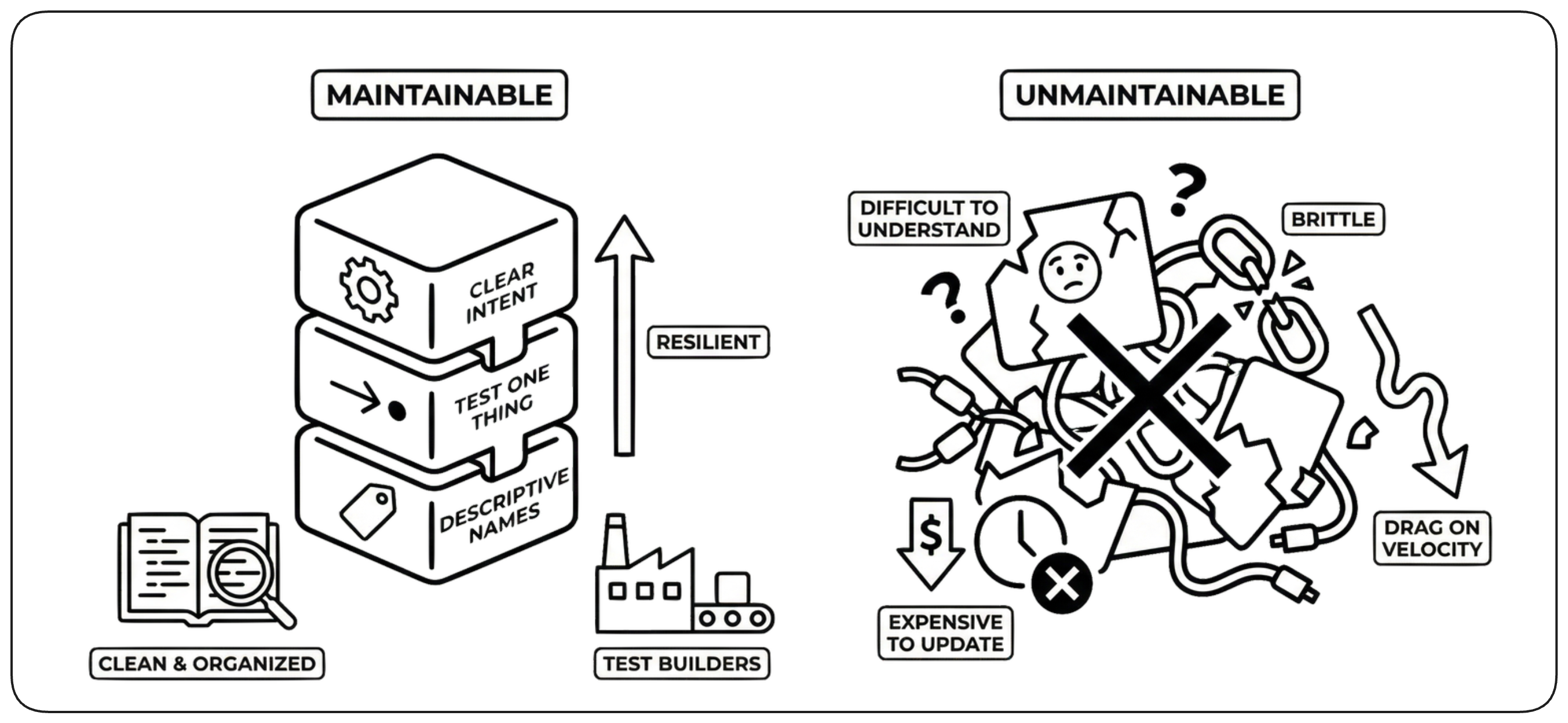
Tests must be maintainable themselves because unmaintainable tests become liabilities that slow development rather than assets that enable it. Tests that are difficult to understand, brittle in the face of implementation changes, or expensive to update when requirements change create drag on development velocity. Well-written tests have clear intent, test one thing at a time, use descriptive names, and remain resilient to implementation changes by focusing on behavior rather than implementation details. Tests should be as clean and well-organized as production code because they will be read and modified frequently throughout the system's lifetime. Use test builders or factory functions to create test data clearly and concisely.
Documentation Practices [Documentation]
AI and a New Paradigm for Documentation [Documentation Reality] {1}
Documentation has always been problematic: it quickly becomes obsolete. There is a permanent drift between the code and whatever describes it—sometimes from the very beginning, and almost always as the code is maintained. Code and documentation simply do not evolve at the same speed, and keeping them in sync has always been a major challenge. AI, and in particular LLMs, has fundamentally changed how we approach this. We no longer primarily write documentation to explain how things work or how the code behaves. Instead, we interrogate the model: How does this work? Why am I getting this error? What does this component do? The strategy has shifted from maintaining exhaustive "how it works" documentation to relying on the codebase as the source of truth and using the LLM as the interface to that knowledge. This does not eliminate the need for documentation—but it does change what we document and why.
Living Documentation in Code [Living Docs]
The most reliable documentation lives directly in code where it cannot become outdated without detection. Self-documenting code with clear names, explicit types, and obvious structure provides always-current documentation that developers trust because it reflects actual implementation. API documentation generated from code annotations stays synchronized automatically. Example code in tests demonstrates actual usage and must remain correct or tests fail. Inline comments explaining non-obvious decisions stay close to the code they describe, making them more likely to be updated when code changes. Living documentation reduces maintenance burden compared to separate documentation requiring manual synchronization. When documentation lives externally in wikis or documents, it frequently becomes outdated as code evolves.
Document Decisions: The Why, Not the How [Decision Records]
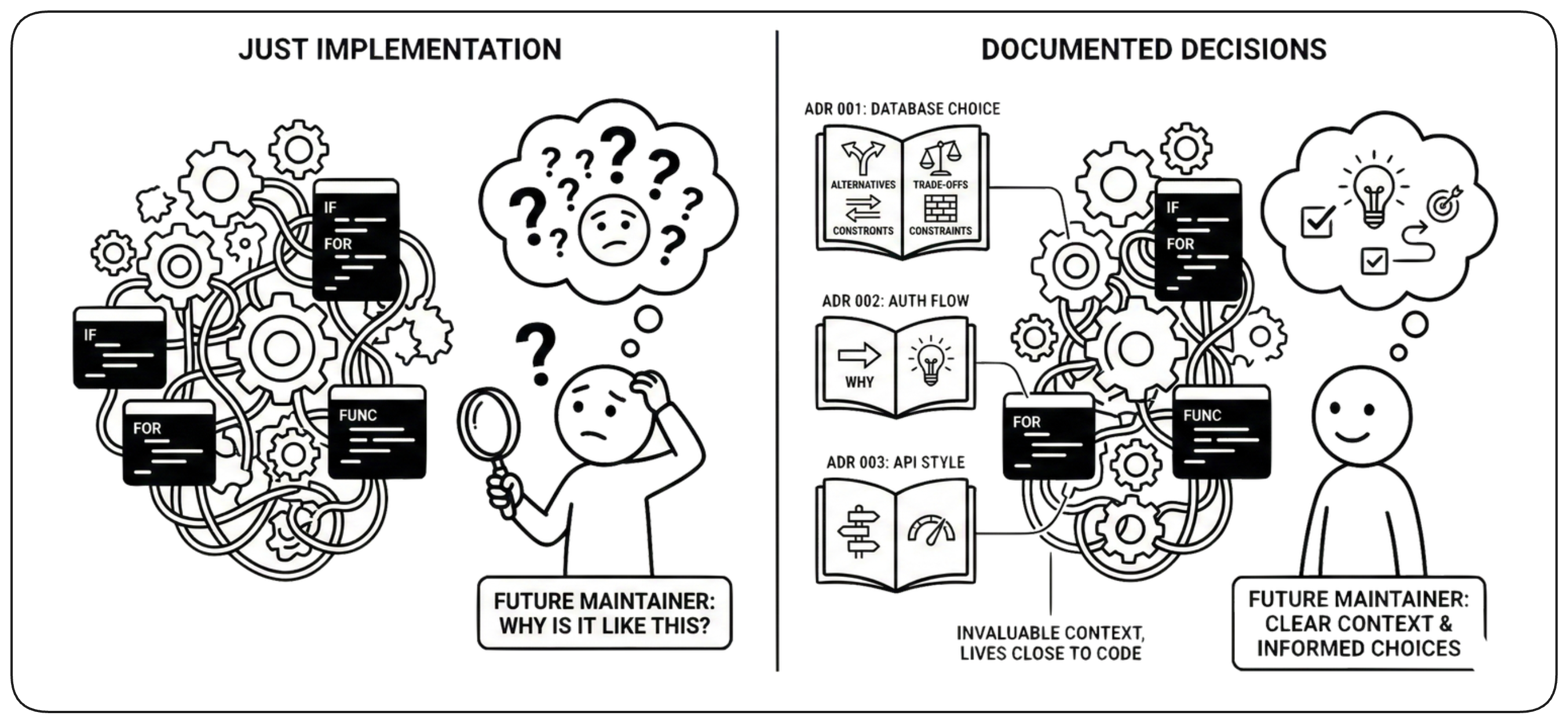
Architecture Decision Records or similar lightweight documentation of important decisions provides invaluable context for future maintainers trying to understand why systems are designed particular ways. These records capture what decision was made, what alternatives were considered, what factors influenced the decision, and what trade-offs were accepted. This context prevents future maintainers from revisiting settled questions, helps them understand constraints that might not be obvious from code alone, and enables informed decisions about whether past choices remain valid under current circumstances. Decision records should be brief, focused documents that live close to the code they describe—perhaps in the repository alongside code or directly in code comments for smaller decisions.
Documentation That Paves the Way [Paved Way] {1}
One form of documentation we keep is the kind that paves the way: how to get started, which path to follow, what to do first. This is typically the result of several hypotheses and reflects best practice—someone takes you by the hand and says: do this first, then this. It is often opinionated, and that is valuable. Getting-started guides, onboarding runbooks, and "how we do things here" documentation reduce ambiguity and help new contributors or teams converge quickly on a single, proven path. Unlike low-level "how the code works" documentation, which drifts with the code and is increasingly replaced by asking the LLM, this higher-level guidance captures institutional knowledge and preferred workflows that do not live in the code itself. Keep and maintain this kind of documentation; it remains essential.

Keep Documentation Close to Code [Documentation Proximity]
Documentation that lives close to code it describes remains more accurate and useful than documentation stored separately in wikis, documents, or external knowledge bases. Code comments, doc comments for API documentation, README files in feature directories, and architecture decision records in the repository all benefit from proximity to code because developers see them while working and can update them naturally as part of code changes. Documentation stored externally requires deliberate navigation away from code and extra effort to keep synchronized, making it prone to becoming outdated and eventually ignored. Store architecture documentation in the repository in markdown files alongside code. Use doc comments for API documentation that can be generated automatically.
Team Practices [Team Practices]
Review Code Systematically [Code Reviews]
Systematic code reviews improve quality, spread knowledge across the team, catch bugs before they reach production, and ensure consistency across the codebase. Reviews provide opportunities for developers to learn from each other, for senior developers to mentor junior developers, and for the team to maintain shared standards and conventions. Effective reviews focus on code comprehension, correctness, maintainability, and adherence to team conventions rather than personal style preferences. Establish clear expectations for code reviews—what reviewers should focus on, how quickly reviews should happen, what level of thoroughness is appropriate for different types of changes. Small, frequent reviews work better than large infrequent reviews because they provide faster feedback.
Maintain Shared Ownership [Shared Ownership]
Shared code ownership where any team member can modify any part of the codebase creates more maintainable systems and more capable teams than siloed ownership where individuals control specific components. Shared ownership distributes knowledge across the team, prevents knowledge silos from forming, enables developers to fix problems wherever they exist, and creates collective responsibility for code quality. When everyone feels ownership of the entire codebase, quality improves because no one wants to let the team down with poor code. Transitioning to shared ownership requires deliberate effort to spread knowledge through pair programming, code reviews, documentation, and architectural discussions. It requires establishing shared conventions so that code written by different developers remains consistent.
Plan for Knowledge Transfer [Knowledge Transfer] {1}
Systems must remain maintainable by people who didn't write original code, including new team members and future engineers who join years later. Planning for knowledge transfer prevents bus factor problems where critical knowledge exists only in individual heads, creating major risks if those individuals leave. Effective knowledge transfer happens through multiple channels working together—comprehensive documentation, clear code that explains itself, recorded architectural decisions, regular knowledge sharing sessions, pair programming, thorough code reviews, and onboarding programs that systematically introduce new members to system architecture. Make knowledge transfer a continuous process rather than an emergency response when someone leaves. Regular tech talks where team members present different system parts distribute understanding.
Understanding Coupling [Coupling Fundamentals]
What is Coupling? [Coupling Definition] {1}
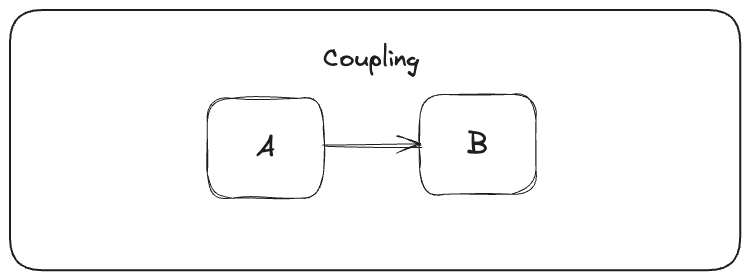
Coupling refers to the degree of interdependence between different parts of a software system—how much components know about each other, rely on each other, and affect each other. Highly coupled components have extensive dependencies and shared knowledge, meaning changes in one component frequently necessitate changes in others. Loosely coupled components minimize dependencies and knowledge sharing, allowing each component to function more independently. The fundamental goal of managing coupling is reducing unnecessary interdependence while maintaining necessary communication and collaboration between components that must work together. Coupling can be understood as the weight of a priori knowledge that one component requires about another. Tightly coupled components must know substantial details about each other's internals.
Is Coupling Inherently Bad? [Coupling Reality]
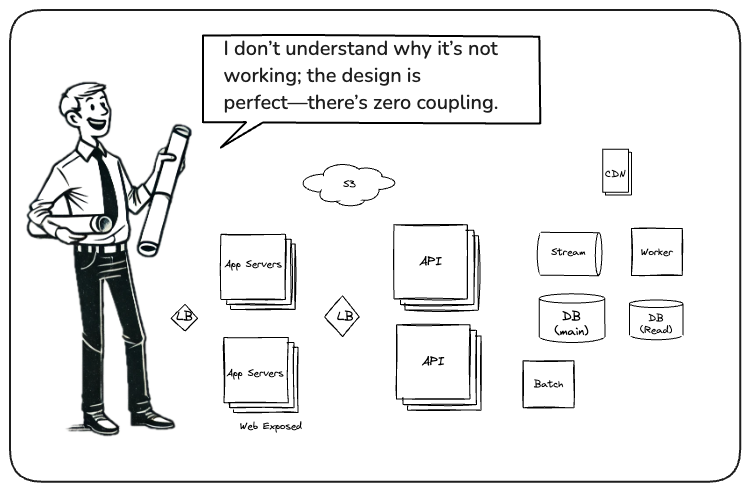
Coupling is often misunderstood as something to eliminate entirely, but in reality coupling is necessary—it's the mechanism that allows different parts of a system to work together toward common goals. Zero coupling would mean zero interaction and a completely useless system where components cannot collaborate. The question is not whether to have coupling but what kind of coupling, where to accept coupling, and how to manage it effectively. Some coupling is essential for functionality, some coupling is accidental complexity that should be eliminated, and distinguishing between these categories requires careful analysis. The goal is not eliminating coupling but managing it strategically—accepting necessary coupling at stable interfaces while eliminating unnecessary coupling creating fragility.
The Goal of Loose Coupling [Loose Coupling Benefits]
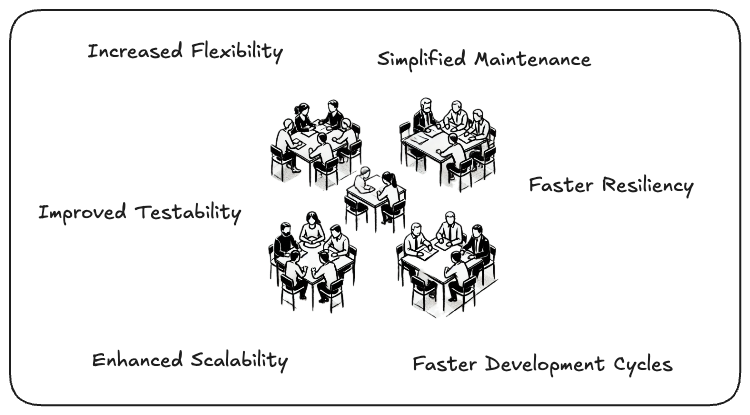
Loose coupling aims for components that have minimal dependency on each other while still communicating effectively to achieve system goals. This ensures adequate interaction between modules while maintaining their independence, resulting in more robust and adaptable architecture. The primary objective is reducing the ripple effect where changes in one module cascade unpredictably to many others. By designing systems so each module can be modified, updated, or replaced with minimal disruption to others, the overall system becomes more flexible and resilient. Loose coupling enables independent deployment, allowing different components to be updated separately without coordinating simultaneous releases. It enables parallel development, allowing different teams to work on different components without constant coordination.
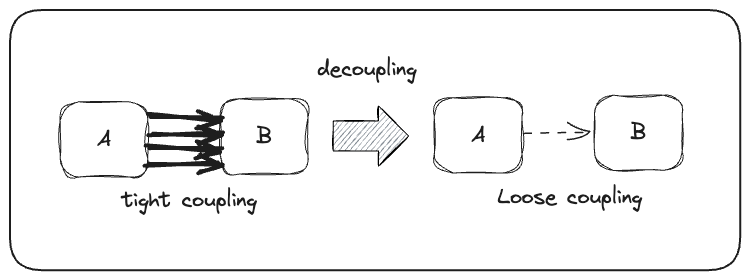
The Phone-Charger Analogy [Phone Charger]
Tight to Loose Coupling Evolution [Charger Evolution]
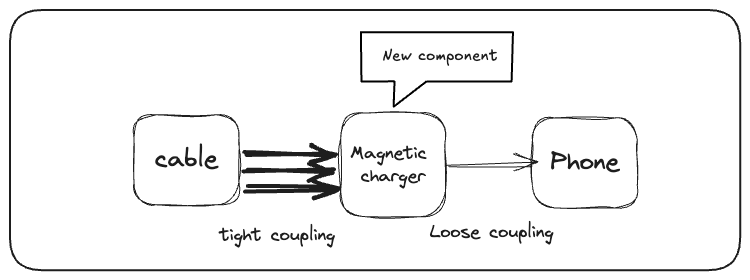
Consider the evolution of phone charging to understand coupling concretely. Early phones had proprietary charging ports with dedicated cables—tight coupling where phone and charger were completely interdependent. Replacing the phone required replacing the charger because both were designed specifically for each other. This tight coupling created inconvenience and waste as each new phone model brought new charging cables. The industry evolved toward loose coupling through standardization—first mini-USB, then micro-USB, and eventually USB-C—allowing phones and chargers to evolve independently as long as they adhered to standard interfaces. Modern wireless charging represents another level of loose coupling where phones and chargers communicate through electromagnetic induction according to standards like Qi.
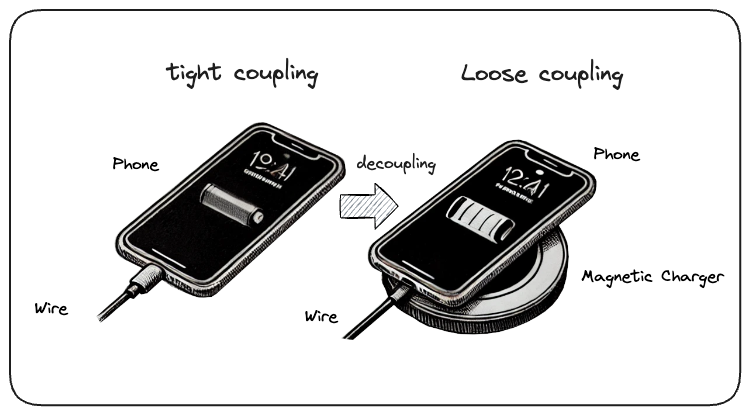
Strategic Decoupling [Decoupling Strategy]
Decoupling should be applied selectively and strategically rather than uniformly throughout systems. Focus decoupling efforts on components likely to change independently and where tight coupling would force unnecessary coordination or create fragility. In the phone charging example, the phone is the component most likely to change frequently as technology advances, making it the right focus for decoupling from the charging infrastructure. This strategic approach ensures decoupling efforts are targeted where they provide real value rather than adding complexity everywhere. Decoupling always has costs—additional abstraction layers, more complex communication, potential performance overhead—that must be justified by benefits in terms of flexibility, maintainability, and reduced coordination. Not every component requires loose coupling.
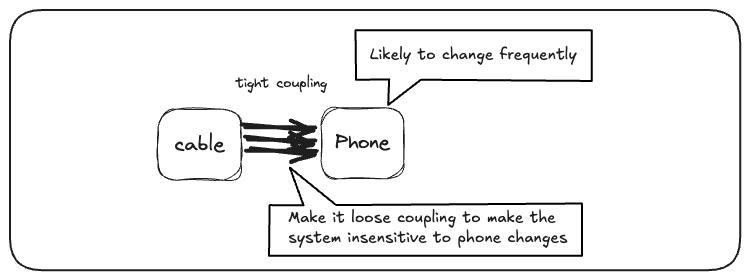
Coupling Relocation [Coupling Movement]
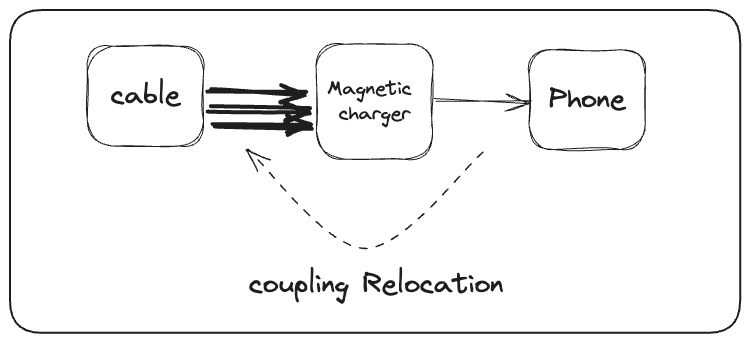
Decoupling rarely eliminates coupling entirely—it typically relocates coupling to more stable locations or more manageable forms. In the phone charging example, eliminating tight coupling between phone and charger required introducing a new coupling point—the standardized interface specification that both must follow. Phones are now coupled to the USB-C standard rather than to specific chargers. This relocation is beneficial because the coupling point—the USB-C specification—is stable and standardized rather than proprietary and changing frequently. Understanding that coupling relocates rather than disappears helps make informed architectural decisions about where to place coupling and what forms of coupling to accept. The goal is moving coupling to stable interfaces, explicit contracts, and standardized protocols rather than eliminating it.
Types of Coupling [Coupling Types]
Understanding different forms of coupling helps identify problematic dependencies and choose appropriate decoupling strategies. Coupling exists on a spectrum from extremely tight to very loose, with different characteristics and implications for maintainability.
Content Coupling [Content Coupling]
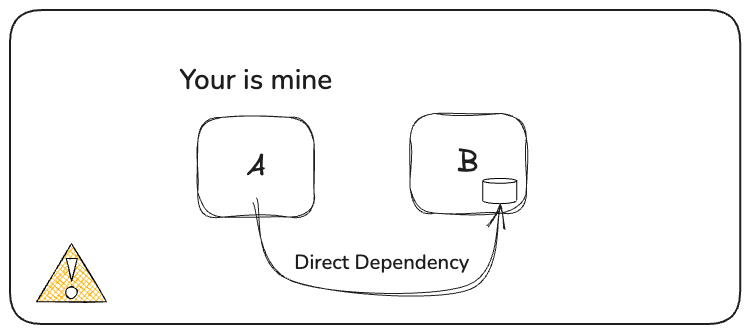
Content coupling represents the tightest and most problematic form of coupling where one component directly accesses or modifies another component's internal state, such as changing private data or calling private methods through reflection or other mechanisms. This extreme coupling creates invisible dependencies that make understanding component boundaries impossible and changes to internal implementation potentially break external components that depend on internal details. Content coupling should be avoided absolutely because it destroys encapsulation and makes maintenance nearly impossible. When content coupling exists, any change to a component's internals potentially breaks other components in completely unpredictable ways because the dependencies are not explicit or enforced. Debugging becomes extremely difficult because component behavior depends on external manipulation.
Common Coupling [Common Coupling]
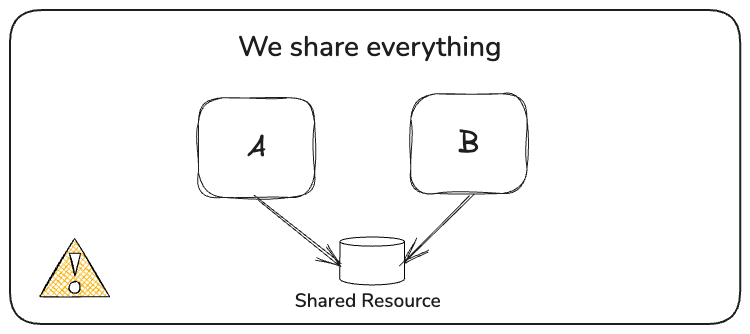
Common coupling occurs when multiple components share access to global data or shared mutable state that any component can read or modify. While this approach simplifies data sharing between components superficially, it dramatically increases system complexity because changes to shared state can ripple through all components that depend on it in unpredictable ways. Understanding system behavior requires tracking all possible modifications to shared state from all components, making reasoning about correctness extremely difficult and making bugs related to state manipulation hard to reproduce and fix. Common coupling creates implicit dependencies between all components sharing global state even when they have no other relationship. Minimizing shared global state by passing data explicitly through function parameters dramatically reduces this problematic form.
External Coupling [External Coupling]
External coupling arises when components depend on externally defined systems, interfaces, formats, or protocols such as third-party APIs, file formats, communication protocols, or database schemas controlled by other teams or organizations. External coupling is often unavoidable when integrating with external services or following industry standards, but it introduces dependencies beyond the control of system developers. Changes in external dependencies like API updates, protocol modifications, or format changes can break system functionality and require immediate reactive updates to maintain compatibility. Managing external coupling requires creating abstraction layers that isolate internal code from external dependencies, implementing versioning strategies that allow gradual migration when external systems change, and maintaining thorough monitoring of external dependency health.
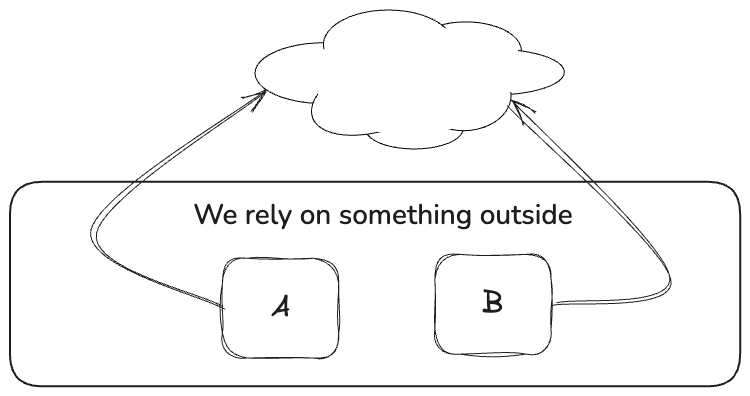
Control Coupling [Control Coupling]
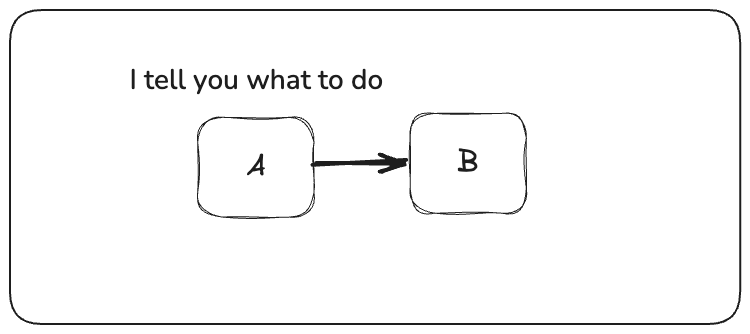
Control coupling exists when one component controls the flow of execution or internal logic in another component by passing control information such as flags, command codes, or operation types that dictate behavior. This coupling creates interdependence between components where the calling component must know about the internal behavior options of the called component and make decisions about which behavior to invoke. Control coupling reduces modularity because components cannot make independent decisions about their behavior and must accept control from external sources. While control coupling is less problematic than content coupling, it still creates maintenance difficulties because changes to one component's internal behavior options frequently require changes to all components that control it.
Data Coupling [Data Coupling]
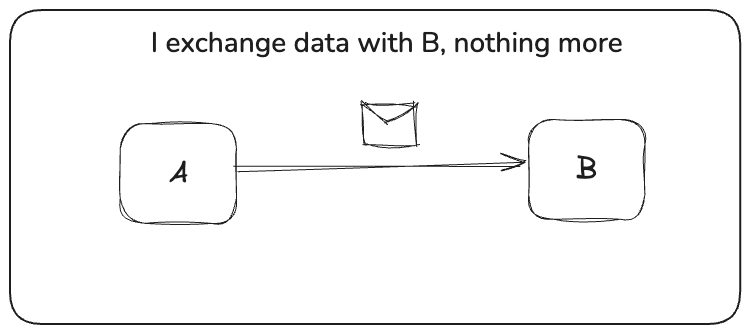
Data coupling represents a desirable form of coupling where components interact exclusively by sharing necessary data through well-defined interfaces without influencing each other's internal workings. Components pass only the specific data required for operations through explicit parameters, maintain complete control over their internal state and logic, and have no knowledge of each other's internal implementation details. This minimal coupling preserves modularity and allows maximum flexibility for independent evolution as long as data interfaces remain consistent across versions. Data coupling enables components to evolve their internal implementation freely without affecting other components because dependencies exist only at the data interface level. Testing becomes straightforward because component behavior depends only on input data and internal logic.
Message Coupling [Message Coupling]
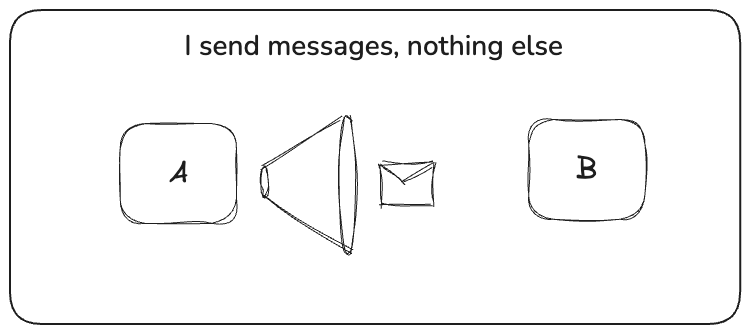
Message coupling represents extremely loose coupling where components communicate exclusively through structured message passing without sharing resources, data structures, or direct references to each other. Components send and receive messages that encapsulate data and potentially commands, but senders need not know how receivers process messages or even which specific components will receive them. This decoupling promotes high modularity because internal workings of components remain completely hidden behind message interfaces. Message coupling enables asynchronous communication patterns where senders and receivers operate independently with different timing. Message coupling is commonly implemented in service-oriented architectures, microservices, and event-driven systems where services communicate through APIs, message queues, event streams, or publish-subscribe patterns. This architecture enables independent deployment.
Migration Projects [Migration]
The Migration Reality [Migration Context] {1}
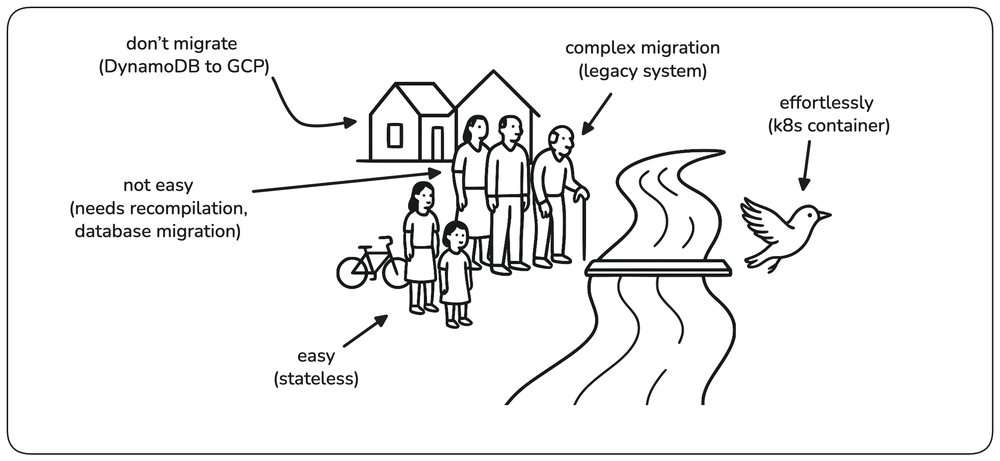
Migration projects represent fundamental infrastructure engineering work where systems move between platforms, transform architectures, or evolve to meet new requirements. These projects span from moving workloads between data centers to redesigning entire architectures for cloud platforms, typically lasting months or years with careful orchestration of applications, data, dependencies, and operational processes while keeping production running continuously. Migration projects serve as ultimate tests of system design because they expose coupling, dependencies, and architectural decisions that remained invisible during normal operations, revealing both the wisdom and technical debt of past engineering choices. Every migration contains a natural spectrum—some components migrate easily with minimal changes, others demand complex orchestration, and some prove impossible to move without fundamental redesign.
Migration as Opportunity [Strategic Cleanup]
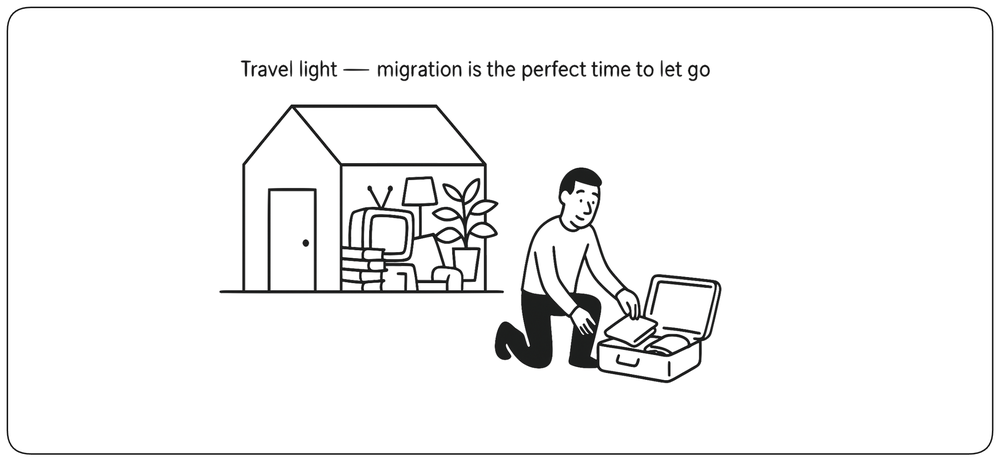
Migration projects create rare organizational permission to clean house and eliminate accumulated technical debt that normal operations never prioritize. That legacy service nobody dares touch because original developers left years ago? The tangled dependencies everyone avoids refactoring because the risk seems too high? The half-abandoned features consuming resources without providing value? Migration provides perfect justification for addressing all these problems—"it's too complex to migrate as-is" becomes legitimate reason for overdue simplification and consolidation. Smart teams leverage migrations strategically to decommission inactive services, consolidate redundant systems, eliminate unnecessary features, simplify complex architectures, and establish better patterns going forward. The question shifts from "how do we migrate this?" to "do we even need this anymore?"
Migration Politics and Phases [Political Navigation]
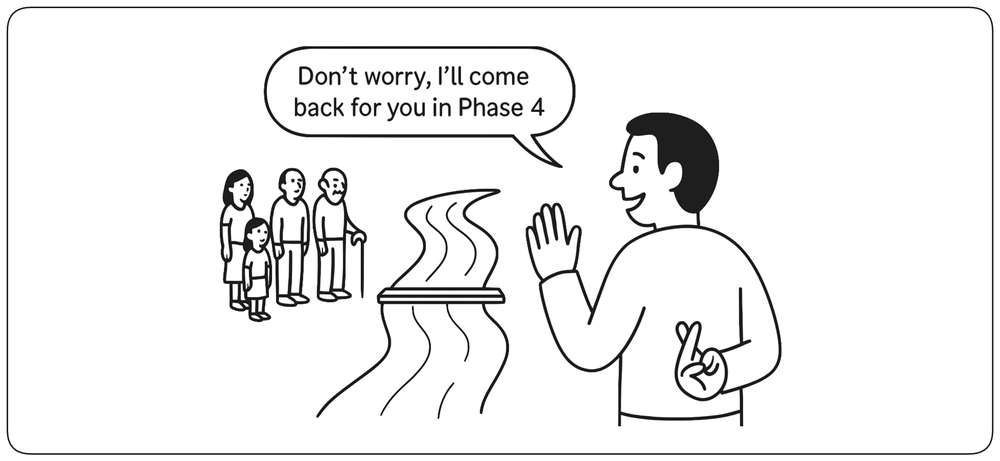
Proposing significant changes or component decommissioning during migration planning can be politically sensitive because services often have stakeholders, legacy systems have defenders, and suggesting elimination can trigger organizational resistance regardless of technical merit. Successfully navigating these dynamics requires diplomatic skill, strategic patience, and careful attention to stakeholder concerns. Successful teams proceed in phases rather than attempting wholesale transformation that threatens too many stakeholders simultaneously. Start with quick wins that build credibility and demonstrate competence. Migrate straightforward components successfully to establish trust. Gradually demonstrate the real cost of maintaining complex legacy components through objective metrics. Let evidence accumulate supporting simplification. Frame discussions around business value and costs rather than technical preferences.
Lift and Shift Strategy [Lift and Shift]
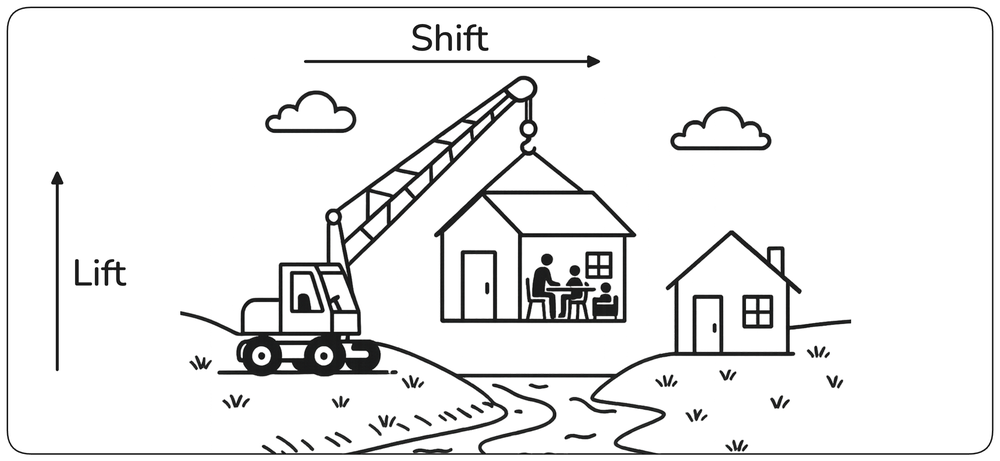
Lift and shift refers to moving infrastructure or applications from one environment to another with minimal changes, avoiding redesign or modernization during migration itself. This strategy prioritizes speed and risk reduction by keeping changes minimal and deferring optimization until after successful migration to new platforms. Lift and shift works well when time pressure is high, when applications function adequately in current form, or when migration risk must be minimized by avoiding simultaneous platform and application changes. However, lift and shift deliberately does not address technical debt or architectural problems and often results in higher operational costs because applications are not optimized for new platforms. Successful lift and shift requires accepting this reality and planning explicit follow-up phases.
The Strangler Pattern [Strangler Migration]
The strangler pattern enables gradual migration by incrementally replacing existing system functionality with new implementations while both systems operate simultaneously during transition. Named after strangler vines that gradually overtake trees, this pattern places a routing layer or façade between users and systems, directing requests to either existing or new implementations based on migration progress. Teams migrate functionality incrementally—perhaps starting with user authentication, then profiles, then orders, then recommendations—gradually strangling the existing system until it can be safely decommissioned after all functionality has been replaced. This incremental approach dramatically reduces migration risk by enabling validation of each component migration before proceeding to the next, providing easy rollback if issues arise, maintaining production stability throughout migration.
Refactoring for Cloud-Native [Cloud Modernization]
Refactoring involves redesigning existing applications to leverage modern cloud-native capabilities, architectural patterns, and managed services rather than simply moving them unchanged. This transformation might mean decomposing monolithic applications into microservices that scale independently, migrating from self-managed infrastructure to fully managed cloud services, implementing event-driven architectures that respond to changes asynchronously, or adopting serverless computing models that eliminate infrastructure management entirely. Cloud-native refactoring represents more investment than lift and shift but delivers significantly better long-term results through improved scalability, reliability, and operational efficiency. Organizations choose refactoring for applications that represent competitive advantages worth investment, high-value services where improved capabilities justify costs, or systems causing operational pain through frequent outages or difficulty scaling.